
New Supply Lines Through the Whole House
Repiping is the right call when a system is failing everywhere at once. It is also the most oversold job in plumbing, so we will show you why before we recommend it.
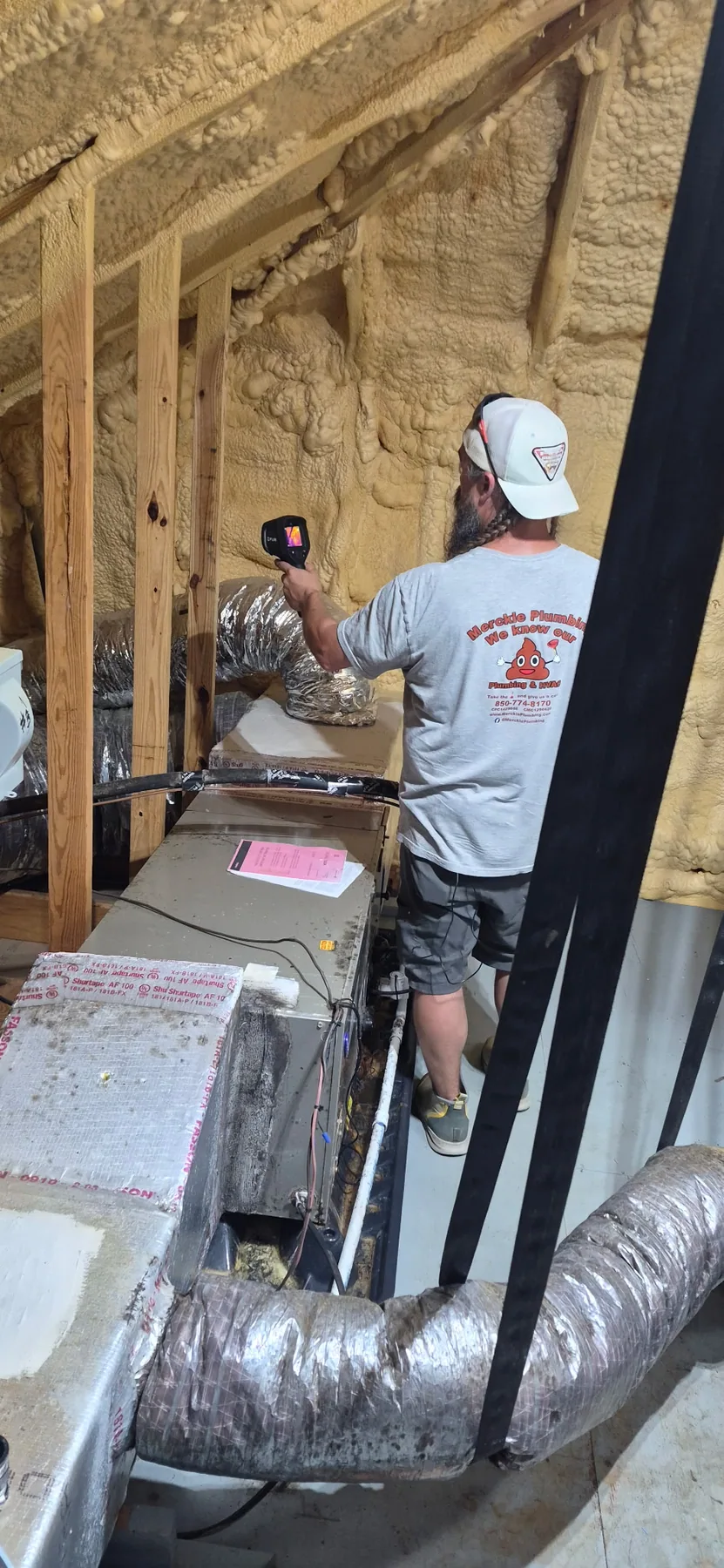
Repiping replaces the water supply lines running through a house. Not the drains, those are a different system, but the pressurized lines feeding every fixture. It is a significant job and there is a real threshold for needing it, which is when the pipe itself has reached the end rather than one section having failed.
The tell is repetition. One pinhole in a copper line is a repair. Three pinholes in two years, in different rooms, is the pipe telling you it has thinned everywhere and the failures are just going to keep arriving. At that point each repair costs you money and drywall and buys a few months, and running new pipe is the cheaper path measured over any real length of time.
We say plainly that this is the job we are most careful about recommending. Noah started this company because he watched people get sold replacements they did not need. So we lead with repair, and when we do recommend a repipe we show you the pipe we pulled out and the pattern of failures behind the decision.
What tells us a system is finished
- Repeated pinhole leaks in different parts of the house
- Rusty or brown water at first draw, especially from older galvanized
- Water pressure that has dropped gradually across every fixture over years
- Visible corrosion or green crust at multiple joints
- Galvanized steel supply lines still in service from the house’s original build
- Polybutylene supply lines, which fail at the fittings and are worth replacing on schedule rather than on failure
One pinhole is a repair. The third pinhole is the pipe telling you something.
How supply systems reach the end
Galvanized steel corrodes from the inside. Zinc coating wears away, the steel underneath rusts, and the rust builds inward until the inside diameter is a fraction of what it started as. That is why old galvanized houses have terrible pressure and rusty first-draw water. The pipe is not just leaking, it is closing, and no amount of repair reopens it.
Copper thins in a more scattered way. Water chemistry, velocity at tight turns, and years of hot lines expanding and contracting all take a little off the wall. When it finally opens up, it opens as a pinhole. And since the whole system was installed at the same time out of the same material carrying the same water, the second and third pinholes are usually not far behind the first.
Local conditions play a part. Regional Utilities draws from wells including the Rock Hill wellfield north of Freeport, and mineral content is a familiar concern for people here. Some rural parcels outside the franchise are on private wells with their own water chemistry entirely. What is dissolved in the water affects how the inside of the pipe ages, which is one reason two houses of the same vintage can be in very different shape.
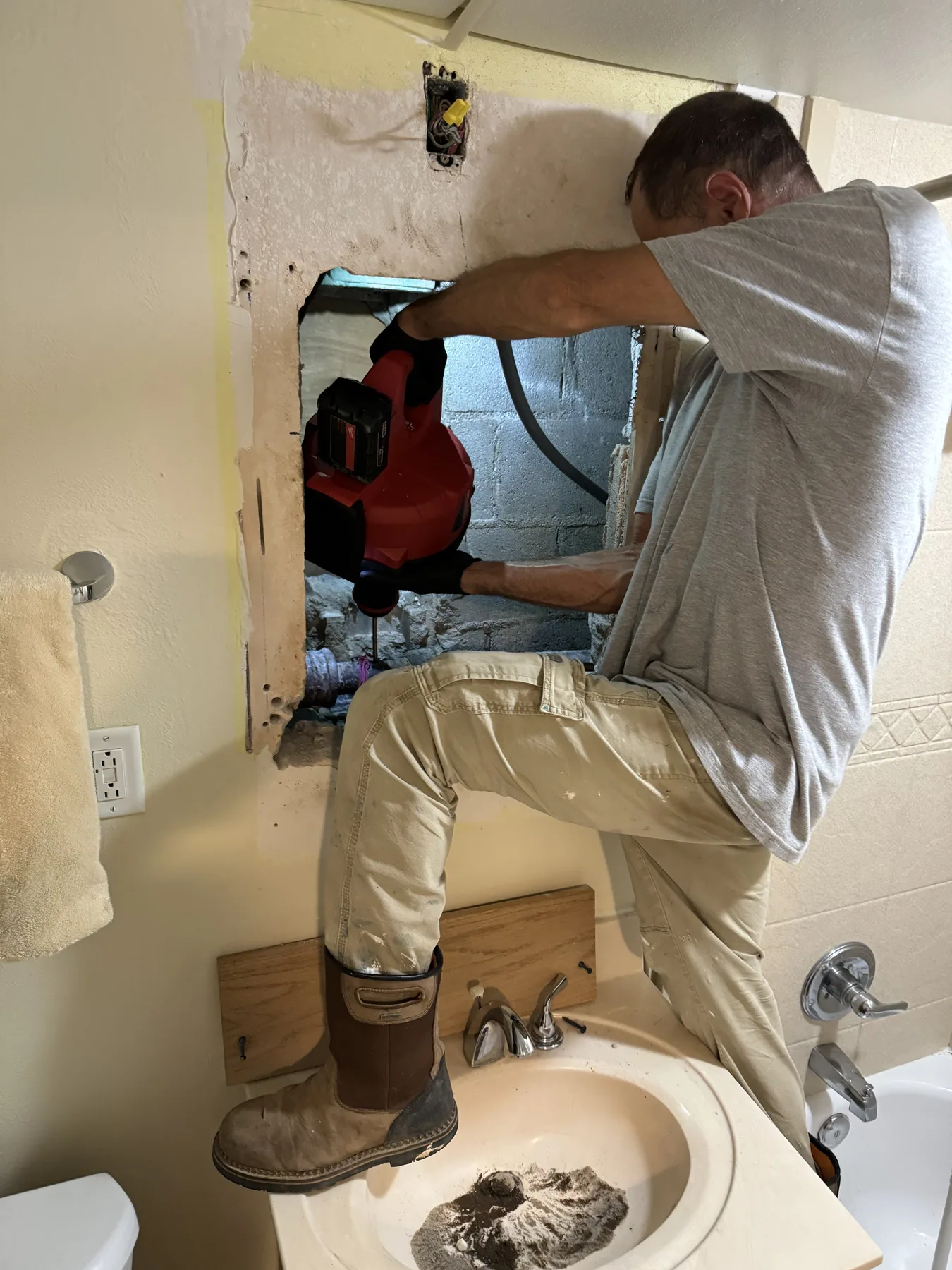
New supply lines run and supported through a wall cavity during a whole-house repipe.
Get it looked at
Been told you need a repipe? Call 850-318-5777 for a second look. We will tell you what it takes and whether you actually need it yet.
- Answered 24 hours, 7 days
- Licensed CFC1429646 and CMC1250426
- Repair first, always
Think of a maintenance plan like an oil change for your home.
How we repipe a house
- Look at the whole system
Material, age, failure history, water condition. A repipe recommendation should rest on evidence, not on a hunch about the year the house was built.
- Plan the routing
Where new lines can run with the least opening of walls and ceilings. Good routing is most of what determines how disruptive this is.
- Give you the full number up front
What it takes, how many days, which walls get opened, what is restored. Before anything starts.
- Run the new lines
New supply installed with correct materials and supports, isolation valves where they belong so future work is easier.
- Tie in and pressure test
Every fixture connected, the system pressurized and held, and every joint checked before anything gets closed.
- Close up and walk it with you
Openings patched, the house cleaned up, and you get shown where the new valves are and what changed.
Repipes from the coast to the county line
The older inland communities are where most whole-house repipes happen. DeFuniak Springs, Paxton, Ponce de Leon, Westville, Vernon, and Caryville have homes old enough to still be on original galvanized, and those are the systems that have quietly closed up over decades. Freeport has a mix, older homes near town and newer construction spreading out toward the bay.
Along the coast in Santa Rosa Beach, Point Washington, Seagrove Beach, Grayton Beach, Seaside, WaterColor, Inlet Beach, Miramar Beach, and Destin, the housing is generally newer, so full repipes are less common and usually driven by a specific material problem or a run of slab leaks rather than by age. We also serve Niceville, Valparaiso, Eglin Air Force Base, Choctaw Beach, Ebro, and Panama City Beach, and we are happy to look at a system and tell you it has years left, which happens often.
Not sure we reach you? Regular stops include Valparaiso, Ebro, Santa Rosa Beach, Destin, Vernon, Point Washington, Niceville, Caryville, Miramar Beach, Eglin Air Force Base and our hometown of Freeport. If your town isn’t named, the full service area list will settle it.
Questions we get about this
How do I know if I need a repipe or just a repair?
Count the failures. A single leak in an otherwise healthy system is a repair. Several leaks in different areas over a short span means the material has thinned throughout and repairs are only going to keep coming.
Pressure and water quality matter too. If pressure has fallen off everywhere and the first draw runs rusty, the inside of the pipe has closed up and no repair reopens it.
How long does a whole-house repipe take?
It depends on the size of the house, how many bathrooms, and how accessible the routing is. We give you a realistic window before starting, and we stage the work so you are not without water for the whole duration.
Will you have to open up my walls?
Some openings are necessary, and good routing minimizes how many. We plan the path before we cut anything and we tell you in advance which walls and ceilings are affected, so nothing about it is a surprise on day two.
Do you repipe drains too?
Drains are a separate system and a separate job. If your drain lines are also failing, usually cast iron with bottom rot, that is sewer or drain replacement work. We will camera them and tell you where they stand rather than bundling it in automatically.
What if another company already told me I need one?
Get a second look. We will inspect the system and give you a straight answer, including telling you it can wait if it can. Repair-first is not a slogan here, it is the reason the business exists.
Related plumbing work
- Bathroom Plumbing
- Kitchen Plumbing
- New Construction Plumbing
- Plumbing Inspection
- Hydro Jetting
- Emergency Plumbing
- Leak Detection
- Leak Repair
- Drain Cleaning
Plumbing problems don’t always fit a tidy label. Look over our plumbing services, check the gallery for jobs like yours, or skip all that and call 850-318-5777. If it is not urgent, a message works too.