
Stop Paying to Cool Your Attic
Sealing is the repair side of the duct problem. We close the joints, boots and connections that have been dumping your conditioned air into an attic.
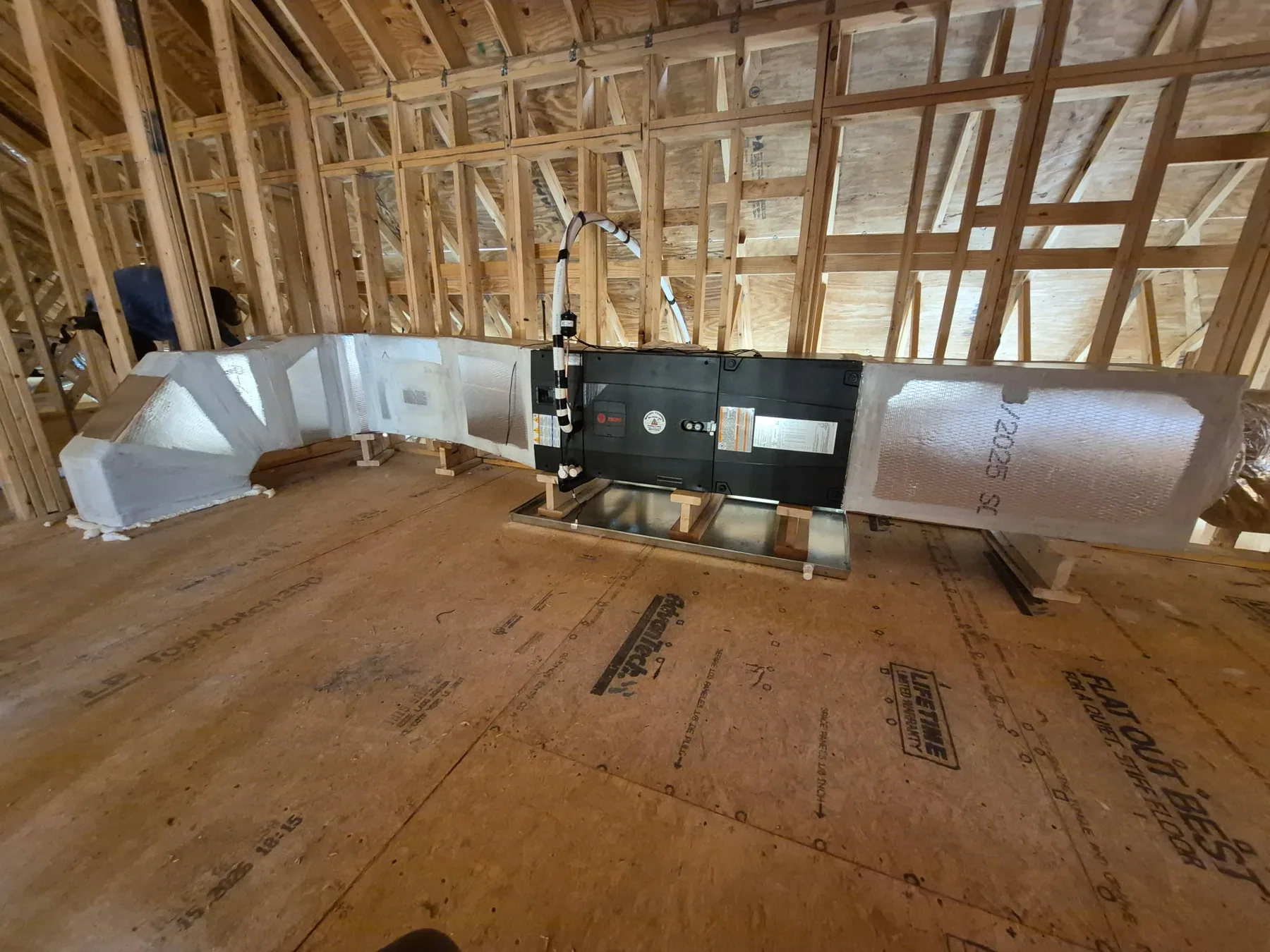
Duct sealing is hands on remediation. We get into the attic or crawl space, work along the accessible runs, and close the places where air is escaping: the plenum takeoffs, the collar connections, the seams in rigid trunk, the flex duct straps, and the boots where the duct meets the ceiling register. Mastic and mesh do the sealing, not tape, because tape in a hot attic eventually lets go.
The reason this pays off has to do with where the ductwork lives. Florida houses are slab on grade with the air handler and duct system in the attic, and that attic is hot and humid for most of the year. Every open seam on the supply side sends cold air into that space. Every gap on the return side sucks hot attic air into the system. Closing those two paths is often the single most effective thing you can do to a duct system.
Sealing also solves problems people do not associate with ductwork at all. Rooms that never keep up frequently improve, because the air that was leaking upstream now reaches the register. Dust drops, because the return stops pulling attic debris through the filter. And the house dehumidifies better, since the equipment stops fighting outdoor moisture it was never meant to handle.
Symptoms That Point at Leaky Duct
- The register in a far room barely moves a tissue held in front of it
- Fine gritty dust reappears fast on furniture and around supply vents
- Ceiling stains or discoloration around a register, which usually means condensation at the boot
- Visible torn or disconnected flex duct where it can be seen from the attic hatch
- The AC keeps up on mild days but loses ground on genuinely hot afternoons
- Cooling costs are noticeably higher than similar houses on your street
Tape fails in a hot attic. Mastic is what actually holds a duct joint closed here.
Where Duct Systems Come Apart
Boot connections are the classic offender. The flex duct is strapped over the boot collar and sealed, but the strap loosens or the sealant cracks, and now conditioned air is pouring into the attic a few inches from the ceiling it was supposed to serve. Because it happens above the drywall, homeowners feel the weak register and blame the equipment.
Plenum and takeoff joints are the expensive ones. These sit closest to the air handler, so the air moving past them is at the highest pressure in the entire system. A gap there loses far more air than a gap at the end of a branch. When we prioritize a sealing job, we start where the pressure is highest and work outward.
Our climate then compounds the damage. With summer dew points in the high sixties and low seventies, cold air leaking out around a duct joint chills the surrounding surface below dew point and water condenses. Wet insulation loses its value, wet framing and dust give mold something to grow on, and eventually a ceiling stain appears. So a leak that started as an efficiency problem in Freeport ends up as a moisture problem, which is a considerably more expensive one.

Brushing mastic over a flex duct collar at the supply plenum, the highest pressure joint in the system.
Get it looked at
We seal where the pressure is highest first, so the money goes where the air is actually being lost. Call 850-318-5777.
- Answered 24 hours, 7 days
- Licensed CFC1429646 and CMC1250426
- Repair first, always
Prices for every maintenance plan are posted, so you know the cost before booking.
The Sealing Process
- Find what is leaking
Visual inspection of every accessible run, ideally with the system pressurized so escaping air is easy to locate. Photos go into your report.
- Reconnect what has come apart
Disconnected boots, pulled straps and separated collars get physically reattached before any sealant goes on. Mastic will not fix a duct that fell off.
- Seal with mastic and mesh
Joints, seams and collars get fiberglass mesh where needed and a proper coat of duct mastic, which stays flexible and holds through attic heat cycles.
- Address the return side
Return leaks import hot humid air, so return plenum and platform joints get particular attention.
- Restore insulation
Duct insulation gets repaired or replaced over sealed sections, since bare metal in a humid attic sweats.
- Confirm the improvement
Where testing was done beforehand, we re-measure so you can see the before and after rather than take our word for it.
Sealing Duct Systems Around Walton County and Beyond
Freeport, Santa Rosa Beach, Point Washington and the 30A communities of Seaside, WaterColor, Grayton Beach, Seagrove Beach and Inlet Beach make up a lot of this work. Houses near the coast see high humidity year round, so leaking supply joints show up as condensation problems faster here than they would further inland.
We also seal duct systems in Miramar Beach, Destin, Niceville, Valparaiso, Eglin Air Force Base, Choctaw Beach, DeFuniak Springs, Paxton, Ponce de Leon, Westville, Ebro, Vernon, Caryville and Panama City Beach. Commercial buildings included. Call 850-318-5777 and we will book a visit.
Towns we get to most: Freeport, Santa Rosa Beach, Point Washington, Miramar Beach, Niceville, Destin, Eglin Air Force Base, Valparaiso, Ebro, Vernon, Caryville. See the full service area.
Questions we get about this
Can I just use duct tape?
Despite the name, standard duct tape is the wrong material for duct. Attic heat cycles dry the adhesive and it releases, often within a couple of seasons. Mastic stays flexible, bonds to the metal and the flex jacket, and holds. Foil backed tape rated for the purpose has its place, but mastic does the real work.
Do I need testing first?
Not always. If we can see torn and disconnected duct in the attic, sealing it is obviously worthwhile and testing first just adds cost. Testing makes sense when the situation is ambiguous or when you want a documented before and after.
Will sealing fix my hot bedroom?
Often it helps a lot, because air that was escaping upstream now reaches the register. If the room is still short after sealing, the next step is balancing the airflow. We will tell you which one your house actually needs rather than selling you both.
Can every leak be sealed?
Every accessible one. Duct buried under blown insulation, running inside soffits, or sealed into a chase cannot be reached without opening things up. We will show you what we can and cannot get to and let you decide.
Does sealing help with humidity in the house?
Yes, and it is one of the bigger wins here. Stopping the return from pulling humid attic air means the equipment spends its capacity on your indoor air instead of outdoor moisture, so the house holds a more comfortable humidity level.
How long does the job take?
Most homes are a day or less, depending on attic access, how much duct is reachable, and how much of it has come apart. We will tell you what it takes after we have looked.
Related HVAC work
- Mini-Split Installation
- Ductless Mini Splits
- HVAC Maintenance
- HVAC System Diagnostics
- Indoor Air Quality
- Emergency HVAC
- HVAC Repair
- HVAC Installation
- AC Repair
You don’t need to know what the problem is called. Tell us what the system is doing at 850-318-5777 or through the contact page, and we’ll sort out which service it is. The HVAC page and the gallery are there if you want to look around first.