
Finding the Leak Without Tearing Up Your House
A hidden leak is a locating problem before it is a plumbing problem. We find exactly where it is, so the repair is a small hole instead of a guess.
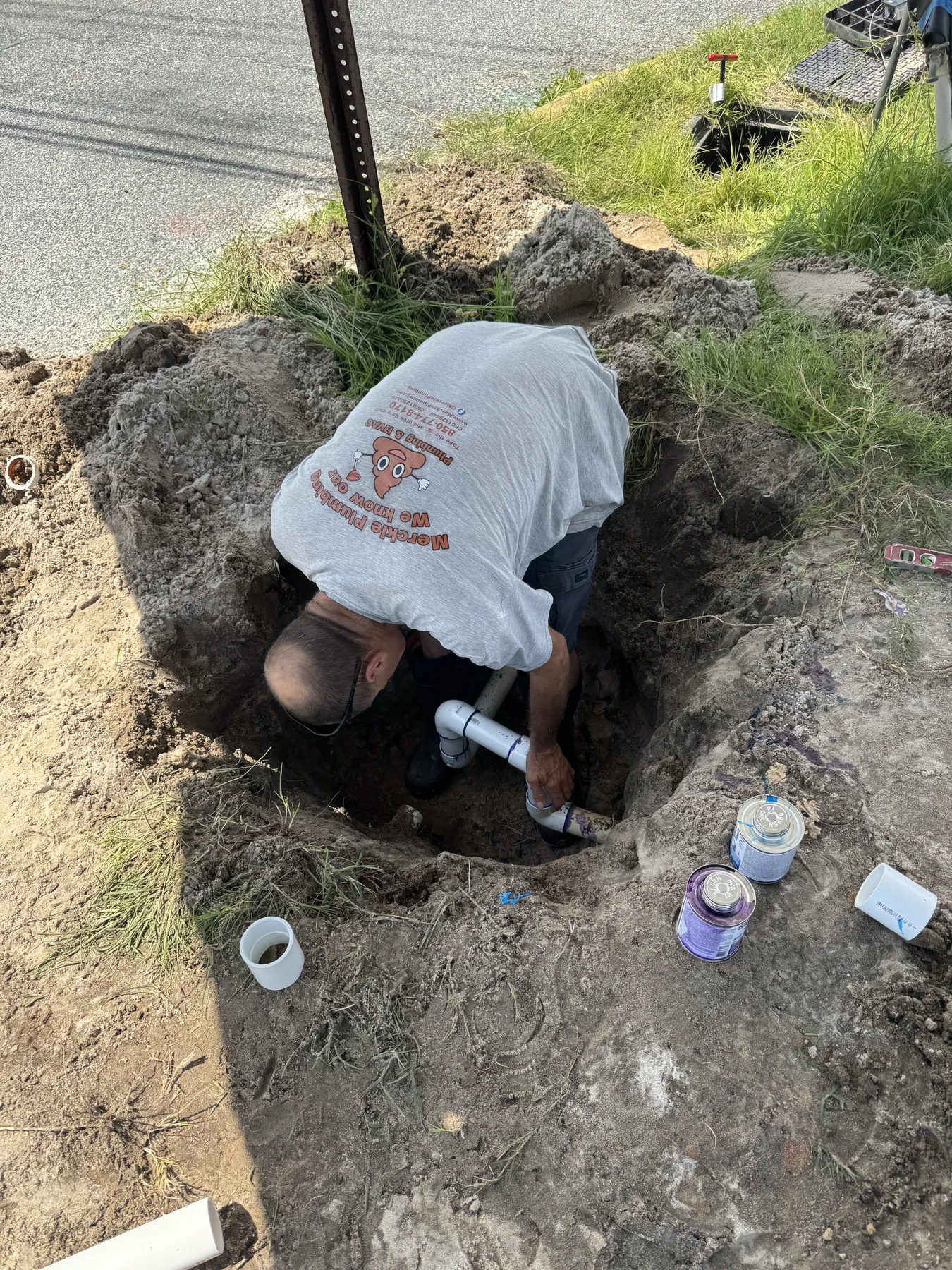
This page is about finding a leak. Fixing one is separate work, and we do that too, but the finding comes first and it is the part people get wrong. Homeowners rip out drywall where the stain is, and the stain is almost never where the leak is. Water runs along the top of a joist or the underside of a slab and comes out at the lowest low point it can reach, sometimes rooms away.
Nearly every house around here sits on a slab on grade. The supply lines run under that concrete. There is nothing to see and nothing to open up, which is why detection is done with sound and pressure instead of eyes. Pressurized water escaping a pinhole makes a specific noise through concrete, and acoustic gear picks it up and lets us narrow it to a spot rather than a room.
We also test rather than assume. Isolating sections of the system and watching what the meter does tells us whether the loss is on the supply side, at an irrigation zone, or a toilet flapper that has been running quietly since March. Plenty of mystery bills turn out to be the cheapest possible fix, and we would rather tell you that than start cutting.
What usually tips a hidden leak off
- A water bill that climbed with no change in how you use water
- The meter dial creeping while every fixture in the house is off
- A patch of floor that is warm underfoot, which points to a hot line under the slab
- Hearing water run faintly when nothing is running
- A section of yard that stays green or soggy while the rest is dry
- Pressure that dropped off across the whole house rather than at one fixture
- A musty smell in a closet or along a baseboard with no visible water
Where the stain shows up is almost never where the water got out.
Why lines under a slab give up
Copper under concrete fails from the outside in as often as the inside out. Soil chemistry, stray current, and simple abrasion where the pipe rubs against concrete every time it expands with hot water all thin the wall until a pinhole opens. Hot lines go first more often than cold, because they move more with every heating cycle. That is why a warm spot on a floor is such a useful clue.
The other common source is a fitting that was never quite right at construction. A joint that was slightly stressed when the slab was poured can hold fine for a decade and then start weeping. Once it starts, the escaping water erodes soil under the slab, and you get a small void long before you get a visible symptom inside the house.
Irrigation and pool lines confuse the picture locally. A lot of properties from Freeport out to Santa Rosa Beach have both, often on the same meter, and a cracked lateral out in the yard reads on the bill exactly like a slab leak reads. Testing sections separately is what tells those apart, and it saves people from paying to open a floor over a broken sprinkler line.
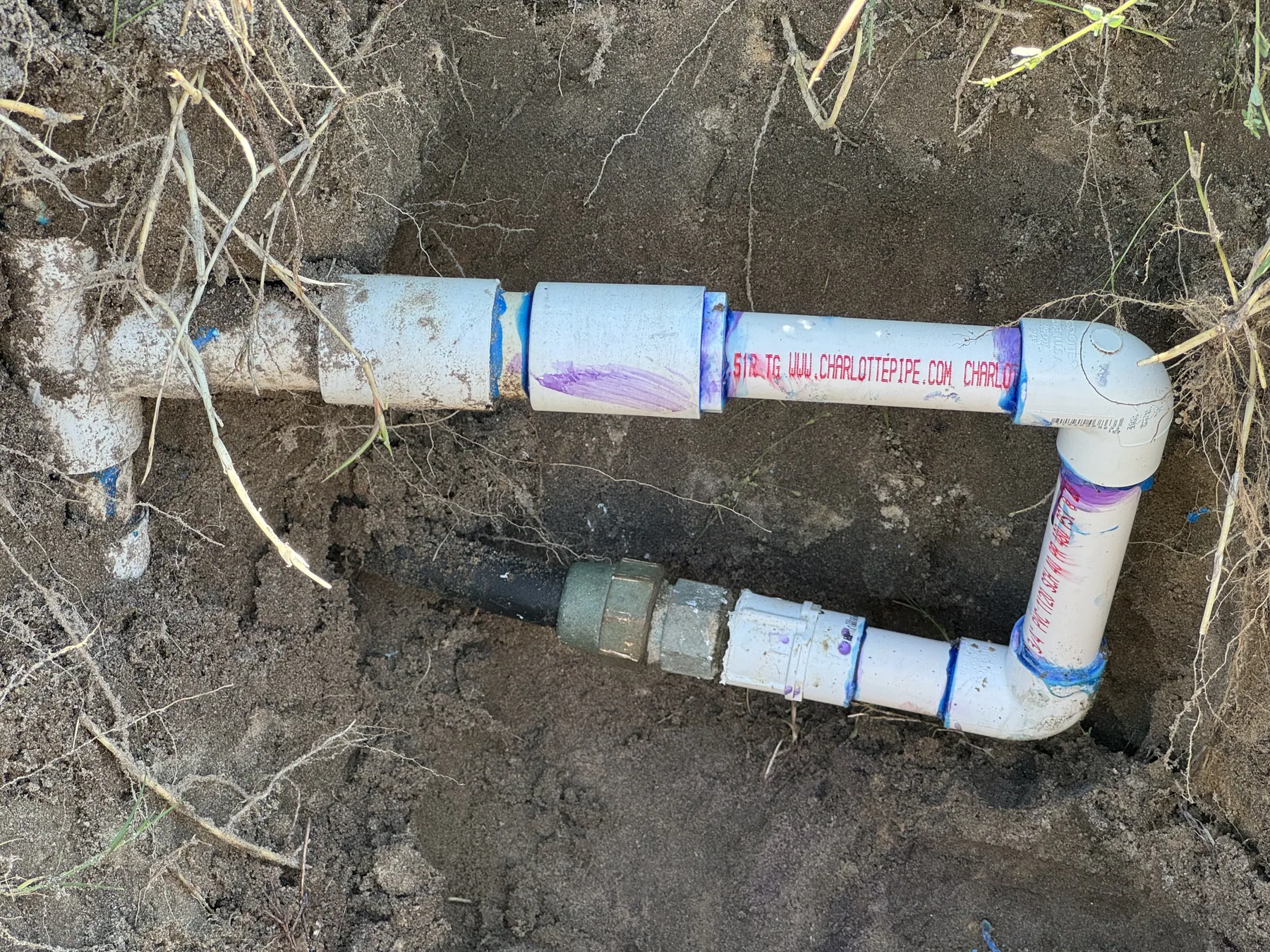
Running an acoustic sweep across a slab floor to narrow down a hot-line leak.
Get it looked at
Bill jumped and you cannot find why? Call 850-318-5777. We locate it first and give you a straight number for the repair after.
- Answered 24 hours, 7 days
- Licensed CFC1429646 and CMC1250426
- Repair first, always
Maintenance plan visits come with a written condition report and photos.
How we pin it down
- Talk through the history
When the bill changed, what you have heard, what you have felt underfoot. The story narrows the search before any gear comes out.
- Meter and isolation test
We close valves section by section and watch the meter. That tells us whether the loss is inside, under the slab, or out in the irrigation.
- Acoustic and electronic locating
Escaping water under pressure makes a sound signature through concrete. We listen across the area and tighten in on the loudest point.
- Mark the spot
You get a physical mark on the floor or wall and a plain explanation of what is under it and how deep.
- Lay out the repair options
Spot repair through the slab or reroute overhead, with the trade-offs for your house. We will tell you what it takes either way.
Locating work from the coast to the county line
Slab construction is close to universal from Inlet Beach up through Freeport and out to DeFuniak Springs, so this is steady work for us. The 30A properties in Seaside, WaterColor, Grayton Beach, and Seagrove Beach add a wrinkle, because many are rentals with turnover and nobody living there day to day to notice a warm floor or a running sound. Those get caught by the bill, months later.
We locate leaks in Miramar Beach, Destin, Niceville, Valparaiso, and Choctaw Beach, and north into Paxton, Ponce de Leon, and Westville where more parcels are on private wells. Well systems change the detection approach, since there is no utility meter to watch. We work off pump cycling and pressure-tank behavior instead, and the answer is just as findable.
Home base is Freeport, and from there we’re regularly in Miramar Beach, Destin, Santa Rosa Beach, Niceville, Point Washington, Valparaiso, Eglin Air Force Base, Caryville, Vernon and Ebro. The rest of our range is listed on the service area page.
Questions we get about this
How do you find a leak under concrete without breaking it?
Water forced through a small opening makes noise, and that noise carries through the slab. Acoustic equipment picks it up and lets us move across the floor until the signal peaks. Combined with isolation testing at the meter, that puts us on a spot rather than a general area.
Is detection separate from the repair?
Yes. Locating the leak and repairing it are two different jobs with two different sets of tools. We do both, but we find it first and then talk to you about the fix, because the location determines what the repair even looks like.
Could my high bill be something other than a leak?
Often, yes. A toilet flapper that does not seat can pass a surprising amount of water silently, and an irrigation zone with a cracked lateral looks identical on a bill. We check the cheap possibilities before we assume the expensive one.
Will you have to cut my floor to find it?
Not to find it. Detection is done from the surface. Cutting only happens if you choose a spot repair through the slab afterward, and then it is a small opening at a marked point instead of exploratory demolition.
What if the leak is in my irrigation and not the house?
Then we tell you that and you have saved yourself a floor repair. Isolating the irrigation from the domestic supply is one of the first tests we run for exactly this reason.
Related plumbing work
- Leak Repair
- Drain Cleaning
- Sewer Line Repair
- Sewer Line Replacement
- Water Heater Repair
- Water Heater Installation
- Tankless Water Heater Repair
- Tankless Water Heater Replacement
- Tankless Water Heater Installation
Can’t find your exact problem above? Describe it on the contact form or over the phone at 850-318-5777. You can browse the full plumbing list first, or look through photos of our work.