
When the Building’s Main Line Is the Problem
Every fixture in the building drains into one line. When that line fails, cleaning individual drains won’t help, and we’ll show you why on camera.
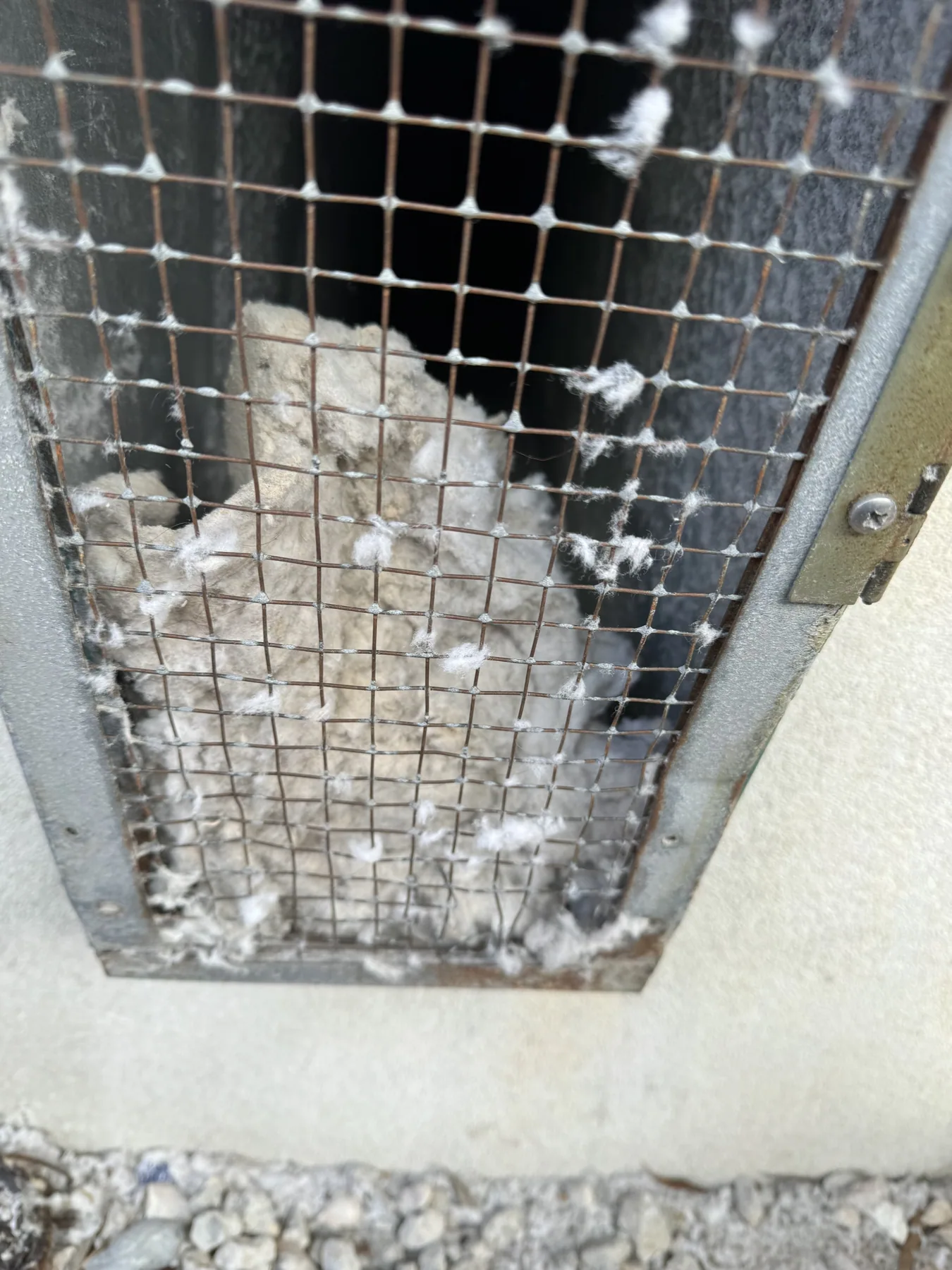
A sewer main is the single point of failure for a commercial property. Every restroom, every kitchen sink, every floor drain eventually feeds it. So when the main is compromised, the symptoms show up all over the building at once, and it’s easy to spend money chasing individual fixtures that were never the problem.
The diagnosis is a camera. We put an eye in the line and watch it, which tells us whether we’re looking at a bellied section holding water, a crack, a joint that’s separated, root intrusion, or the corroded underside of an old cast iron pipe. Those need different repairs and cost very different amounts, and you shouldn’t have to take anyone’s word for which one you have.
From there the question is scope. A single failed section under a parking lot is a spot repair. A line that’s failing in a dozen places along its length is a replacement, and pretending otherwise just means paying for the same excavation twice. We’ll tell you which one the footage supports, including when it’s the cheaper answer.
What a failing main looks like from inside
- More than one fixture group backing up in different parts of the building
- Lowest drains in the building, floor drains and ground-floor restrooms, backing up first
- Sewer odor outdoors near the line’s path, especially after rain
- A soft, sunken or unusually green strip across landscaping or asphalt
- Drains that clear after a cleaning and are slow again within weeks
- Gurgling in a floor drain when a completely different fixture runs
- Repeat backups that a professional cleaning didn’t hold
If several unrelated fixtures back up, stop cleaning drains and put a camera in the main.
Why mains fail in this part of Florida
Age and material do most of it. Cast iron drainage was standard construction from roughly the 1950s into the 1980s, and those systems are now at or past their design life. The classic failure is bottom rot: the underside of the pipe corrodes away where waste and water sit, leaving a channel that catches solids and eventually collapses. A camera shows it immediately.
Ground movement is the second cause. Our soil is sandy and the water table sits high in the low, flat areas around Freeport and along the 30A corridor. Sand shifts, and a line that was laid at proper fall can develop a belly, a low spot that holds water and collects solids. That section becomes the place every future clog forms.
Then there’s load and traffic. Commercial mains often run under parking areas and drives, where heavy vehicles apply loads a residential line never sees. Combine that with root systems looking for the moisture and nutrients in a cracked joint, and you get a line that fails at the joints long before the pipe body would have given out on its own.
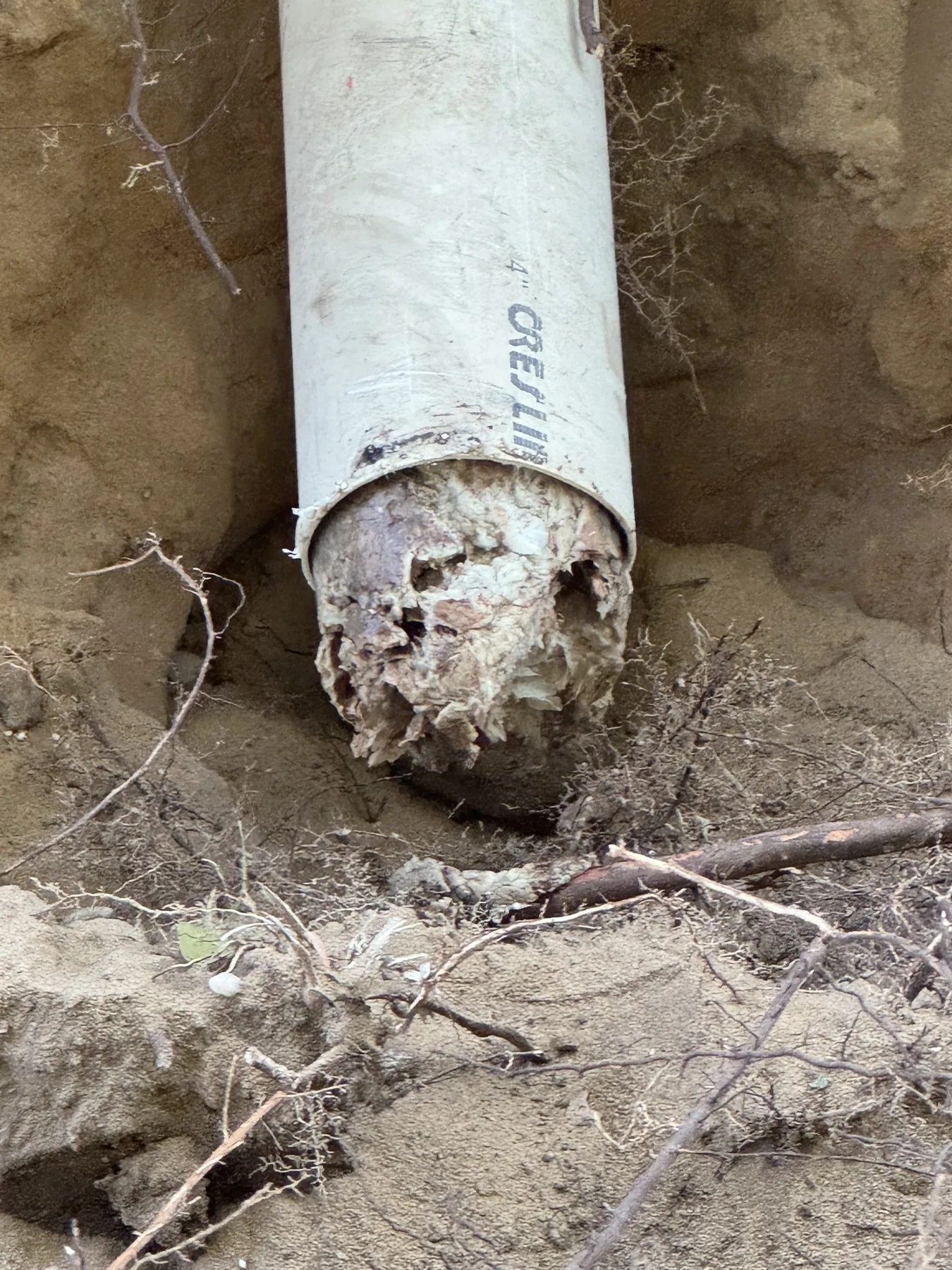
Camera inspection of a commercial sewer main showing a bellied section holding water ahead of a repair.
Commercial work
Repeat backups in more than one part of the building? Call 850-318-5777 and we’ll camera the main before you spend more on drain cleaning.
- Answered 24 hours, 7 days
- Licensed CFC1429646 and CMC1250426
- Repair first, always
A maintenance plan puts a licensed contractor’s eyes on this before it fails.
From diagnosis to a working line
- Camera the main
We run the line end to end and record it, so the decision is based on what’s actually in your pipe, not a guess from the symptoms.
- Locate and mark
We put the depth and position of the problem on the ground, which is what keeps the excavation small and predictable.
- Lay out the real options
Spot repair, sectional replacement, or full replacement, with what each one means for cost, downtime, and how long it holds.
- Plan the outage
We schedule the work and the water-off window around your operating hours and tell you exactly what tenants will lose and when.
- Repair and restore
The line goes back in to code, gets inspected where required, and the surface goes back the way we found it.
- Verify on camera
We camera the finished line so you can see the repair, and you get that footage for your records.
Sewer work across Walton, Okaloosa and Bay counties
We repair commercial sewer mains in Freeport, Santa Rosa Beach, Point Washington, Miramar Beach and along 30A through Grayton Beach, Seaside, WaterColor, Seagrove Beach and Inlet Beach. Much of that corridor is low and flat with a high water table, which matters a lot when you’re planning an excavation and deciding how the trench gets kept dry.
The same work runs into Destin, Niceville, Valparaiso and Eglin AFB, north through DeFuniak Springs, Paxton, Ponce de Leon and Westville, and east to Ebro, Vernon and Panama City Beach. Some properties in this area are on Regional Utilities gravity sewer and others sit on low pressure force main with a grinder pump, and the repair approach is not the same for both.
Towns we get to most: Freeport, Santa Rosa Beach, Point Washington, Miramar Beach, Niceville, Destin, Eglin Air Force Base, Valparaiso, Ebro, Vernon, Caryville. See the full service area.
Questions we get about this
How long will our business be down?
It depends on the repair and where the line runs. A spot repair in an accessible area is often a single day with a short water-off window. A full replacement under a parking area takes longer, and we’ll give you the real schedule up front.
We plan the disruptive part around your hours wherever the work allows it, and we tell you the outage window before we start, not while we’re digging.
Can you repair just the bad section instead of the whole line?
Often, yes, and we’ll do it when the camera supports it. If the rest of the line is sound, replacing all of it is money you don’t need to spend.
What we won’t do is sell a spot repair on a line that’s failing along its whole length, because you’d be paying for the same excavation again inside a couple of years.
Our building has a grinder pump. Does that change the repair?
Yes, quite a bit. Properties on low pressure force main push waste out through a grinder pump instead of relying on gravity, so the failure modes, the pressure in the line, and the repair method are all different. We’ll confirm which system you’re on before we plan anything.
Will you handle the permits and the utility coordination?
We pull the permits the work requires and coordinate with the utility on anything that touches their side of the connection. Skipping a permit to save a day is how a repair turns into a much bigger problem at the next inspection.
Do we get documentation for the owner or insurance?
You get the before and after camera footage, photos of the excavation and the repair, and a written summary. Boards, owners and carriers all want evidence rather than a description, and this is the kind of work where that record matters later.
What if the problem turns out to be on the utility’s side?
Then we tell you, and you don’t pay us to repair something that isn’t yours. Finding out where the responsibility line falls is part of the diagnosis, and it comes before anybody starts digging.
Related plumbing work
- Commercial Water Line Repair
- Commercial Water Line Installation
- Commercial New Construction
- Office Building Plumbing
- Apartment Complex Plumbing
- Hotel Plumbing
- Commercial Emergency Plumbing
- Commercial Drain Cleaning
- Commercial Hydro Jetting
This page covers one job. The rest of what we do is on the plumbing page, and real job photos are in the gallery. For anything else, call 850-318-5777 or send us a message.