Stop Paying to Condition the Space Above the Ceiling
Sealing joints, seams and connections on commercial duct so the air the fan produces actually arrives where the design said it would.
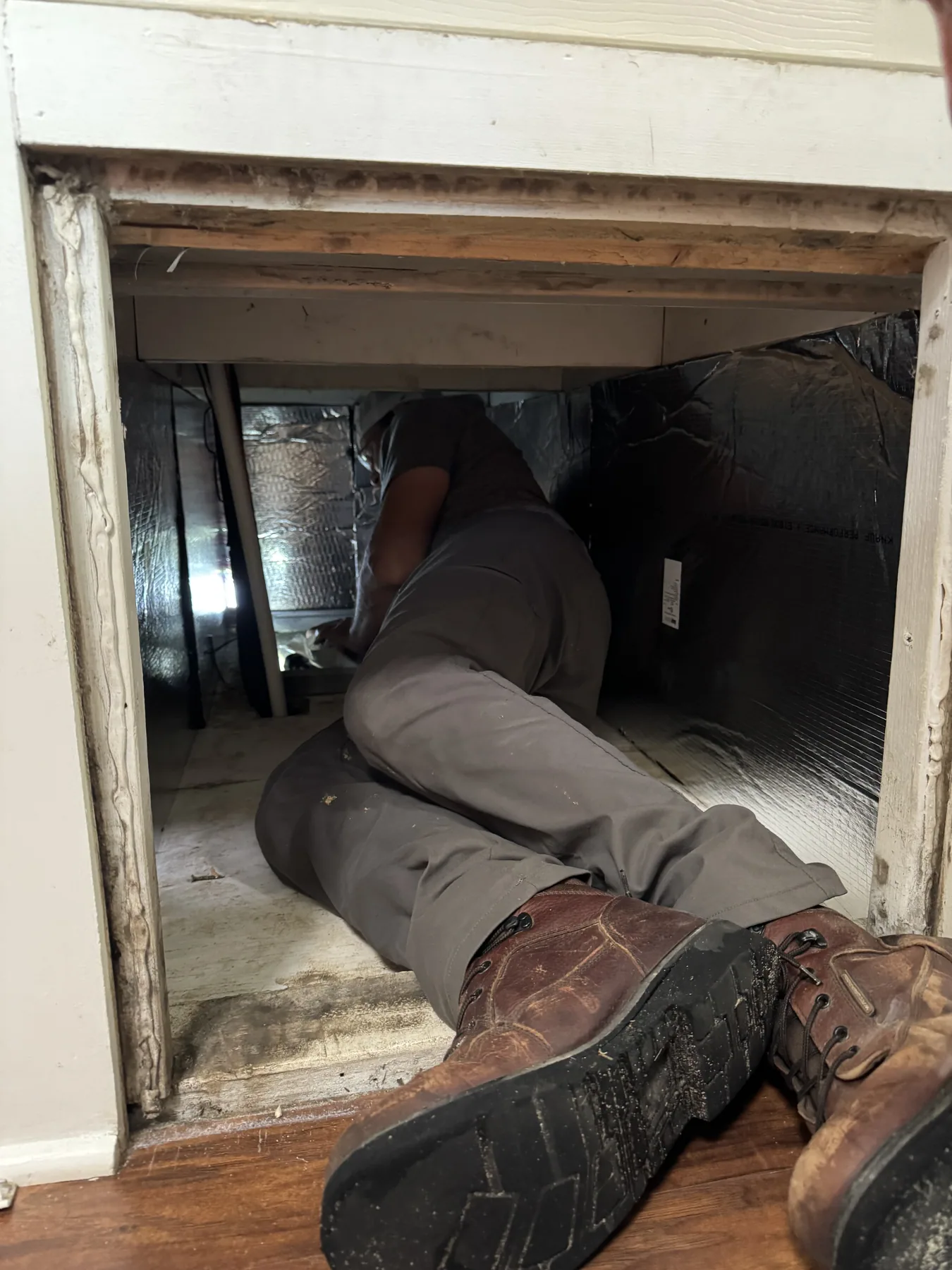
Sealing follows testing. Once you know how much air a duct system is losing and roughly where, sealing is the repair: mastic and mesh at joints, proper mechanical fastening and sealing at takeoffs, and correcting the flex connections that have pulled loose or were never made properly to begin with.
The reason it matters on commercial work is scale. A leak rate that would be an annoyance on a house becomes real money on a system moving thousands of CFM, twelve or more hours a day, through a Florida cooling season that runs most of the year. And the loss is not only energy, it is also pressure, which is why sealing frequently fixes comfort complaints that no amount of thermostat adjustment ever did.
There is a compliance side too. On new construction the mechanical spec often sets a leakage threshold that has to be met and documented. Sealing to that threshold, then retesting to prove it, is what closes that item out.
What a Leaky Duct System Looks Like
- Rooms at the end of a branch that never get enough air
- Humidity in the space staying high while the equipment runs nonstop
- Doors pulling shut or swinging open from pressure differences
- Dust accumulating quickly around diffusers and return grilles
- A failed leakage test with a threshold you have to hit
- Utility costs that stay high after the equipment was serviced or replaced
Sealing duct fixes comfort complaints that a thermostat never could.
Why Duct Fails to Stay Sealed
Materials and workmanship account for most of it. Tape applied over dusty or oily metal releases. Mastic spread too thin cracks as the duct expands and contracts with each cycle. Flex duct clamped once at a boot but never checked for the inner liner sealing separately from the outer jacket will leak air and let humid plenum air into the insulation.
Movement is the second cause. Duct systems flex every time the fan starts, and a joint that was marginal on install day works itself open over a few thousand cycles. Add other trades working above the ceiling in an occupied building and connections get disturbed regularly.
Our climate then decides how much that costs you. Because so much commercial duct here runs through hot, humid unconditioned plenums and attics, a leak on the supply side dumps cold air where nobody benefits, and a leak on the return side pulls in outdoor-humidity air that the equipment has to dry before it can cool anything. Along the coast in Destin, Miramar Beach and the 30A towns, that return-side leakage is a common reason a building stays sticky.
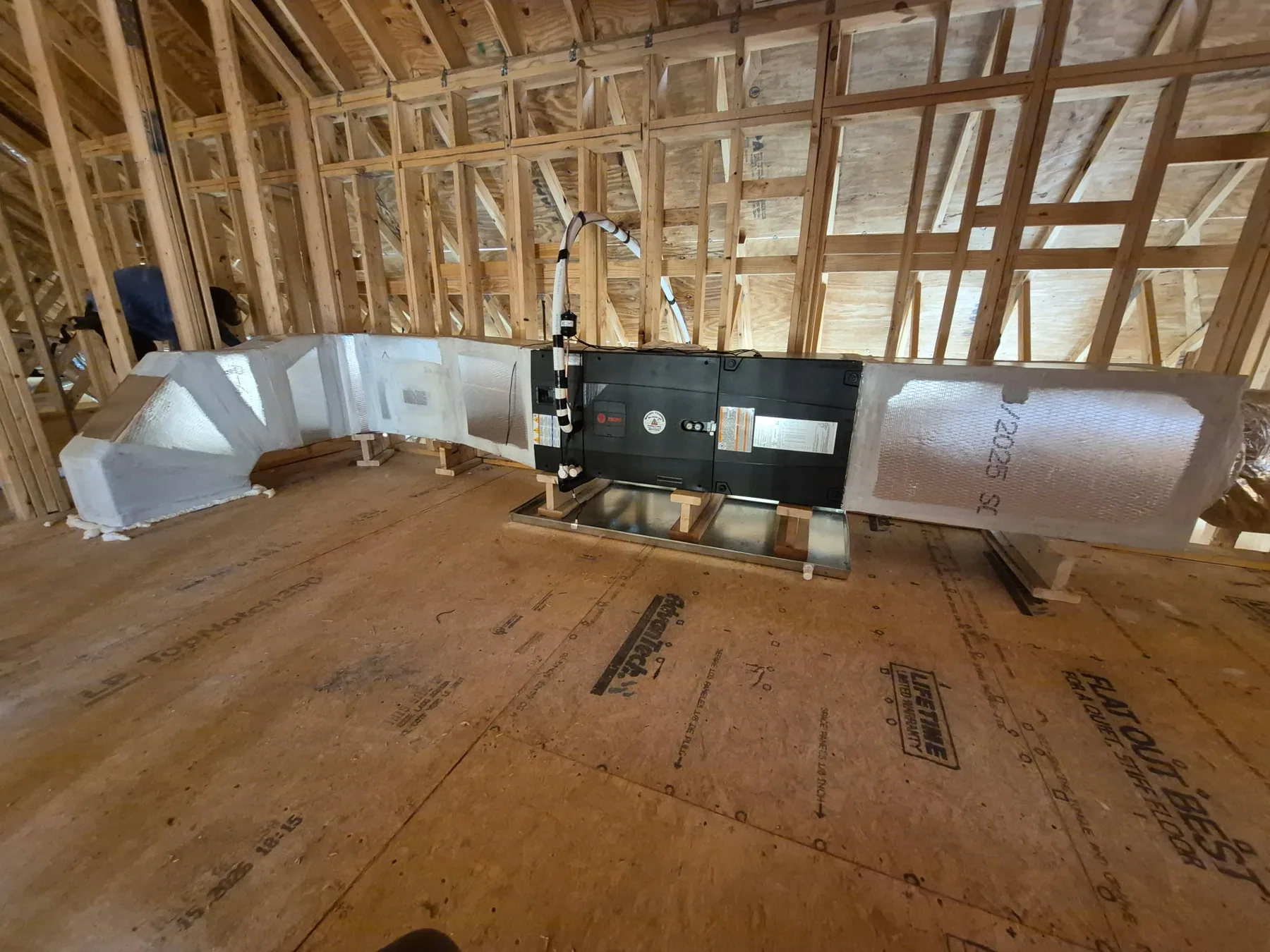
Mastic and mesh applied at a duct takeoff during a commercial sealing job above an accessible ceiling.
Commercial work
Humidity you can’t beat or a leakage threshold you have to hit? Call 850-318-5777 and we will get it looked at and tested.
- Answered 24 hours, 7 days
- Licensed CFC1429646 and CMC1250426
- Repair first, always
Seniors and military members get 5% off our maintenance plans.
The Sealing Sequence
- Measure first
We test to establish a baseline. Sealing without a number before and after is just spending money and hoping.
- Locate the loss
Pressurized inspection to find where the air is actually going, so effort goes to the joints that matter instead of everything within reach.
- Prepare the surfaces
Duct gets cleaned where sealant will be applied. This is the step that gets skipped and it is the reason failed seals fail.
- Seal properly
Mastic and reinforcing mesh at joints and seams, correct mechanical fastening and clamping at takeoffs and flex connections.
- Retest and document
The system is tested again and you get before-and-after numbers, which is what proves the work and satisfies a spec.
Duct Sealing Across Walton, Okaloosa and Bay
Coastal commercial buildings get most of our sealing work, and humidity is usually the complaint that starts it. Hotels, restaurants and rental-management offices from Miramar Beach through Seagrove Beach, Seaside and Inlet Beach frequently have equipment running fine and space that still feels damp, and unsealed return duct in a hot plenum is a leading cause.
Inland, in Freeport, DeFuniak Springs, Niceville and Vernon, sealing more often comes up during new construction closeout or a change of use where existing duct is being reused. Reused duct is worth testing before you commit to it, because sealing an accessible system is straightforward and discovering the problem after the ceiling is finished is not.
Our regular towns, in no special order: Eglin Air Force Base, Vernon, Miramar Beach, Freeport, Caryville, Niceville, Point Washington, Ebro, Destin, Santa Rosa Beach and Valparaiso. Anything else inside our range is on the service area page.
Questions we get about this
Do you seal without testing first?
We would rather not. Testing tells us where the loss actually is and gives you a number to compare against afterward. Sealing blind means nobody can say whether it worked.
Is tape enough to seal commercial duct?
Ordinary duct tape is not. Properly rated mastic with reinforcing mesh, applied to a clean surface, is what holds up through years of thermal cycling. Tape on a dusty joint is a temporary result.
Will sealing help with humidity?
Frequently, yes, especially when the leakage is on the return side and the duct runs through an unconditioned plenum. Sealing stops the system from pulling in outdoor humidity it then has to remove.
Can this be done in an occupied building?
Yes. We work above accessible ceilings section by section and coordinate access with your tenants. It takes longer than an empty building but it is routine work.
Do we get documentation for the spec?
Yes. Before and after leakage numbers, test pressures and what was sealed, written up in a form you can submit for closeout.
Will sealing help if the ductwork is already undersized?
Sealing stops the leaks, it does not make an undersized duct bigger. If the system is fighting a duct that was never right for the load, we will tell you that plainly and measure the static pressure to show you, rather than selling you a seal job that cannot fix the actual problem.
Related HVAC work
- Thermal Imaging
- Kitchen Ventilation
- Ventilation Design
- Rooftop HVAC
- Commercial HVAC System Diagnostics
- Commercial HVAC Service
- Commercial Air Balancing
- Commercial HVAC Cleaning
- Commercial Equipment Installation
Not seeing it? The full list is on the HVAC page, or just call 850-318-5777 and describe it. You can also see the work or send a note.