Control the Moisture and the Air Follows
In this climate, indoor air quality is mostly a moisture question. Get the humidity right and half the problems people blame on air quality stop happening.
Indoor air quality covers three things working together: what your system filters out, how much moisture stays in the house, and how much fresh air gets brought in. Most conversations focus on filters alone, which is why so many homes end up with an expensive filter, a house that still feels sticky, and an owner wondering what they bought.
Moisture deserves top billing here. Summer dew points on this stretch of the Gulf run into the high sixties and low seventies, which means the outdoor air holds a great deal of water and every bit of it that gets inside has to be removed by your equipment. Above roughly sixty percent indoor relative humidity, the house starts feeling clammy at temperatures that should be comfortable, condensation shows up on cool surfaces, and mold and dust mites find conditions they like. Below that, the same house feels fine several degrees warmer.
So the work is practical rather than mysterious. We look at whether your filtration actually seals in its grille, whether the system runs long enough cycles to dehumidify, whether the ductwork is pulling attic air, whether a whole home dehumidifier makes sense for your house, and whether ventilation is bringing fresh air in deliberately or by accident through leaks. The mechanism is understandable, and we will explain it as we go.
What a Moisture Problem Feels Like
- The thermostat reads a reasonable number but the house feels heavy and damp
- Condensation on windows, on supply registers, or on toilet tanks and cold water lines
- A musty smell that is strongest when the system first kicks on
- Doors sticking in summer and freeing up in winter as wood takes on and gives off moisture
- Dust reappearing quickly, or a filter that looks loaded well before it should
- Dark spotting on ceiling corners, closet walls or around air vents
- Somebody in the house has worse symptoms indoors than out
A house at seventy five degrees and sixty five percent humidity feels worse than seventy eight and forty five.
Where Indoor Air Goes Wrong
Oversized cooling equipment is a frequent and counterintuitive cause. A system with more capacity than the house needs hits the thermostat setpoint fast and shuts off, and short cycles do very little dehumidifying, because pulling water out of air requires sustained run time across a cold coil. The house gets cool and stays damp. This is one reason we push back on reflexive upsizing during a replacement.
Duct leakage is the second big one. A return with open joints in the attic imports hot humid outdoor air, along with insulation fibers and dust, directly into your filter and coil. Your equipment then spends its capacity conditioning the attic. Sealing that return frequently improves both the humidity and the dust complaint more than any air purifier would.
Filtration is the third piece, and the common mistake is bypass. A high efficiency filter that does not seal in its grille lets air slip around the edges, and air always takes the easy path. Meanwhile a very restrictive filter on a system that was not designed for it raises static pressure and reduces airflow, which hurts both comfort and dehumidification. The right answer is a filter appropriate to the equipment, fitted so nothing gets around it.
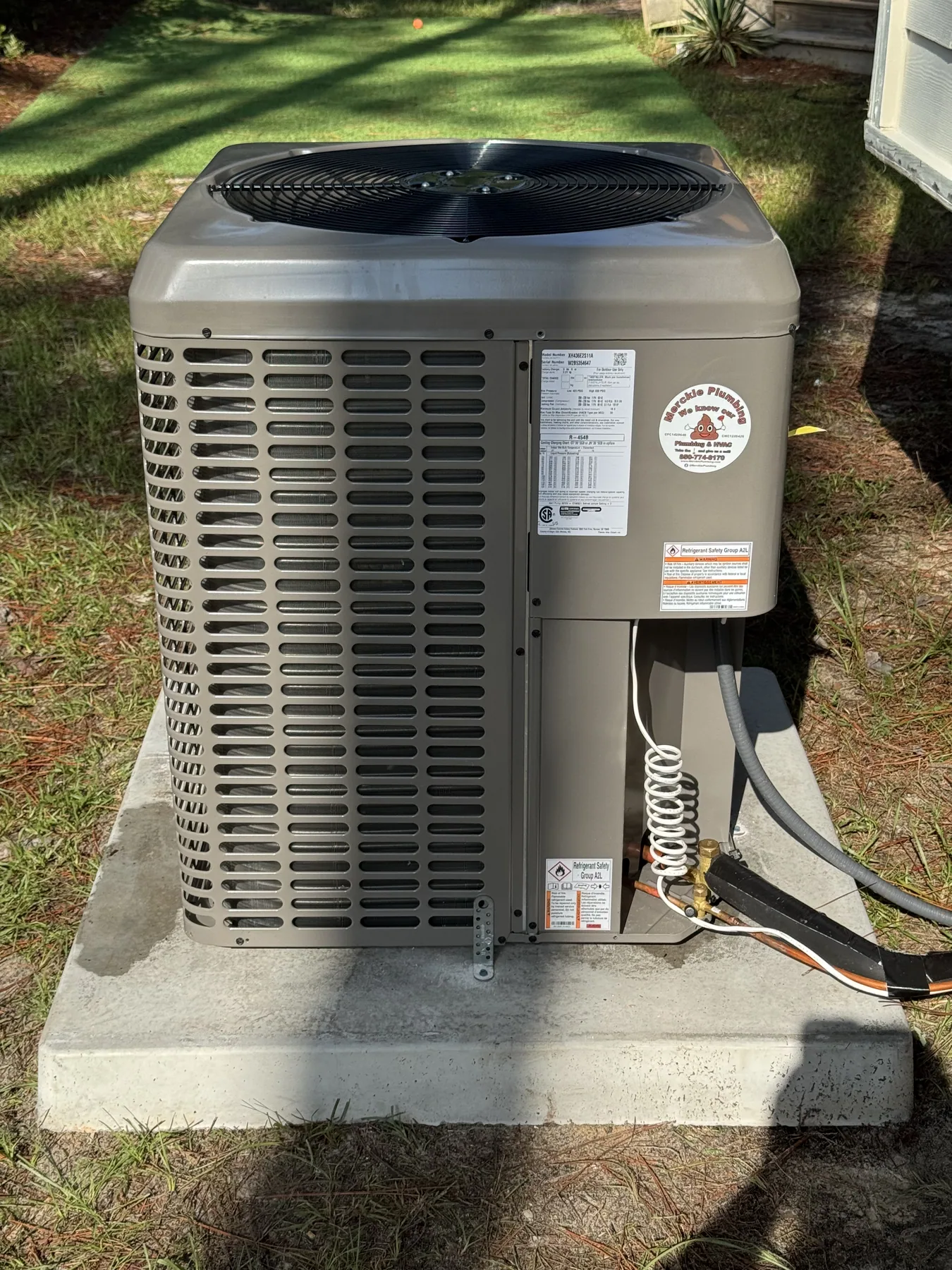
Checking indoor humidity alongside the filter fit at the return, where most air quality problems start.
Get it looked at
We measure humidity and airflow before recommending equipment, because most damp house complaints have a mechanical cause. Call 850-318-5777.
- Answered 24 hours, 7 days
- Licensed CFC1429646 and CMC1250426
- Repair first, always
Prices for every maintenance plan are posted, so you know the cost before booking.
How We Approach It
- Measure the conditions
Temperature and relative humidity in several rooms, so we know whether we are chasing moisture, particulate, or both.
- Check the filtration honestly
Filter type, fit and static pressure. A filter the system cannot breathe through is doing harm, not good.
- Look at run time and coil performance
Short cycling and poor moisture removal at the coil explain most damp house complaints.
- Inspect the duct and return side
Leaks that import attic air are usually the cheapest high impact fix available.
- Discuss the options that fit
Whole home dehumidification, better filtration, ventilation, or UV where it makes sense. We will say plainly which ones your house does and does not need.
- Verify afterward
We come back to the numbers so you can see whether the humidity actually moved.
Air Quality Work Along the Gulf
Humidity is the shared story from Inlet Beach to Panama City Beach. Coastal homes in Santa Rosa Beach, Seagrove Beach, Seaside, WaterColor, Grayton Beach, Miramar Beach and Destin sit in air that carries moisture year round, and second homes that sit empty between visits are especially prone to damp problems because nobody is there to notice the humidity climbing.
Around Freeport, Point Washington, Choctaw Beach and inland toward DeFuniak Springs, Paxton, Ponce de Leon, Westville, Vernon, Ebro and Caryville, we see the same moisture mechanics with different housing stock. Niceville, Valparaiso and Eglin Air Force Base are on our regular route. Call 850-318-5777.
Home base is Freeport, and from there we’re regularly in Miramar Beach, Destin, Santa Rosa Beach, Niceville, Point Washington, Valparaiso, Eglin Air Force Base, Caryville, Vernon and Ebro. The rest of our range is listed on the service area page.
Questions we get about this
What humidity should I keep the house at?
Somewhere in the range of forty five to fifty five percent relative humidity is comfortable and discourages mold and dust mites. Above sixty percent is where problems start showing up. A cheap hygrometer on a shelf will tell you where you stand.
Will an air purifier fix a musty smell?
Usually not, because a musty smell in this climate almost always traces to moisture somewhere: a wet coil, a clogged condensate line, a sweating duct, or growth in the air handler cabinet. Masking it with a purifier leaves the water where it is.
Do I need a whole home dehumidifier?
Some houses genuinely benefit, particularly tight newer homes and coastal properties that sit vacant between visits. But we look at cycling, duct leakage and coil performance first, because those are cheaper to correct and often solve the problem outright. We will tell you what it takes.
Is a higher MERV filter always better?
No. A filter more restrictive than the equipment was designed for raises static pressure, cuts airflow, and can hurt both comfort and dehumidification. We check the pressure and pick a filter the system can actually pull through, then make sure it seals in the grille.
Are UV lights worth it?
They have a real and narrow use, which is keeping biological growth off the evaporator coil and in the drain pan. That matters here, because our coils stay wet for months. What they do not do is meaningfully clean the air moving through your rooms, and anybody telling you otherwise is overselling.
My condensate line keeps clogging. Is that related?
Directly. Because the AC runs nearly continuously through our long cooling season, the condensate line never dries out between cycles, so algae and slime grow inside it. That is why clogs are so much more common here than in dry climates, and it is exactly the kind of overlap where holding both a plumbing and a mechanical license helps.
Related HVAC work
- Emergency HVAC
- HVAC Repair
- HVAC Installation
- AC Repair
- Furnace Repair
- Furnace Installation
- Furnace Tune-Up
- Heat Pump Service
- Air Balancing
Every heating and cooling service we offer is on the HVAC page. If your system is doing something you can’t put a name to, call 850-318-5777 and describe the noise or the temperature. Past jobs are in the gallery, and the contact form works for anything that can wait.