Dirty Coils Are the Most Expensive Thing on Your Roof
Coil, blower, drain pan and duct cleaning at commercial scale. A clean system moves the air it was designed to move and costs less to run.

Heat transfer is the whole job of a coil. Air passes across thin metal fins, gives up its heat to the refrigerant inside, and comes out cold. Put a layer of dust, grease or salt residue on those fins and you have insulated the exact surface that was supposed to be transferring heat. The system runs longer to reach the same temperature, and longer runtime is the energy bill.
On a big commercial system that penalty scales up fast. A rooftop unit serving a restaurant dining room might run twelve or fourteen hours a day in July. Every point of efficiency you lose to a fouled condenser coil gets multiplied by all those hours, across every unit on the building.
Cleaning covers more than the coil. Blower wheels load up and lose capacity, drain pans grow biofilm, and duct interiors collect whatever the filters missed. We clean the parts that actually change how the system performs, and we tell you which ones on your building were the real problem.
Signals the System Needs Cleaning
- Energy costs up with no change in occupancy or weather
- Weak airflow at diffusers that used to feel strong
- A musty smell in the space when the system first kicks on
- Visible dust or grey streaking on ceiling diffusers
- The unit runs constantly and still struggles on hot afternoons
- Standing water or slime in a drain pan
- High head pressure showing up on service calls
A fouled coil doesn’t break the system. It just quietly bills you every month.
What Fouls Commercial Equipment Here
Salt is the big one near the water. Salt-laden air carries onto condenser coils and combines with dust into a crust that both insulates the fins and corrodes them. Buildings in Miramar Beach, Grayton Beach and Panama City Beach get this year round, and a rooftop unit takes it with no shelter at all.
Grease is the other one, and it comes from kitchens. Vaporized cooking oil that gets past a hood filter migrates and settles, and once it is on a coil or a blower wheel it holds every particle of dust that touches it. Restaurant equipment fouls far faster than office equipment for exactly this reason.
Then there is our humidity. Because the coil stays wet nearly continuously through the long cooling season, anything that lands on it sticks and stays damp. That is a growing environment, which is where the musty smell in the first minute of operation comes from, and why drain pans and lines need attention on the same visit.
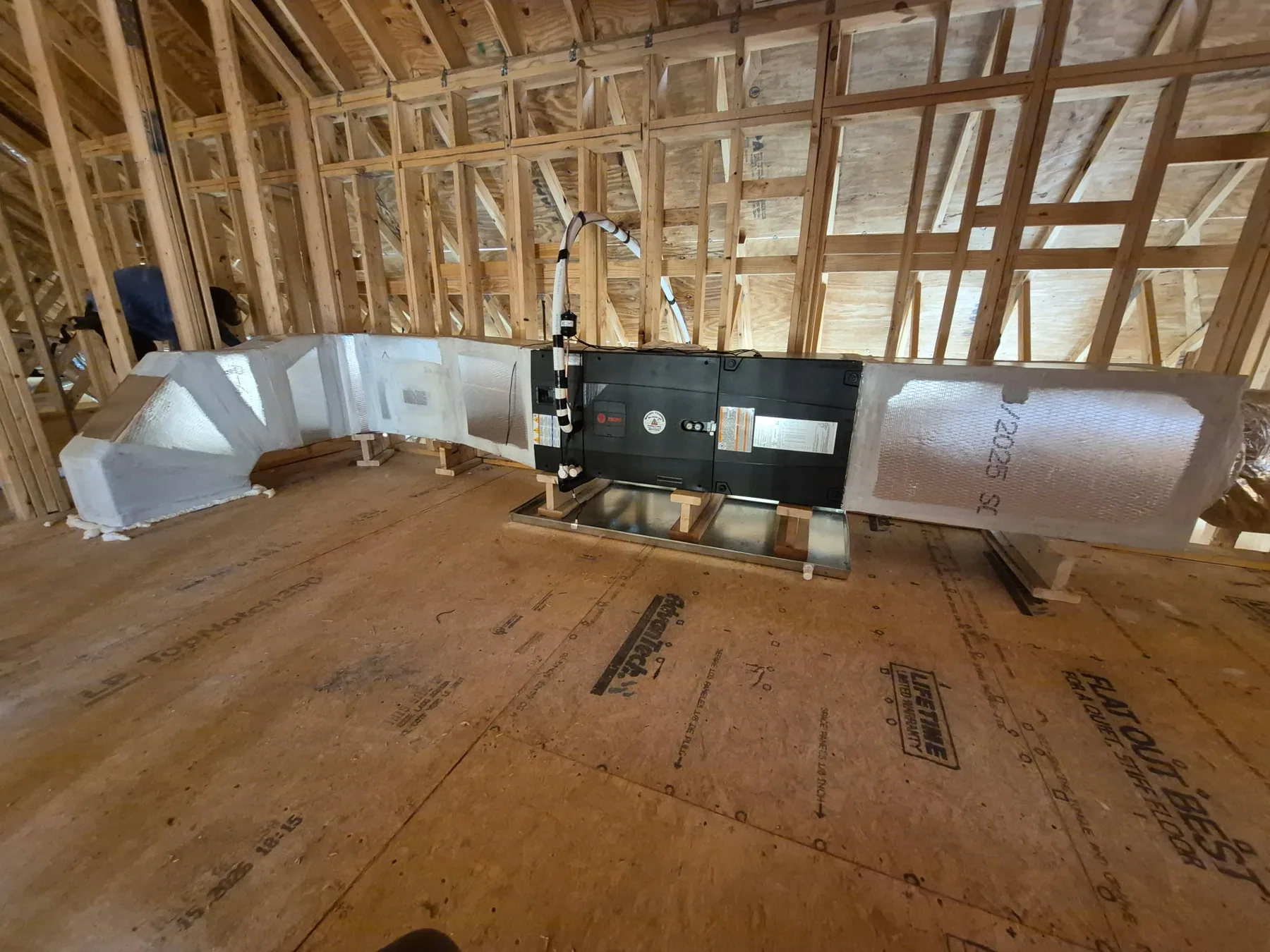
Condenser coil on a coastal rooftop unit, mid-cleaning, with salt and dust fouling still visible on the untouched half.
Commercial work
Bills climbing and airflow dropping? Call 850-318-5777 and we will look at the coils and tell you what it costs to put it right.
- Answered 24 hours, 7 days
- Licensed CFC1429646 and CMC1250426
- Repair first, always
Prices for every maintenance plan are posted, so you know the cost before booking.
How We Clean a Commercial System
- Assess and document
We open the unit, photograph the condition of the coils, blower and pan, and show you what we are working with before anything is touched.
- Protect the space
Containment where we need it, especially in occupied buildings and anywhere near food service. The mess stays in the equipment room.
- Clean the coils
Appropriate coil cleaner and a rinse, worked through the fin pack rather than sprayed at the face, so the debris comes out instead of packing deeper.
- Blower, pan and drain
The blower wheel gets cleaned, the pan gets cleared and treated, and the condensate line gets flushed so it drains the way it should.
- Ductwork where warranted
If the duct interior is genuinely part of the problem we clean it. If it isn’t, we say so rather than selling you a service you don’t need.
- Re-check performance
Temperature split and airflow get read again so there is a measured before and after, not only a clean-looking photo.
Cleaning Coastal and Inland Commercial Systems
Coastal buildings are on a different schedule than inland ones. A rooftop condenser in Seaside or Inlet Beach picks up salt continuously, so those units need attention more often than the same equipment sitting in DeFuniak Springs or Vernon. A freshwater rinse between full cleanings goes a long way and we will show your maintenance staff how to do it.
Restaurants along 30A and in Destin get the heaviest fouling we see, kitchen and dining side both. We schedule those cleanings between service periods or on a closed day, and we work with the kitchen exhaust side of the building too, so the source of the grease and the equipment it is fouling get handled by the same contractor.
Beach-side calls take us to Santa Rosa Beach, Miramar Beach and Destin. Away from the beaches we’re in Freeport, Point Washington, Niceville, Valparaiso and Eglin Air Force Base, and farther up in Ebro, Vernon and Caryville. See the whole service area for more.
Questions we get about this
How often should commercial coils be cleaned?
It depends on the building. Kitchen equipment and coastal rooftop units foul fastest and need it more often than an inland office system. We look at your equipment and give you an interval based on what we actually find in it.
Will cleaning really lower our energy bill?
Cleaning a genuinely fouled coil restores heat transfer, which cuts runtime, and runtime is what you pay for. We take temperature and pressure readings before and after so you can see the change rather than take our word for it.
Do you have to clean the ductwork too?
Not always. Duct cleaning gets oversold in this industry. We inspect it and recommend it when the duct interior is genuinely contributing to the problem, and we skip it when it isn’t.
Can you do this while we are open?
Coil cleaning involves water and cleaner, so for restaurants and occupied spaces we schedule it outside service hours. Give us your window and we will work inside it.
Does cleaning help with the musty smell?
Usually, because that smell almost always comes from a wet coil, a dirty drain pan, or a slow condensate line. Cleaning all three at once is what actually clears it, which is why we do them together.
Related HVAC work
- Commercial Equipment Installation
- Commercial Duct Leakage Testing
- Commercial Duct Sealing
- Thermal Imaging
- Kitchen Ventilation
- Ventilation Design
- Rooftop HVAC
- Commercial HVAC System Diagnostics
- Commercial HVAC Service
If the job you need isn’t on this page, the HVAC services list probably has it. You can also see the gallery, or call 850-318-5777 and tell us what’s going on. A short note works too if you’d rather not call.