
Replacing Heating Equipment Without the Upsell
Before you buy a furnace in Northwest Florida, it is worth asking whether a furnace is the right piece of equipment for this climate at all.
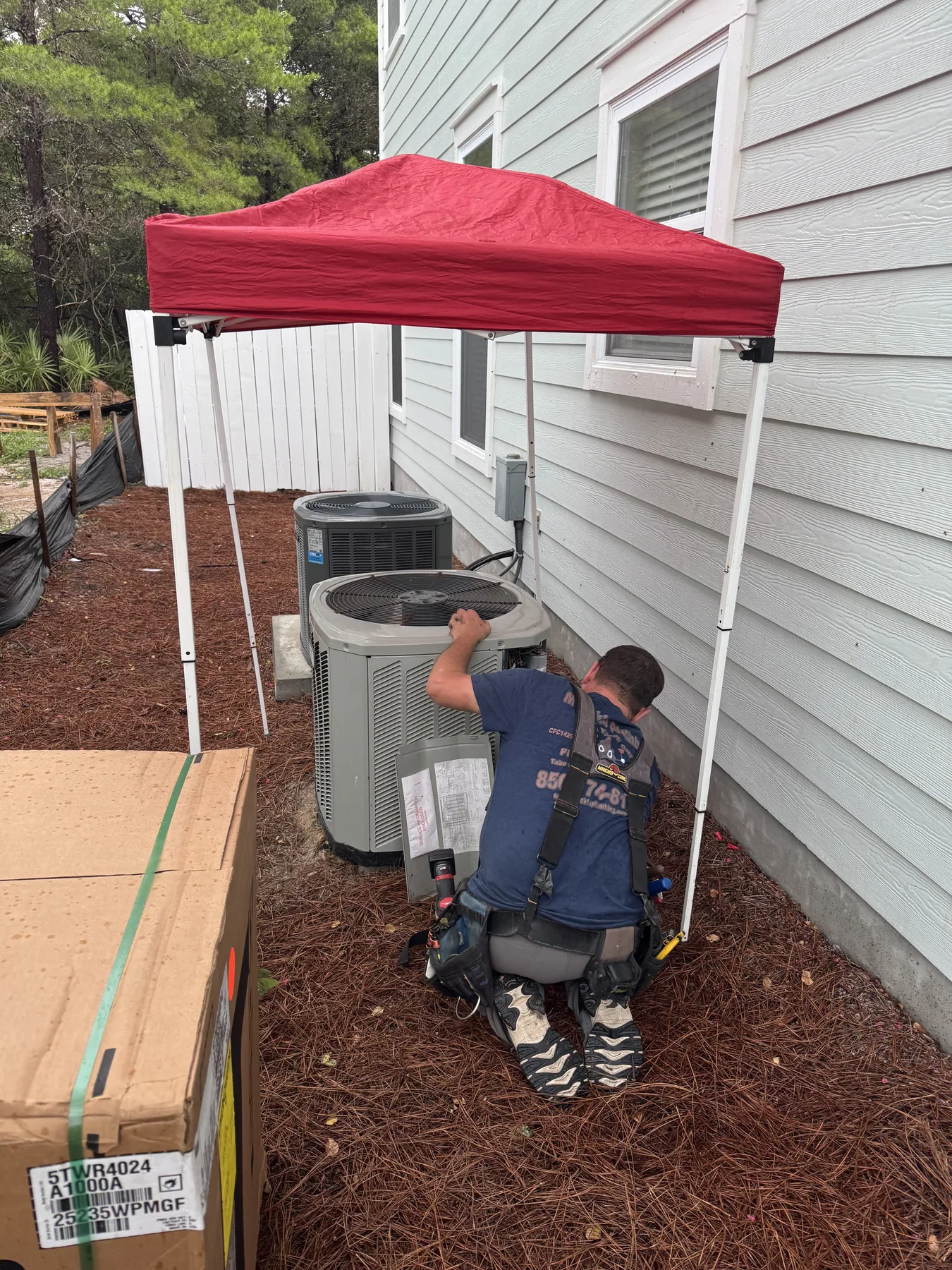
Heating equipment gets sized and selected for the climate it will live in. Our winters are mild and short, which changes the math considerably compared to states where a furnace carries the house for five months. Spending heavily on high output heating capacity that runs a few weeks a year is often money that would do more good spent on the cooling side, where the equipment works constantly.
That is why this conversation usually starts with what you have and what the house needs, not with a model number. Some homes genuinely want a gas furnace, particularly where gas service already exists and the owner prefers that kind of heat. Many more are better served by a heat pump, which handles nearly the entire heating season here efficiently and gives you cooling from the same equipment.
Whatever the answer, the install details are what determine whether it works. Correct venting on gas equipment, adequate combustion air, properly sized electrical for strip heat, and ductwork that can actually carry the airflow. Those are the parts nobody sees and the parts that cause problems years later when they are done carelessly.
Reasons People Replace Heating Equipment
- The heat exchanger has cracked, which takes the unit permanently out of service
- Parts for the existing furnace are discontinued or take weeks to source
- The equipment is oversized and cycles the house between too warm and chilly
- You are replacing the cooling side and the two components need to be matched
- Backup heat carries most of the load, which costs far more than it should here
- A remodel or addition changed the load the old equipment was sized for
Buying heating capacity for a northern winter in a climate that never has one is wasted money.
Choosing the Right Heat For Here
Heat pumps deserve first consideration in this region. A heat pump moves heat rather than creating it by burning fuel or running resistance coils, and it does that efficiently as long as outdoor temperatures stay reasonable. Northwest Florida winters sit comfortably in that range the vast majority of the time. Federal minimums put heat pumps at 14.3 SEER2 and 7.5 HSPF2, and because our systems run so many cooling hours, the same box earning its keep in both seasons is usually the strongest value in the house.
Gas furnaces still make sense in specific situations. If you already have gas service, prefer the character of gas heat, or have a home where the ductwork and equipment room were built around a furnace, replacing in kind can be the right call. Gas installs carry requirements that must be respected, correct venting, proper combustion air, and gas piping sized to the appliance. Holding both a plumbing and a mechanical license means the gas piping side does not get subcontracted out or ignored.
Electric strip heat is the third path, usually as backup to a heat pump rather than as the primary source. It is inexpensive to install and expensive to run, which is a fine tradeoff for something that only fires on the coldest mornings and during defrost cycles. It is a poor tradeoff for anything that runs regularly, so the strip stage gets sized and staged for the role it actually plays.
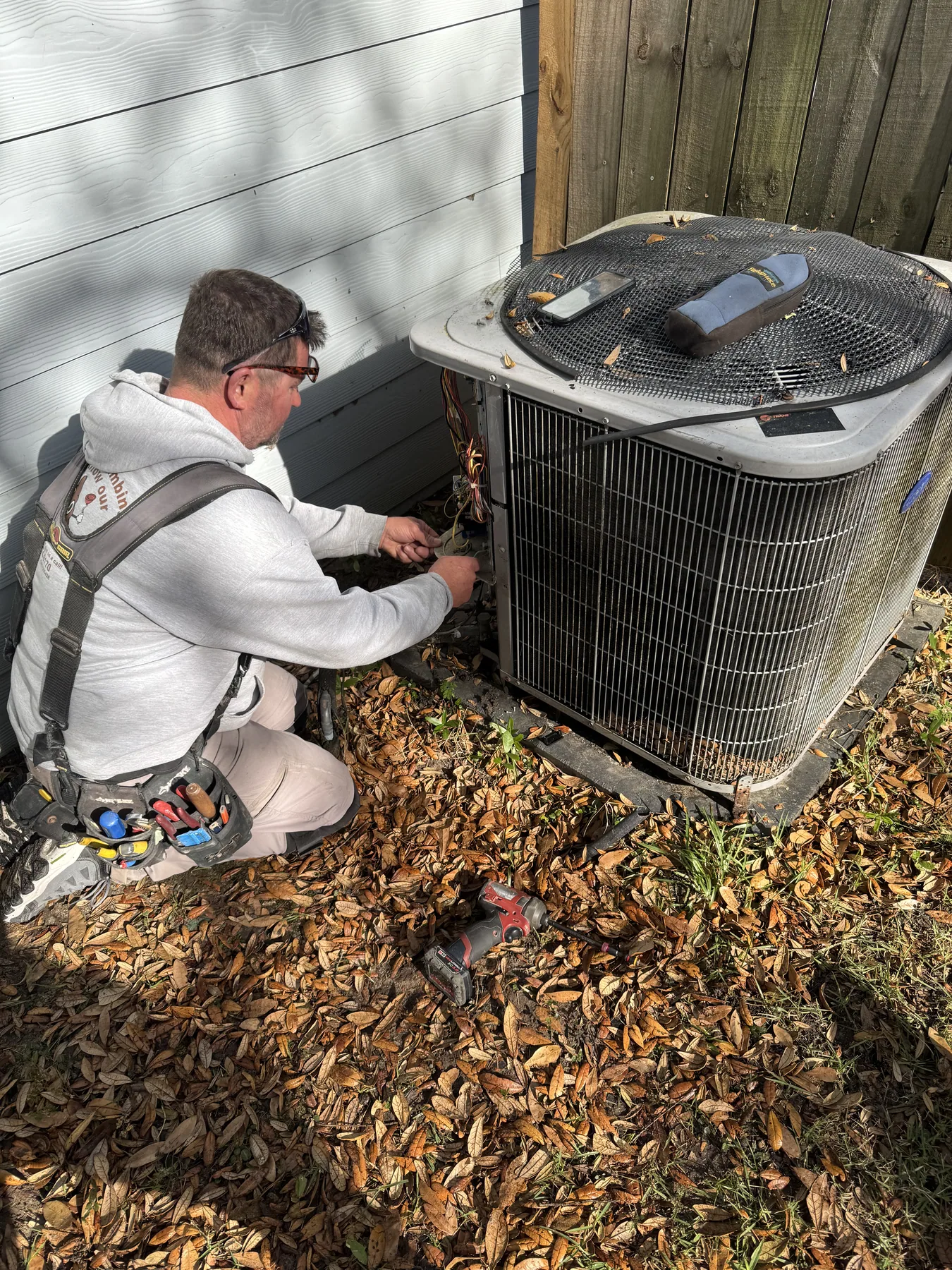
Setting new indoor heating equipment and connecting duct and electrical during a system replacement.
Get it looked at
Ready to replace heating equipment? Call 850-318-5777 and we will walk the house and tell you what it takes.
- Answered 24 hours, 7 days
- Licensed CFC1429646 and CMC1250426
- Repair first, always
Seniors and military members get 5% off our maintenance plans.
The Install, Start to Finish
- Talk about how you heat
How the house has felt in past winters, what your bills have looked like, and whether backup heat has been carrying more than it should.
- Match equipment to the climate
We lay out gas, heat pump, and strip options with the honest tradeoffs for a mild climate, including which one we would put in our own house and why.
- Give you a straight number
Each option gets a clear price and a clear explanation. You take the time you need. There is no expiring offer here.
- Prepare the space
Old equipment out, and the electrical, gas piping, venting, drain and duct connections all brought up to what the new unit requires.
- Set and connect
New equipment set level and secured, connections made properly, controls wired, and every safety confirmed operational.
- Test through a full cycle
Heat gets run through complete cycles, staging is verified, temperature rise measured, and on gas equipment combustion and venting confirmed before we call it finished.
Heating Installs From the Coast to the County Line
Working out of Freeport we install heating equipment across Walton County, from Santa Rosa Beach, Miramar Beach, Point Washington and the 30A communities of Seaside, WaterColor, Grayton Beach, Seagrove Beach and Inlet Beach, north to DeFuniak Springs, Paxton and Choctaw Beach. Coastal homes lean heavily toward heat pumps because the heating load is so light. Homes further north see genuinely colder mornings and sometimes justify a different setup.
We install through Niceville, Valparaiso, Destin and Eglin Air Force Base as well, and out to Ebro, Vernon, Caryville, Westville, Ponce de Leon and Panama City Beach. Older homes in the inland communities are where we run into most of the remaining gas furnaces, and those installs need the gas piping and venting handled by somebody licensed to do both sides of the work.
Not sure we reach you? Regular stops include Valparaiso, Ebro, Santa Rosa Beach, Destin, Vernon, Point Washington, Niceville, Caryville, Miramar Beach, Eglin Air Force Base and our hometown of Freeport. If your town isn’t named, the full service area list will settle it.
Questions we get about this
Should I install a gas furnace or a heat pump?
In this climate a heat pump is usually the better fit. Winters here are mild enough that a heat pump handles almost the whole heating season efficiently, and it gives you cooling from the same equipment during the long season that actually matters here.
Gas still makes sense if you already have service and prefer it. We will lay out both honestly rather than steering you.
How long does a heating installation take?
A straight replacement is generally a single day. Adding venting, running new gas piping, upgrading electrical for strip heat, or modifying ductwork can push into a second day. We tell you which before we start.
Can you handle the gas piping too?
Yes. The same license holder covers both plumbing and mechanical work here, so gas piping, venting and the equipment itself are all handled by one contractor rather than coordinated across two.
Do I need to replace heating and cooling at the same time?
Not necessarily, though if you have a heat pump they are the same equipment and the question answers itself. With separate components, matching matters. We will tell you honestly whether pairing new with existing will actually perform or just create a mismatch.
Is a bigger furnace better for cold snaps?
No. Oversized heating equipment short cycles, which means uneven temperatures, more wear, and no real benefit during the few genuinely cold nights we get. Correct sizing gives you steadier heat and longer equipment life.
Will you pull permits?
Yes, we pull whatever the local jurisdiction requires and handle inspection. We also register the equipment with the manufacturer so your warranty coverage is genuinely in force.
Related HVAC work
- Furnace Tune-Up
- Heat Pump Service
- Air Balancing
- Evaporative Coolers
- Smart Thermostat Installation
- Air Duct Cleaning
- Air Balancing Analysis
- Duct Leakage Testing
- Duct Sealing
Not seeing it? The full list is on the HVAC page, or just call 850-318-5777 and describe it. You can also see the work or send a note.