One Leak Upstairs Becomes Three Units Downstairs
Multi-unit buildings share risers and stacks, so a failure in one apartment is rarely contained to it. That geometry drives how this work has to be done.

The defining feature of apartment and condo plumbing is stacking. Units sit in vertical columns sharing supply risers and drain stacks, which means the plumbing in unit 401 is physically connected to 301, 201 and 101. A supply failure travels down. A drain stack blockage backs up into the lowest unit on the stack, which is almost never the unit that caused it.
That changes every decision. Shutting water to make a repair may affect an entire column of residents rather than one household, so isolation and scheduling matter enormously. Diagnosing a leak means figuring out which unit it originated in, which is a different question from which unit is wet. And the resident whose ceiling is stained is usually not the resident whose plumbing failed.
The other constant is turnover. Vacant units are the only real window to do work that would otherwise require resident coordination, so smart properties bundle repairs, replacements and inspections into turnover days. Missing that window means either waiting for the next one or scheduling access with a resident, which is slower and less predictable.
Patterns worth acting on
- A stain appearing on a ceiling in a unit whose own plumbing is fine
- The lowest unit on a stack backing up while the ones above drain fine
- Several units in the same vertical column reporting low pressure
- Repeat maintenance tickets for the same stack over multiple months
- Water heater failures clustering in units built or renovated the same year
- Odor in a stairwell or common hall rather than in a specific unit
- A unit that’s been vacant a while showing drain odor at turnover
In a stacked building, the wet unit and the broken unit are usually not the same unit.
Why multi-unit buildings fail the way they do
Shared stacks concentrate risk. A single drain stack serves every kitchen or every bathroom in a column, so anything that restricts it affects all of them, and it manifests at the bottom where the hydraulics dictate. Residents on the ground floor end up reporting problems caused four stories up, which is why chasing the complaint instead of the stack wastes so much time in these buildings.
Age uniformity is the second factor. Everything in the building was installed at the same time by the same crew with the same materials, so components reach the end of their lives on roughly the same schedule. When water heaters or supply lines start failing in one unit, the identical ones in every other unit are on the same clock. That’s a budgeting reality more than a plumbing one, and it’s much better to know it early.
Along the coast, occupancy swing adds real stress. Condo and rental buildings around Santa Rosa Beach, Miramar Beach and the 30A towns can sit lightly used through shoulder season and run completely full in season. Lines that sit stagnant then get hammered at full simultaneous demand, and that cycle finds weak joints, tired valves and undersized risers faster than steady occupancy ever would.
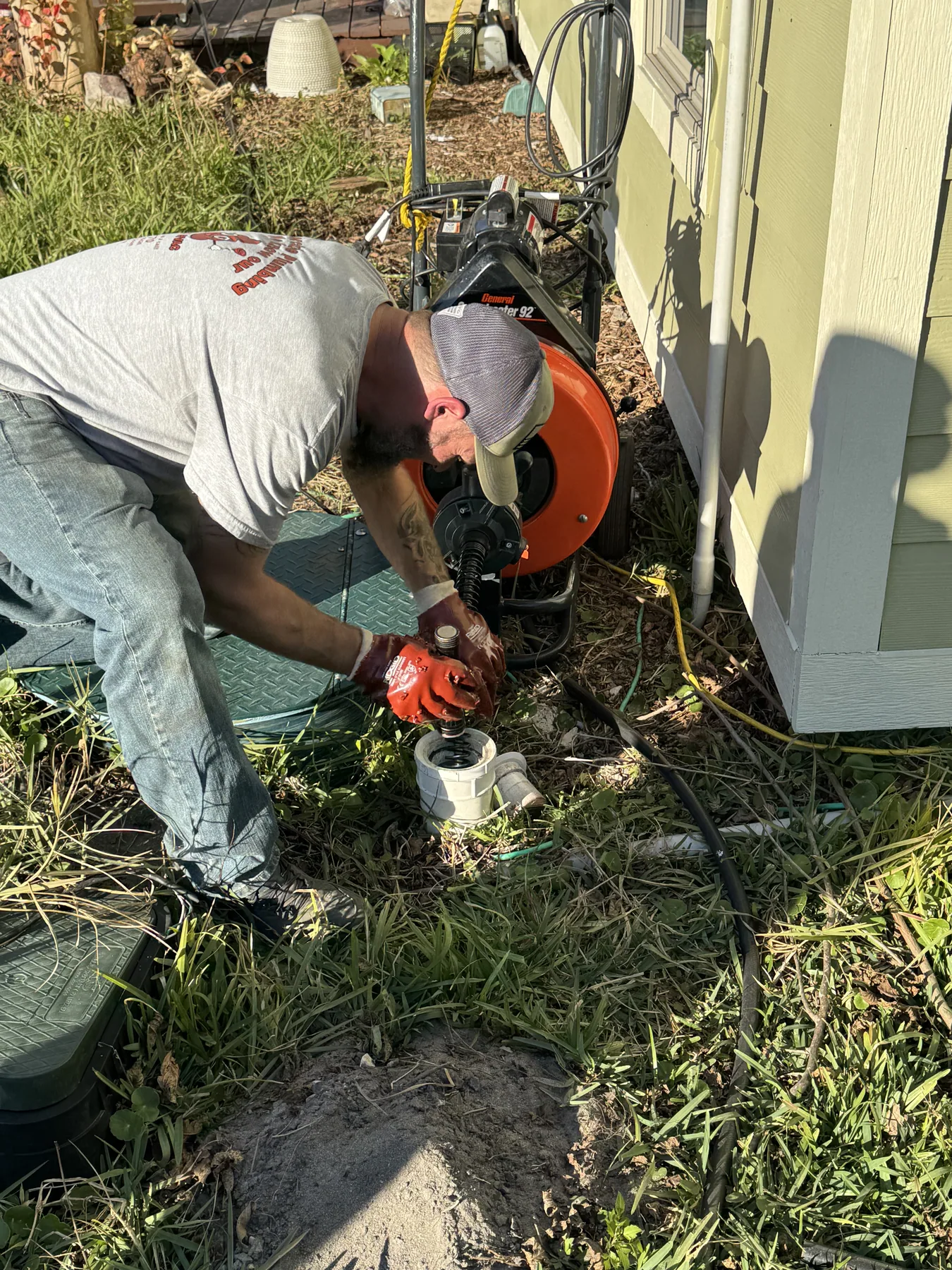
Isolating a single supply riser in a multi-unit building so the rest of the property kept water during a repair.
Commercial work
Water showing up in a unit that didn’t cause it? Call 850-318-5777 and we’ll trace it up the stack.
- Answered 24 hours, 7 days
- Licensed CFC1429646 and CMC1250426
- Repair first, always
A maintenance plan puts a licensed contractor’s eyes on this before it fails.
How we work a multi-unit property
- Map the building’s stacks
Which units share which risers and stacks, and where the isolation valves are. This is the single most useful thing to have on file before an emergency.
- Trace to the origin, not the symptom
The reported unit is a starting point. We work up the stack to find where the failure actually is.
- Isolate the smallest column
Shutting one riser instead of the building keeps most residents in water and keeps the notification list short.
- Coordinate access properly
Written notice of which units are affected and when, so management isn’t fielding surprise complaints during the work.
- Bundle into turnover windows
Non-urgent work in a vacant unit costs less and disrupts nobody. We’ll flag what should wait for a turnover and what genuinely can’t.
- Report by unit
Documentation showing which units were affected, what was found and what was done, which is what boards, owners and insurers ask for.
Multi-unit properties across Walton and Okaloosa
We service apartment complexes, condo buildings and multi-unit rental properties in Santa Rosa Beach, Miramar Beach, Freeport, Point Washington and the 30A towns of Grayton Beach, Seaside, WaterColor, Seagrove Beach and Inlet Beach. Much of that stock is stacked and rental-heavy, so turnover scheduling and fast riser isolation matter more than anything else we do there.
We also work multi-unit property in Destin, Niceville, Valparaiso, DeFuniak Springs and Panama City Beach. For property managers with several buildings, we’d rather walk each one and record the stack layout and valve locations in advance than figure it out during an emergency with residents standing in a hallway.
Towns we get to most: Freeport, Santa Rosa Beach, Point Washington, Miramar Beach, Niceville, Destin, Eglin Air Force Base, Valparaiso, Ebro, Vernon, Caryville. See the full service area.
Questions we get about this
Can you find which unit a leak came from?
Usually yes, and it matters, because in a multi-unit building the responsibility question follows the origin, not the damage. We work up the stack from where the water shows and use isolation and detection equipment to narrow it down.
You get that finding in writing with photos. It’s the kind of thing that gets disputed between owners, residents and carriers, and a clear record at the time is worth a great deal later.
Do you have to shut water off to the whole building?
Rarely. Most multi-unit buildings can be isolated riser by riser, and that’s always our first approach because it keeps the affected resident list as short as possible.
When a building-wide shut-off genuinely is required, we tell you the window in advance so management can notify residents properly rather than after the fact.
Can you work around unit turnovers?
Yes, and we’d encourage it. A vacant unit is the cheapest and least disruptive time to do anything non-urgent, and rental-heavy buildings around here have predictable turnover calendars.
Give us the schedule and we’ll tell you what’s worth bundling into those windows and what shouldn’t wait.
Several water heaters have failed. Should we replace them all?
Not necessarily all at once, but you should know that identical units installed at the same time tend to fail on a similar schedule. Once a couple go, the rest are on the same clock.
We’ll survey what’s in the building, flag the units at real risk, and help you plan a replacement sequence you can budget for. That’s much better than replacing them one emergency at a time with water damage attached to each one.
Do you provide documentation for the HOA board?
Yes, and for condo associations it’s essential. You get photos, a written description of what was found and repaired, and a unit-by-unit account of what was affected.
Boards have to answer to owners, and a clear written record does that far better than a verbal report from a maintenance call.
Are you available for after-hours emergencies at our property?
We answer 24 hours a day, seven days a week. In a stacked building an active leak damages more units by the hour, so these get treated as urgent regardless of the time.
If your on-site staff knows where the riser valves are, they can cut the loss substantially before we arrive, and we’ll walk them through it on the phone.
Related plumbing work
- Commercial Water Heaters
- Commercial Repiping
- Commercial Leak Detection
- Commercial Leak Repair
- Commercial Water Line Repair
- Commercial Water Line Installation
- Commercial New Construction
- Office Building Plumbing
- Hotel Plumbing
Not seeing it? The full list is on the plumbing page, or just call 850-318-5777 and describe it. You can also see the work or send a note.