
Heat Out on a Cold Snap? We Will Sort It Out
Heating runs a handful of weeks a year here, which is exactly why problems stay hidden until the first genuinely cold night.
Northwest Florida heating is not a northern story. Our heating season is short, and most homes here are not running a gas furnace at all. What we find in the field is mostly heat pumps, sometimes with electric strip heat as a backup, plus a smaller number of true gas furnaces in older or custom homes. All three fail differently, and step one on any no heat call is confirming what you actually have.
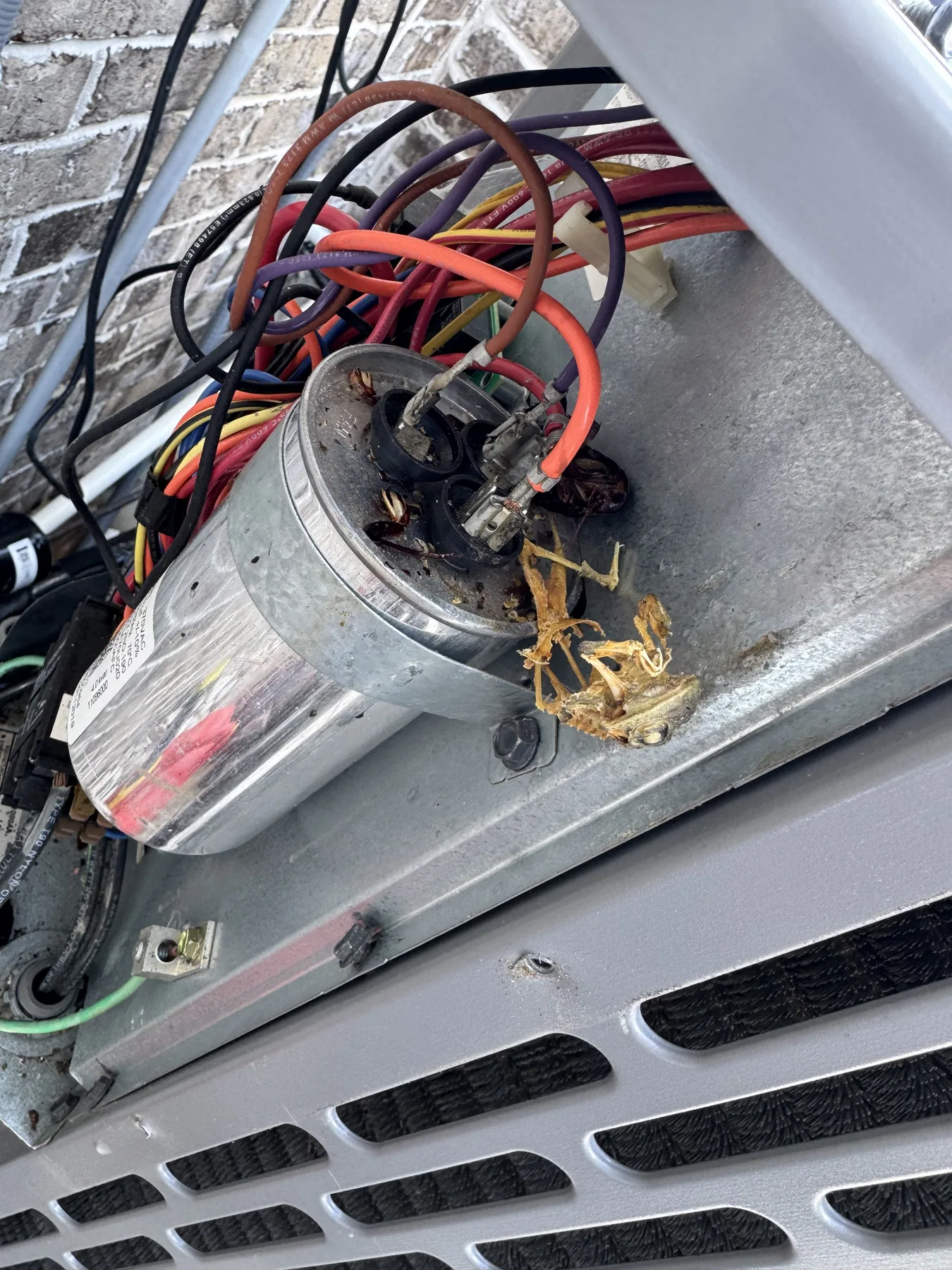
Short runtime creates its own trouble. A system that sat idle from March to December has had months for dust to settle on heating elements, for rodents to find the equipment, and for a component to quietly fail with nobody around to notice. That is why the phone rings all at once on the first cold night in December. Nothing broke that night. It broke sometime in the spring and just got discovered.
Gas equipment adds a safety layer that is not optional. A cracked heat exchanger can let combustion gases into the air you breathe, and a furnace with a genuine exchanger problem gets shut down and red tagged rather than patched. We would rather tell you something unwelcome than leave a hazard running.
Signs the Heat Is In Trouble
- The system blows air that is barely warmer than the room
- A burning dust smell that does not clear after the first ten minutes of the season
- Heat starts, runs briefly, then shuts down before the house gets comfortable
- The furnace tries to ignite repeatedly and locks itself out
- Backup heat runs constantly on mildly cool days when it should not be needed
- Booming or rumbling from the equipment when the burners light
Nothing broke on the first cold night. It broke in the spring and nobody noticed.
Why Heating Fails In a Mild Climate
Ignition and flame sensing cause most gas furnace no heat calls. The flame sensor is a small metal rod that confirms a flame is actually present, and it develops a film of oxidation over time. Once the sensor cannot read the flame properly, the control board does exactly what it should and shuts the gas off. The furnace ends up locking out on repeated ignition attempts, which feels like a dead furnace and is usually a cleaning or a sensor.
Electric strip heat fails around its sequencers and elements. Strip heat is essentially a bank of high resistance coils, staged on by sequencers to avoid slamming the electrical service all at once. Elements burn out and sequencers stick. A stuck sequencer that will not close leaves you with no heat, while one that will not open leaves strips running when they should not, and you find out from the power bill.
Heat pumps in trouble tend to show up as a heating complaint too. If the reversing valve does not shift properly or the outdoor unit cannot pull heat from the air, the system falls back on auxiliary heat and runs it constantly. The house stays warm, so nothing seems wrong, and the bill arrives as the first real evidence. In a climate where the heat pump should be handling almost the whole heating season on its own, aux heat running all the time is a symptom worth chasing.

Checking ignition components and flame sensing on a gas furnace during a no heat call in DeFuniak Springs.
Get it looked at
No heat, or heat that will not keep up? Call 850-318-5777 and we will get it looked at and tell you what it takes.
- Answered 24 hours, 7 days
- Licensed CFC1429646 and CMC1250426
- Repair first, always
Think of a maintenance plan like an oil change for your home.
Getting Heat Back On
- Identify the equipment
Gas furnace, electric strip, or heat pump. What you have determines everything about where we look and what could be wrong.
- Read the fault
Most modern equipment stores a diagnostic code. We pull it, then verify it against actual measurements rather than trusting a blinking light alone.
- Check safeties and ignition
On gas equipment that means the flame sensor, igniter, pressure switch, and limits. On electric it means sequencers, elements, and the contactors feeding them.
- Confirm combustion safety
Any gas appliance gets its heat exchanger and venting inspected. This is not a step we skip because the call was about something else.
- Repair and cycle test
The fix goes in and the system gets run through complete heating cycles to confirm it stages properly and shuts down when it should.
Heating Calls Across Walton and Okaloosa
Cold snaps here arrive fast and do not last long, which means everybody discovers a heating problem in the same 48 hours. We run those calls out of Freeport across Santa Rosa Beach, Point Washington, Miramar Beach, Seagrove Beach, Seaside, WaterColor, Grayton Beach and Inlet Beach, plus DeFuniak Springs, Paxton and Choctaw Beach. Inland communities up toward DeFuniak Springs and Paxton do run colder than the coast, and those homes lean on their heat more than beach houses do.
We also cover Niceville, Valparaiso, Destin, Eglin Air Force Base, Ebro, Vernon, Caryville, Westville, Ponce de Leon and Panama City Beach. Rental properties are worth a mention here, because a house that sits empty through the fall often has heat that has not run since the previous winter, and finding that out with guests already in the door is a bad time to find it out.
Our regular towns, in no special order: Eglin Air Force Base, Vernon, Miramar Beach, Freeport, Caryville, Niceville, Point Washington, Ebro, Destin, Santa Rosa Beach and Valparaiso. Anything else inside our range is on the service area page.
Questions we get about this
Do I even have a furnace?
Many homes here do not. Heat pumps are extremely common in this climate, often paired with electric backup heat, and plenty of people call that whole assembly a furnace. If you are not sure, describe your equipment on the phone and we will figure it out with you.
Why does my heat smell like burning the first time I use it?
Dust settles on heat exchangers and electric elements over a long idle summer and burns off when heat runs again. A faint smell for the first ten or fifteen minutes of the season is normal. A smell that persists, or one that is sharp or electrical, is not, and you should shut it down and call.
My heat runs but the house is not warming up. What now?
On a heat pump that often means the outdoor unit is not producing and the system is limping on backup heat. On gas equipment it can be a partial ignition problem or an airflow restriction. Both need measurements to sort out, and it is worth checking before you get a large power bill.
Is a cracked heat exchanger really that serious?
Yes. A crack can allow combustion byproducts including carbon monoxide into your indoor air. If we find a genuine crack we shut the unit down rather than return it to service. We will show you what we found and explain your options.
Why does my backup heat run so much?
Auxiliary strip heat is expensive to run and, in a climate this mild, should only come on in genuinely cold conditions or during defrost. If it is running regularly, something on the heat pump side is usually underperforming, and that is worth diagnosing.
Should I repair or replace old heating equipment?
Given how few hours heating equipment accumulates here, repair is very often the sensible answer on a unit that would be considered tired up north. We tell you the condition of the equipment honestly and let you decide without a sales pitch attached.
Related HVAC work
- Furnace Installation
- Furnace Tune-Up
- Heat Pump Service
- Air Balancing
- Evaporative Coolers
- Smart Thermostat Installation
- Air Duct Cleaning
- Air Balancing Analysis
- Duct Leakage Testing
From mini-splits to rooftop units, the HVAC page lists all of it. Photos from real installs and repairs are in the gallery. Questions go to 850-318-5777 at any hour, or to the contact form if you’d rather write.