
Find the Leak Without Opening the Whole Building
Your meter says you’re losing water and nothing is visibly wet. We locate the leak before anybody cuts into a floor, a wall, or a tenant’s ceiling.
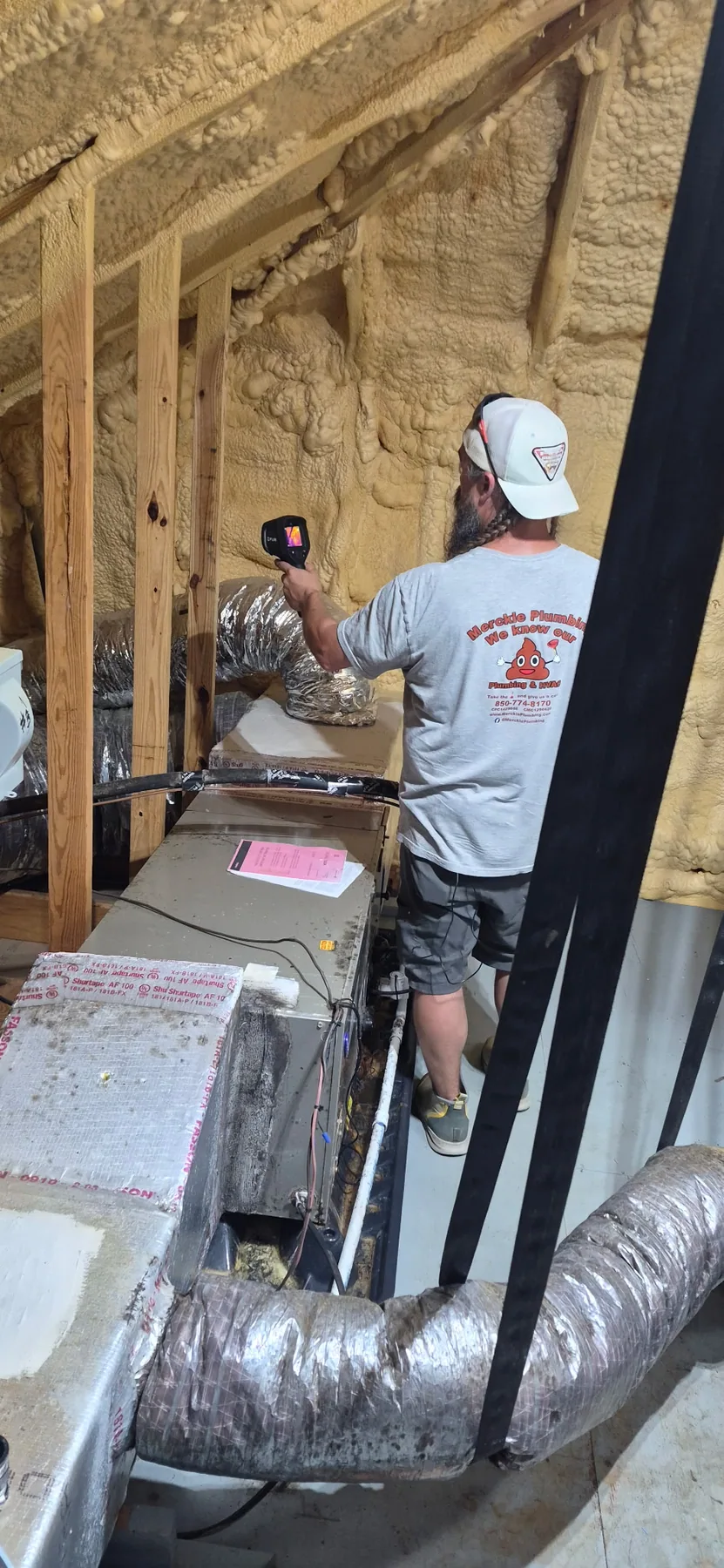
A hidden leak in a commercial building is a location problem. You already know water is escaping, because the meter moves with every fixture closed or the bill jumped without a change in occupancy. What you don’t know is where, and in a building with pipe under slab, inside walls and above ceilings, guessing wrong means demolition in an occupied space for nothing.
Detection works because escaping water makes noise and changes temperature. Pressurized water forcing through a small opening produces a distinct sound that carries through pipe and concrete, and acoustic equipment picks it up and lets us narrow the location by comparing intensity at different points. Thermal imaging finds temperature differences from a hot line leaking or from wet material against dry.
Where a building is complicated, we isolate. Valving off sections and watching the meter tells us which zone is losing water before we ever chase a sound. In a multi-tenant or multi-story building that isolation step is usually what turns a whole-building mystery into a single riser or a single unit.
Evidence you’ve got a hidden leak
- The meter creeps with every fixture in the building shut off
- A water bill that climbs without a matching change in occupancy
- A warm spot on a floor slab, which points at a hot line below
- Pressure noticeably down at fixtures across multiple units
- Sound of running water inside a wall or ceiling when nothing is on
- Musty smell, staining or bubbling paint in a hallway or ground floor unit
- Landscaping or paving that stays wet with no irrigation running
Guessing at a slab leak costs more in concrete and drywall than the detection would have.
Why leaks hide so well in Florida buildings
Slab-on-grade construction is standard here, and it means supply lines run under the concrete. There’s no crawlspace to inspect and no visual access at all. Water escaping under a slab travels along the path of least resistance, which is often nowhere near where it finally surfaces, so the wet spot in a corner may be nothing like where the pipe actually failed.
In multi-story buildings, gravity does the same trick vertically. A pinhole on a fourth-floor riser can run down inside a wall cavity and show up as a stain on the second floor. Cutting open the second floor ceiling finds wet insulation and no leak. That’s the exact scenario detection equipment prevents, and it’s common in the stacked condo and rental stock along the coast.
The reason small leaks matter so much here is the humidity. With dew points in the high 60s to low 70s through the long summer, materials that get wet inside a wall don’t dry out. They stay damp, and damp cavity space in a commercial building becomes a mold and liability problem long before the water damage itself gets expensive.
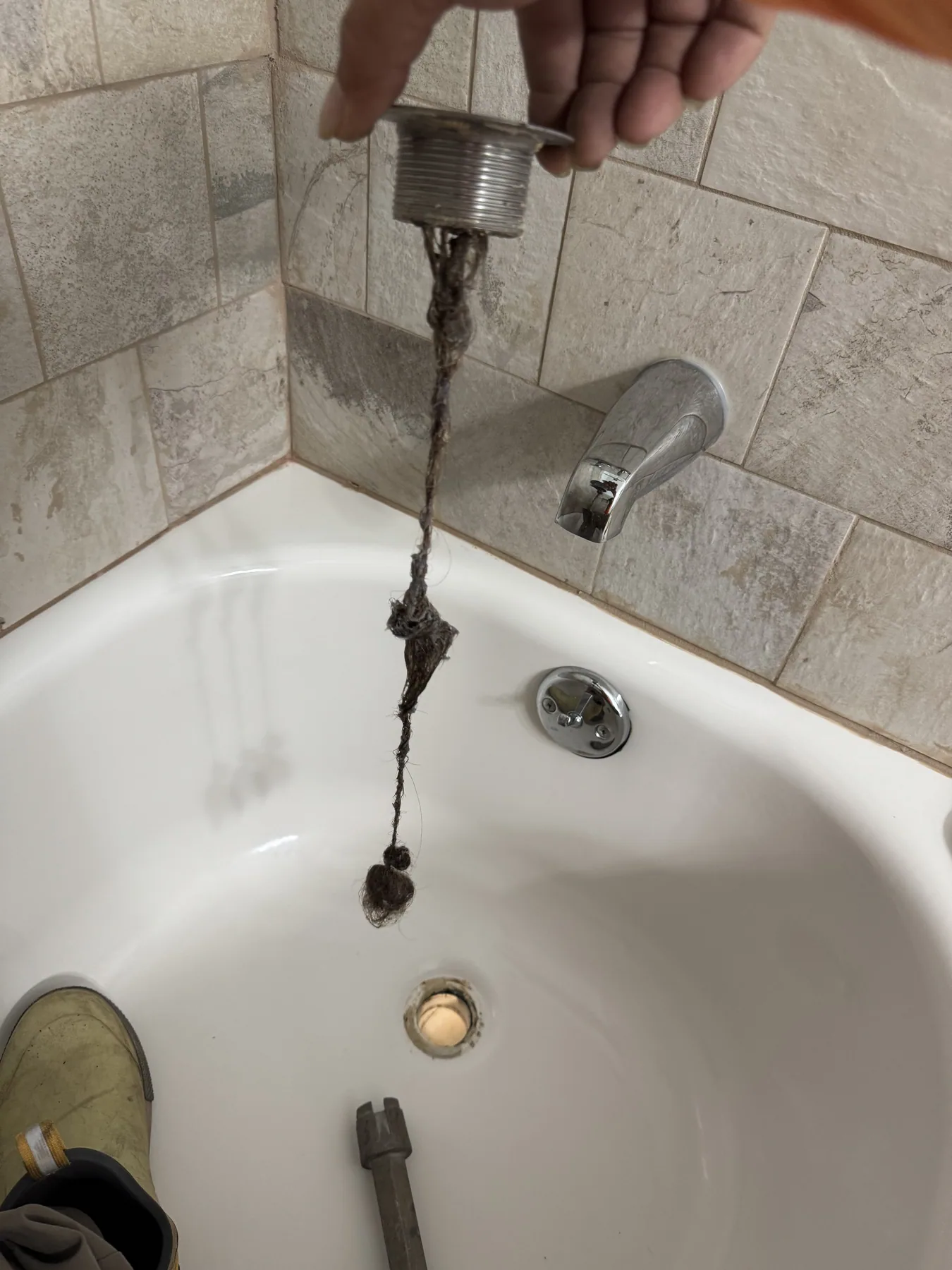
Acoustic listening equipment pinpointing an under-slab supply leak at a commercial property in Walton County.
Commercial work
Meter moving with everything shut off? Call 850-318-5777. We’ll find it before anybody opens a floor.
- Answered 24 hours, 7 days
- Licensed CFC1429646 and CMC1250426
- Repair first, always
Prices for every maintenance plan are posted, so you know the cost before booking.
How we narrow it down
- Confirm and quantify at the meter
Before anything else, we verify the loss is real and get a sense of scale, because that shapes how we search.
- Isolate by zone
Valving off sections and rechecking tells us which part of the building is losing water and takes the rest off the table.
- Listen and image
Acoustic gear on the pipe and the slab, thermal imaging where temperature differences will show, sometimes pressure testing an isolated section.
- Mark the spot
We put the location on the floor or wall with a note on depth and direction, so any access opening is as small as it can be.
- Explain the repair options
Spot repair through the slab or reroute overhead, with the honest tradeoff between them for your building and your tenants.
Locating leaks across the Panhandle
We do commercial leak detection in Freeport, Santa Rosa Beach, Point Washington, Miramar Beach and throughout the 30A towns including Grayton Beach, Seaside, WaterColor, Seagrove Beach and Inlet Beach. Multi-unit rental and condo buildings there are where hidden leaks cause the most trouble, because one leak upstairs becomes several unhappy units downstairs.
We also work Destin, Niceville, Valparaiso, Eglin AFB, DeFuniak Springs, Paxton, Ponce de Leon, Westville, Ebro, Vernon and Panama City Beach. Slab-on-grade is nearly universal across all of it, which is why detection equipment does the finding around here and a visual inspection almost never will.
Beach-side calls take us to Santa Rosa Beach, Miramar Beach and Destin. Away from the beaches we’re in Freeport, Point Washington, Niceville, Valparaiso and Eglin Air Force Base, and farther up in Ebro, Vernon and Caryville. See the whole service area for more.
Questions we get about this
Do you have to break concrete or open walls to find it?
No, that’s the whole point of the equipment. Acoustic and thermal tools locate the leak first so any opening we make afterward is deliberate and as small as possible.
The expensive version is the opposite order: cutting into a slab or a tenant’s ceiling based on where the water showed up, which frequently isn’t where the pipe failed.
Can you tell which tenant’s line is leaking?
Usually yes, and in a multi-tenant building that question matters a lot for who’s responsible for the repair. Zone isolation combined with acoustic work generally narrows it to a specific line or unit.
We put that in writing with the findings, because it’s the kind of thing that gets disputed later between owners, tenants and insurers.
How accurate is the location?
Close enough that access is a small opening rather than exploratory demolition. Depth, pipe material and what’s above the line all affect precision, and we’ll be straight with you about confidence rather than overselling it.
If a building’s conditions make acoustic work unreliable, we’ll say so and use isolation and pressure testing to narrow it down another way.
Should we just repair it or reroute?
It depends on how many failures the building has had. A single leak in otherwise sound pipe is usually a spot repair. A line that’s already failed more than once is telling you the rest of it is on the same path, and rerouting overhead often costs less than the third repair plus the damage.
We’ll lay out both with real numbers and let you decide, rather than deciding for you.
Will you provide a report for insurance?
Yes. Photos, the equipment findings, the marked location and a written summary of what we determined. Carriers and property owners want documentation of the cause and location, and having it from the detection stage rather than reconstructing it afterward makes claims much easier.
Related plumbing work
- Hotel Plumbing
- Commercial Emergency Plumbing
- Commercial Drain Cleaning
- Commercial Sewer Repair
- Commercial Hydro Jetting
- Backflow Installation
- Commercial Water Heaters
- Commercial Repiping
- Commercial Leak Repair
Not seeing it? The full list is on the plumbing page, or just call 850-318-5777 and describe it. You can also see the work or send a note.