The Most Common Heating System on This Coast
A heat pump does not make heat. It moves heat, and in a climate with winters this mild that is why nearly everybody here has one.

Here is the mechanism, because it explains almost everything else about these systems. A furnace creates heat by burning fuel or running electricity through resistance coils. A heat pump does neither. It uses refrigerant to absorb heat from one place and release it in another, exactly like your air conditioner does. The difference is that a heat pump can run that cycle in either direction. In summer it pulls heat out of your house and dumps it outside. In winter it pulls heat out of the outdoor air, even air that feels cold to you, and brings it inside.
Moving heat takes far less energy than making it, which is why heat pumps dominate in mild climates. Northwest Florida winters sit right in the range where a heat pump does its best work, so the same equipment cools you all summer and heats you through the short cool season without a separate furnace in the picture at all.
The part that gets misunderstood is the auxiliary heat. Most heat pumps here include electric strip heat as a backup for genuinely cold mornings and for defrost cycles. Strips are expensive to run. When a heat pump underperforms, the system quietly leans on those strips instead, the house stays warm, nothing seems wrong, and the power bill is the only evidence that anything is off.
Heat Pump Behavior Worth Investigating
- The emergency or auxiliary heat indicator stays on during ordinary cool weather
- The system heats fine but cools poorly, or the other way around
- A loud whoosh or clunk when the system switches between heating and cooling
- The outdoor unit ices over and never clears itself
- Air from the vents in heating mode feels cool against your skin even while heating
- Winter power bills climbed sharply without a change in the weather
- The outdoor unit runs in winter with steam coming off it, then never returns to heating
A heat pump does not create warmth. It relocates it, and that is why it costs so little to run.
Where Heat Pumps Give Trouble
The reversing valve is the component unique to heat pumps and the one most people have never heard of. It is a valve that redirects refrigerant flow to switch the system between heating and cooling. When it sticks partway or fails to shift, the classic symptom is a system that works perfectly in one mode and poorly or not at all in the other. Because our heating season is so short, a reversing valve that failed in spring often is not discovered until December.
Defrost is the second area, and it is normal operation that people frequently mistake for a fault. In heating mode the outdoor coil gets colder than the outside air, so on cool damp mornings frost forms on it. The system periodically reverses itself briefly to melt that frost off, which is why you see steam rolling off an outdoor unit in winter and hear the system change its tone. That is correct behavior. The problem is when defrost does not initiate, so ice builds up and blocks airflow, or when it initiates constantly and the system spends its time defrosting rather than heating. Both usually trace to a sensor or a control board.
Then there is auxiliary heat staging. Strip heat should come on only when the heat pump genuinely cannot keep up or during defrost. If low refrigerant charge, a dirty coil, or a thermostat configured wrong causes the system to call for strips constantly, you get a warm house and a shocking bill. This is one of the most common things we find and one of the least noticed, because nothing about it feels like a malfunction.
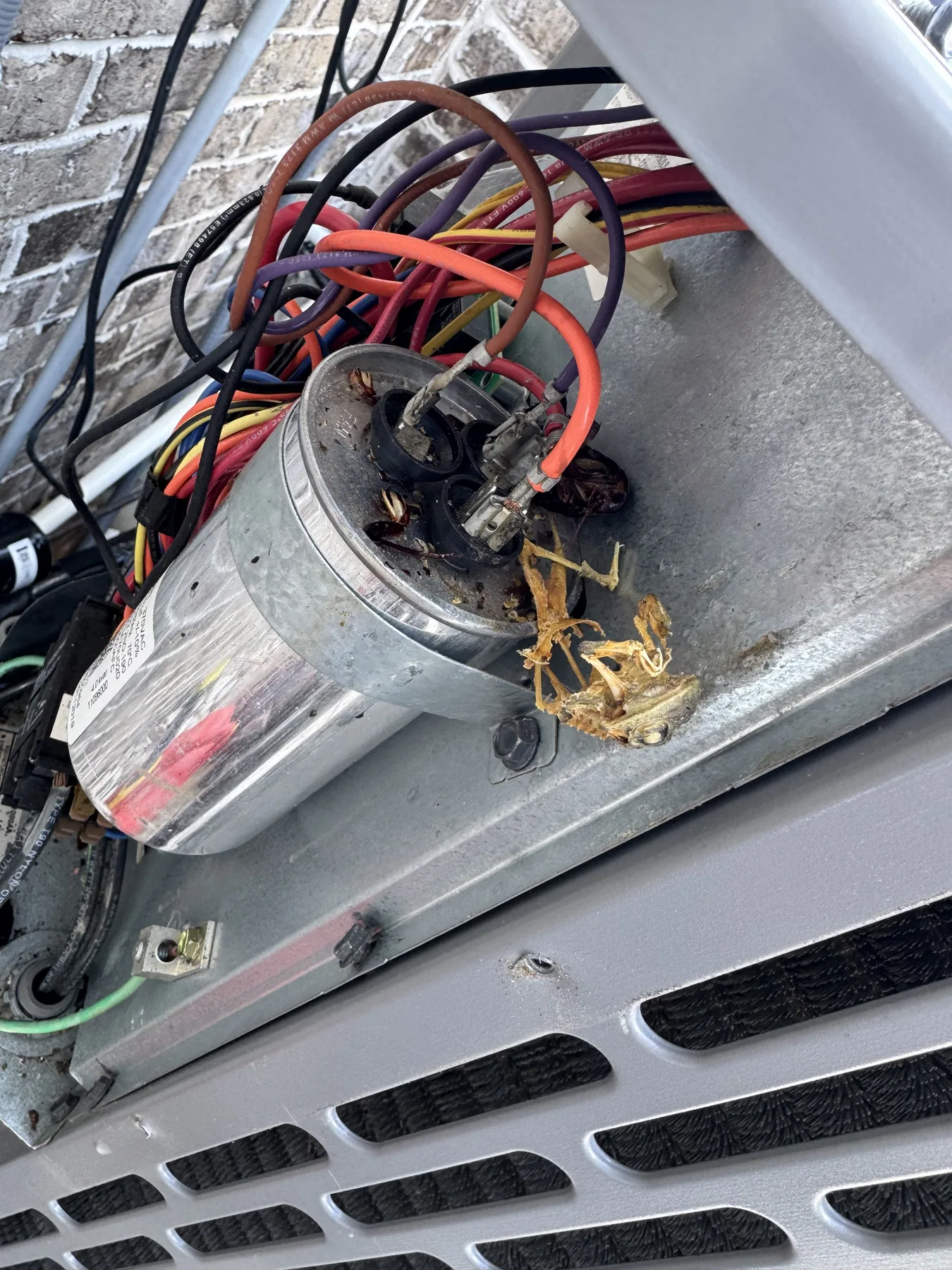
Taking pressure and temperature readings on a heat pump to verify reversing valve operation.
Get it looked at
Heat pump leaning on backup heat or struggling in one mode? Call 850-318-5777 and get it looked at properly.
- Answered 24 hours, 7 days
- Licensed CFC1429646 and CMC1250426
- Repair first, always
A maintenance plan keeps this kind of thing from becoming an emergency.
How We Service a Heat Pump
- Test both modes
Heating and cooling both get run, because a heat pump can be flawless in one direction and failing in the other. Testing only the mode you complained about misses half the machine.
- Verify the reversing valve
We confirm the valve is shifting fully and holding, using temperature and pressure readings across the valve rather than listening for a click.
- Watch a defrost cycle
Defrost initiation and termination get confirmed, along with the sensors that trigger them, so ice buildup and endless defrost both get ruled out.
- Check aux heat staging
We confirm the strips only energize when they should and that the thermostat is configured correctly for the equipment it is controlling.
- Read charge and airflow
Refrigerant pressures and temperature split get measured in both modes. Low charge degrades heating performance before it becomes obvious in cooling.
- Clean and report
Coils cleaned, drain cleared, and you get a written report on what was found and what condition the equipment is in.
Servicing Heat Pumps Across Walton and Okaloosa
Heat pumps are everywhere here, which means we service them in nearly every community we cover. From Freeport out through Santa Rosa Beach, Point Washington, Miramar Beach, Choctaw Beach and the 30A towns of Seaside, WaterColor, Grayton Beach, Seagrove Beach and Inlet Beach, they are the standard installation. Coastal units get an added concern, because salt air corrodes outdoor coils and a corroded coil hurts heating performance just as much as it hurts cooling.
Inland and west we cover DeFuniak Springs, Paxton, Niceville, Valparaiso, Destin, Eglin Air Force Base, Ebro, Vernon, Caryville, Westville, Ponce de Leon and Panama City Beach. Homes further north from the water see more genuinely cold mornings, so defrost cycles run more often there and auxiliary heat legitimately does more work, which changes what normal looks like on those systems.
Not sure we reach you? Regular stops include Valparaiso, Ebro, Santa Rosa Beach, Destin, Vernon, Point Washington, Niceville, Caryville, Miramar Beach, Eglin Air Force Base and our hometown of Freeport. If your town isn’t named, the full service area list will settle it.
Questions we get about this
What is the actual difference between a heat pump and a furnace?
A furnace makes heat by burning fuel or running electric resistance coils. A heat pump moves existing heat from one place to another using refrigerant, and it can run that process in both directions, so the same equipment heats and cools.
Moving heat uses much less energy than making it, which is why heat pumps are the standard choice in a mild climate like ours.
Why does the air from my vents feel cool when the heat is on?
Heat pump supply air is typically warmer than the room but cooler than what a gas furnace produces, so it can feel cool against your skin while still heating the house. That is normal. If the house is genuinely not warming up, that is a different matter and worth checking.
My outdoor unit is steaming in winter. Is that broken?
Almost certainly not. That is a defrost cycle. The system briefly reverses to melt frost off the outdoor coil, and the steam is that frost evaporating. It should last a few minutes and then return to heating. A unit that ices up and never clears, or one that defrosts constantly, does need attention.
What is emergency heat and when should I use it?
Emergency heat locks the system into electric strip heat only, bypassing the heat pump entirely. It is meant for when the heat pump has failed and you need warmth until somebody can get there. It is expensive to run, so it is not a setting to leave on, and if you find yourself needing it, call us.
My winter power bill jumped. What causes that?
Most often auxiliary heat running when it should not. Low refrigerant charge, a dirty or corroded outdoor coil, a thermostat set up wrong, or a reversing valve not fully shifting will all push the system onto the strips. The house feels fine, so the bill is usually the first clue anything is wrong.
How often should a heat pump be serviced?
More often than equipment in cooler climates, because a heat pump here works nearly year round instead of half the year. Twice a year, before cooling season and before the cool months, is the sensible rhythm, and that is what our maintenance plans are built around.
Related HVAC work
- Air Balancing
- Evaporative Coolers
- Smart Thermostat Installation
- Air Duct Cleaning
- Air Balancing Analysis
- Duct Leakage Testing
- Duct Sealing
- Mini-Split Installation
- Ductless Mini Splits
Looking for something this page doesn’t cover? Check the full HVAC list, look at work we’ve finished, send a note with the details, or call 850-318-5777.