
Scour the Grease Off the Pipe Wall, Not Through It
High pressure water cuts grease and buildup off the pipe wall and flushes it out, which is why a jetted line stays open far longer than a cabled one.
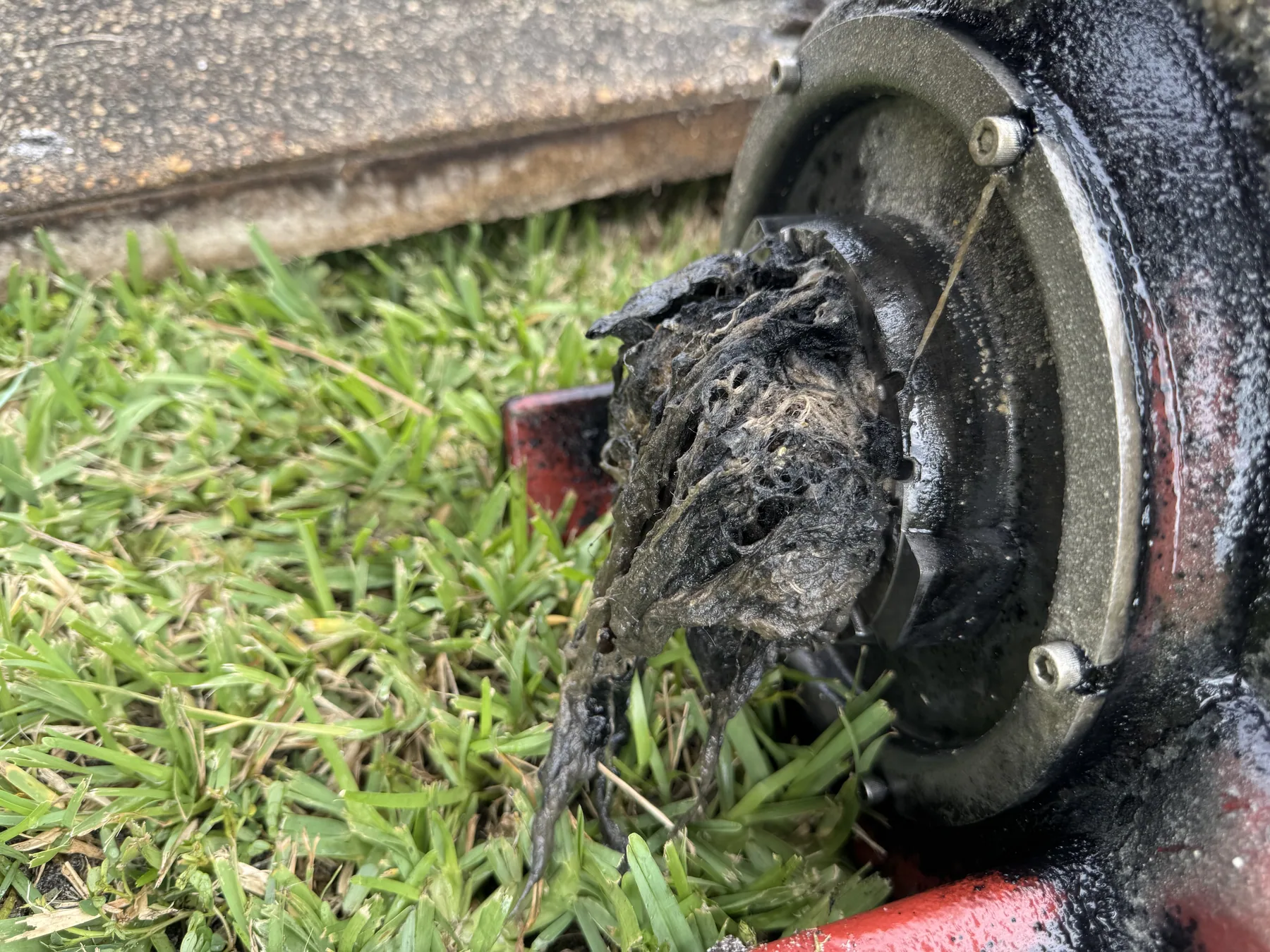
Hydro jetting uses water at high pressure through a nozzle that sprays backward as well as forward. The forward jets cut through the blockage, and the rear jets pull the hose along while scouring the pipe wall and flushing everything downstream. The result is a line closer to its original inside diameter rather than a channel bored through a layer of buildup.
That distinction is the whole reason this service exists. Grease, soap and food solids don’t sit in a lump, they coat. A cable passes through the middle of that coating and restores flow temporarily, which is genuinely useful in an emergency. But the coating stays, so the line closes back up on the same schedule it always did. Jetting removes the coating.
It isn’t the right tool for everything. Jetting a fragile old line, or one with a break in it, can make a small problem into a large one. We camera lines before jetting when the age or history of the building calls for it, which is most of the time on the older commercial stock around here.
Lines that are asking for a jetter
- A kitchen line you’ve had cabled more than once in a year
- Drains that run fine after service and slow down again within a month
- Multiple fixtures on the same branch getting sluggish together
- Camera footage showing a coated pipe wall rather than one obstruction
- A greasy film or odor coming back at the floor drain after cleaning
- Buildings that were fine at low occupancy and back up when they fill
A cable makes a hole in the clog. A jetter takes the pipe back to the diameter you paid for.
Why grease wins in a commercial kitchen
Grease goes down the drain warm and liquid and behaves like water for about ten feet. Then it cools in the horizontal run, comes out of suspension, and sticks to the pipe wall. Every wash cycle after that adds another thin layer, plus whatever food solids catch on the sticky surface. It’s a slow, extremely consistent process, and no amount of hot water at the sink prevents it.
The Emerald Coast makes it worse through sheer volume. Restaurants in Destin, Miramar Beach and the 30A towns run near capacity through the season with no quiet weeks to reset. A line that would take two years to load up in a slower market can get there in a single busy summer, and the first symptom usually shows on the worst possible night.
Non-kitchen buildings load lines differently but they still load them. Soap scum, paper, wipes and hair build up in high-traffic public restrooms, and in older cast iron drainage the pitted interior surface grabs all of it. Once a pipe has a rough wall, buildup accelerates because there’s something for it to hold onto.
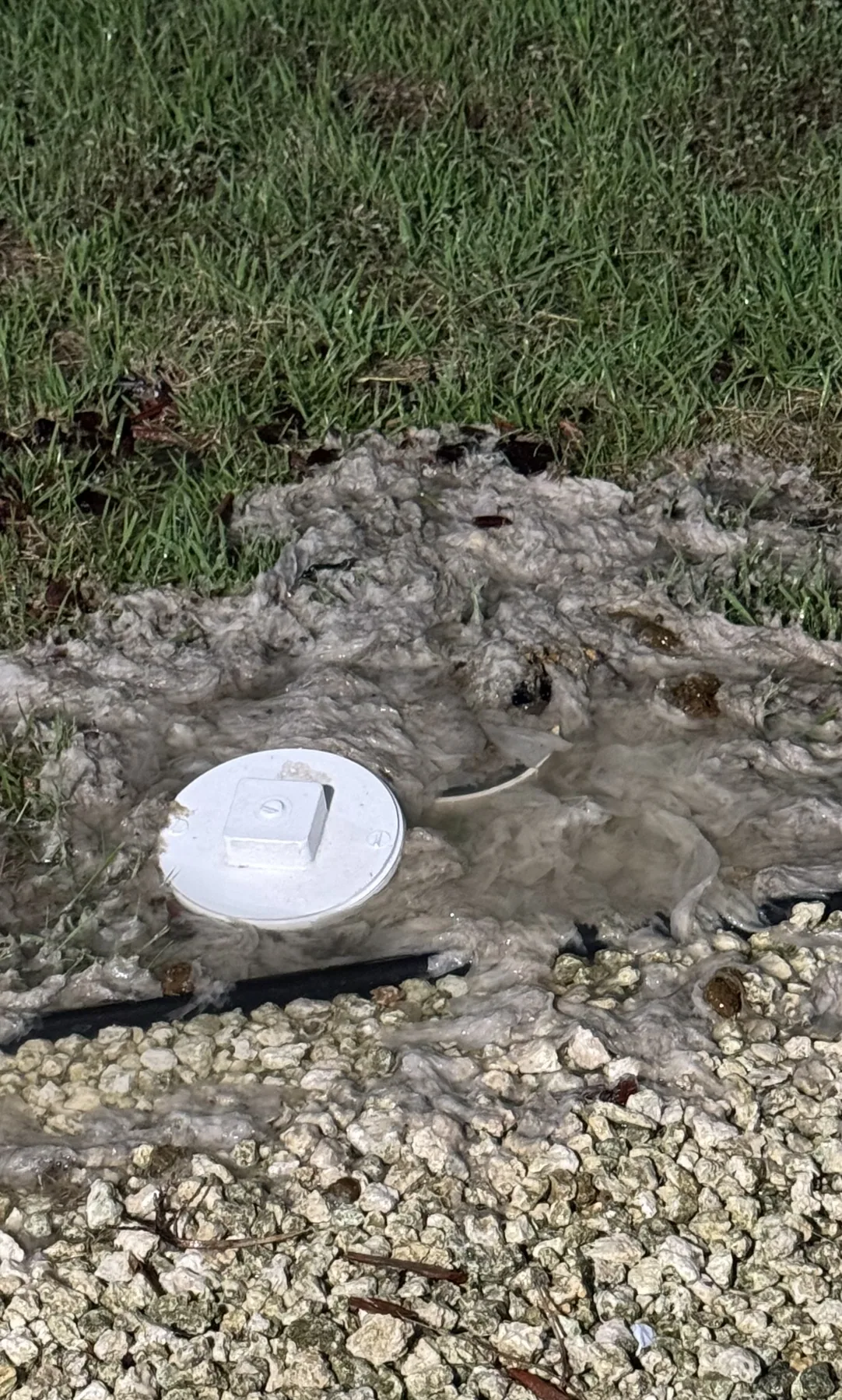
Running a jetter nozzle through a grease-loaded commercial kitchen line at a 30A restaurant.
Commercial work
Same line clogging again? Call 850-318-5777. We’ll camera it first and tell you whether jetting is actually the right tool.
- Answered 24 hours, 7 days
- Licensed CFC1429646 and CMC1250426
- Repair first, always
Seniors and military members get 5% off our maintenance plans.
How a jetting visit goes
- Look at the line first
Access points, pipe material and age, plus camera footage where the building’s history calls for it. Jetting a compromised pipe is how you turn a clog into an excavation.
- Set pressure and nozzle to the pipe
Different materials, diameters and blockage types need different settings. This isn’t one dial at maximum for every job.
- Work the line in passes
We cut through, then scour on the way back, repeating until the wall is clean rather than stopping the moment water starts moving.
- Flush and confirm
Real volume down the line and a camera check where it matters, so you know what you’re getting instead of taking our word for it.
- Give you an honest interval
Based on your actual line and volume, we’ll tell you when it’ll realistically need this again.
Jetting kitchens and properties along the coast
Most of our jetting work is food service and multi-unit property, which puts us in Santa Rosa Beach, Miramar Beach, Destin and up and down 30A through Grayton Beach, Seaside, WaterColor, Seagrove Beach and Inlet Beach. Those kitchens run hard through season, and the smart ones book jetting in the shoulder months rather than waiting for a Saturday failure.
We also jet commercial lines in Freeport, Point Washington, Niceville, Valparaiso, DeFuniak Springs and Panama City Beach. Property managers running several buildings often put this on a schedule, because a planned visit in an empty window costs a fraction of an emergency clear during a full house.
Not sure we reach you? Regular stops include Valparaiso, Ebro, Santa Rosa Beach, Destin, Vernon, Point Washington, Niceville, Caryville, Miramar Beach, Eglin Air Force Base and our hometown of Freeport. If your town isn’t named, the full service area list will settle it.
Questions we get about this
Is jetting safe for our older pipes?
It depends on the pipe, which is why we look before we jet. Sound PVC and healthy cast iron handle it fine. A cast iron line with advanced bottom rot, or one with an existing crack, can be made worse by high pressure.
If the camera shows a pipe that shouldn’t be jetted, we’ll say so and talk about what the line actually needs instead.
How is this different from snaking?
A cable is a mechanical tool that bores through an obstruction and restores flow. Jetting is water pressure that strips the buildup off the pipe wall and flushes it out of the system.
Both have their place. If you need to open a line right now, a cable is often faster. If you’re tired of clearing the same line every few months, the cable isn’t solving your actual problem.
Can you do it while we’re open?
We’d rather not, and usually you wouldn’t want us to. Jetting a kitchen line means the sinks are out of service for a while and there’s water and mess involved. We schedule around service hours, including nights, so you don’t lose covers over it.
How long will the line stay clear?
Longer than a cabling, and how much longer depends entirely on your volume and what goes down the drain. A high-output fryer kitchen will load a line faster than an office building will. Once we’ve seen your line, we’ll give you an interval based on your building rather than a generic figure.
Do you jet grease interceptor lines?
Yes, the lines in and out of the interceptor are frequently the worst-loaded pipe on a property. If the interceptor itself is undersized or overdue for pumping, we’ll tell you that too, because jetting the lines won’t fix an interceptor problem.
Related plumbing work
- Commercial Water Line Installation
- Commercial New Construction
- Office Building Plumbing
- Apartment Complex Plumbing
- Hotel Plumbing
- Commercial Emergency Plumbing
- Commercial Drain Cleaning
- Commercial Sewer Repair
- Backflow Installation
If it leaks, drips, backs up or runs cold, chances are it is on our plumbing page. Still unsure? 850-318-5777 gets you a real person, the contact page takes a written description, and the gallery shows finished work.