
Restore the Water Service Feeding Your Building
The service line runs from the meter to your building, and when it fails you lose pressure or water entirely. It’s underground, so finding it is half the job.
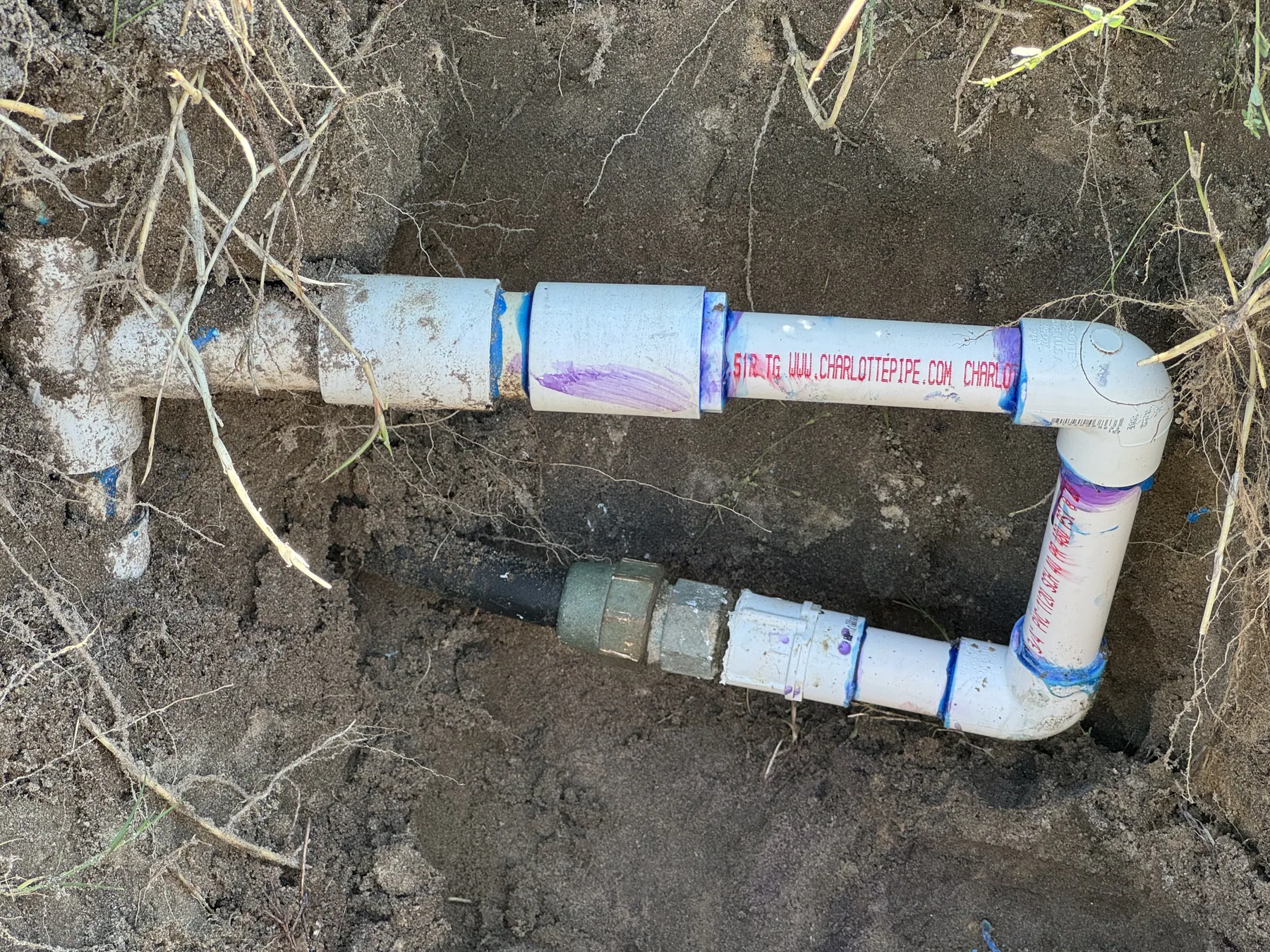
The water service line is the single pipe carrying everything your building uses from the utility’s meter to your first interior valve. Everything downstream of it depends on it, and unlike interior plumbing it’s buried, unmarked in most cases, and often runs under parking, landscaping or drives. A failure there takes the whole property down, not one fixture.
Failures on a service line show up as pressure loss, a wet or sunken area along the line’s path, or water at the meter box that keeps refilling. Because the line is pressurized, a break loses water continuously, so the meter keeps spinning and the bill climbs while the ground quietly absorbs it. In sandy soil, a substantial leak can run for a long time before anything surfaces.
Repair means locating the line, finding the failure point on it, and getting to it with the smallest excavation that does the job. This is repair of an existing service, not running new pipe, so the goal is a sound permanent fix at the failure with the pavement, landscaping and traffic flow restored as close to how we found them as possible.
Symptoms of a failing service line
- Pressure down across the entire building rather than at specific fixtures
- A consistently wet, soft or sunken strip in the ground between meter and building
- Water standing in or repeatedly refilling the meter box
- The utility’s meter registering flow when every fixture is off
- Grass or landscaping unusually green in a line along the service run
- A sudden total loss of water with no utility outage reported
- Air spitting from fixtures when water comes back after an interruption
A buried service line loses water every second it’s broken, and nothing above ground has to look wrong.
What breaks a buried service line here
Excavation damage is the most common single cause. Landscaping crews, sign installers, fence contractors and paving work all put equipment into ground where a service line runs, often unmarked. Sometimes a line is nicked rather than severed, which produces a slow leak that doesn’t show for months and gets blamed on something else entirely.
Then there’s material and age. Older service lines in galvanized steel corrode from the inside until the wall thins and gives out. Polybutylene, used in some construction, becomes brittle and fails at fittings. Copper in direct contact with damp soil corrodes from the outside. In each case the failure is a symptom of the whole line’s condition, which is worth knowing before deciding on a repair.
Locally, ground conditions do real work on these lines. Sandy soil shifts and settles, and the high water table in the low areas around Freeport and along the 30A corridor means a trench can be wet, which affects both how the original line settled and how we have to approach the repair. Heavy vehicle traffic over a shallow line in a commercial parking area adds load the pipe was never sized for.
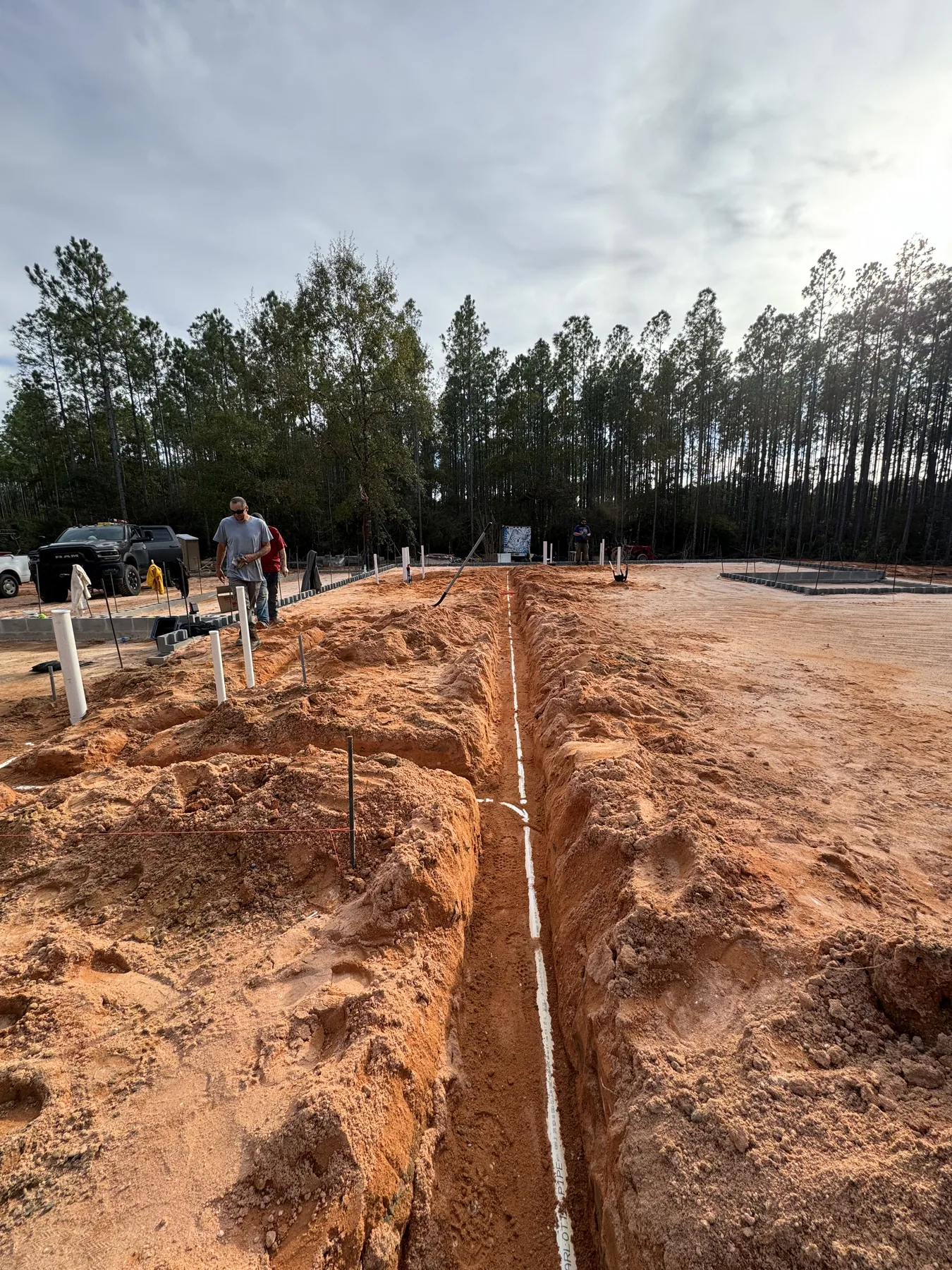
Targeted excavation exposing a failed commercial water service line ahead of a section replacement.
Commercial work
Lost pressure building-wide or found a wet strip in the lot? Call 850-318-5777 and we’ll get it looked at.
- Answered 24 hours, 7 days
- Licensed CFC1429646 and CMC1250426
- Repair first, always
Think of a maintenance plan like an oil change for your home.
How a service line repair proceeds
- Verify it’s the service line
We confirm the loss is on your side of the meter and on the service run itself, not in the building, before anybody excavates.
- Locate the line and the break
Line locating plus acoustic work to find the failure point, so the excavation is targeted instead of a trench along the whole run.
- Call in locates and plan access
Underground utilities marked, and the dig planned around traffic, parking and access so you can keep operating.
- Excavate and repair
The failed section is cut out and replaced with correct material and fittings, then pressure tested before backfill.
- Restore the surface
Compacted backfill, and pavement, concrete or landscaping put back. A repair that leaves a sinkhole in a parking lot isn’t finished.
- Tell you the line’s condition
If what we found suggests the rest of the line is on the same path, you hear it now rather than at the next failure.
Service line repairs across the coverage area
We repair commercial water service lines in Freeport, Santa Rosa Beach, Point Washington, Miramar Beach and along 30A through Grayton Beach, Seaside, WaterColor, Seagrove Beach and Inlet Beach. Most of those properties are on Regional Utilities water, and knowing where their meters and service runs typically sit saves real time on locating.
We also work Destin, Niceville, Valparaiso, Eglin AFB, DeFuniak Springs, Paxton, Ponce de Leon, Westville, Ebro, Vernon and Panama City Beach. Some rural parcels outside the utility franchise are on private wells, where the service run and the failure modes are different, and we’ll confirm which situation you’re in before planning the work.
Our regular towns, in no special order: Eglin Air Force Base, Vernon, Miramar Beach, Freeport, Caryville, Niceville, Point Washington, Ebro, Destin, Santa Rosa Beach and Valparaiso. Anything else inside our range is on the service area page.
Questions we get about this
How do we know it’s the service line and not something inside?
The meter answers it. If the meter registers flow with the building’s main valve closed, the loss is between the meter and that valve, which is the service line. If it stops when you close the main, the problem is inside.
That’s a two-minute check and it decides everything about how the job proceeds, so we do it before we plan any excavation.
Will you have to tear up our parking lot?
Only where the repair actually is, which is why locating matters so much. A properly located break means a targeted opening rather than a trench along the whole run.
We plan the dig around your traffic and access so you can keep operating, and we restore the surface when we’re done. A repair that leaves a settling patch in a drive lane isn’t a finished job.
Is repair or full replacement the better choice?
A single failure on a line that’s otherwise in good condition is a repair, and that’s usually what we recommend. If the line is aged galvanized or a material with a known failure pattern, one break is generally the first of several.
We’ll tell you what we found in the trench and what it suggests. You should make that call knowing the condition of the pipe, not just the price of the patch.
Who’s responsible, us or the utility?
Generally the utility owns up to the meter and the property owner owns from the meter to the building, but it varies by system. Determining where the failure sits relative to the meter is part of the diagnosis and it happens before anyone starts work.
If it turns out to be on the utility’s side, we’ll tell you and help you get it reported. You shouldn’t pay us to repair something that isn’t yours.
How long will we be without water?
The building is typically down for the working portion of the repair, which for a located break in accessible ground is often a single day. Depth, water table and surface restoration all affect it.
We give you the window before we start so you can notify tenants or plan around service, and if what we find in the trench changes the schedule, you hear it immediately rather than at the end.
Related plumbing work
- Commercial Drain Cleaning
- Commercial Sewer Repair
- Commercial Hydro Jetting
- Backflow Installation
- Commercial Water Heaters
- Commercial Repiping
- Commercial Leak Detection
- Commercial Leak Repair
- Commercial Water Line Installation
Plumbing problems don’t always fit a tidy label. Look over our plumbing services, check the gallery for jobs like yours, or skip all that and call 850-318-5777. If it is not urgent, a message works too.