
New Supply Pipe Without Gutting the Unit
In a building where units stack one above the next, a supply line that keeps leaking soaks more than your own ceiling. We repair a single leak when a repair will hold. When the pinholes keep coming, we repipe room by room through small openings and keep the water off for as short a stretch as we can.
Your leak reaches the unit below
Condo towers and resort buildings are put together with stacked risers, one unit sitting over the next, and water follows them down. A supply leak inside your wall rarely stays there. It runs along the pipe, through the floor and into the ceiling of whoever is under you, and they are often the first to see it. In Miramar Beach, where plenty of units sit empty between guests, a slow drip can go on for days before anybody in your unit notices.
That changes how a repeat leak ought to be handled. A patch that fails a second time costs you more than another service call. It can leave a stained ceiling downstairs, an unhappy neighbor and a long conversation with an insurance adjuster.
Supply pipe is the pressurized side of the plumbing, the lines carrying water to every faucet, shower, toilet and appliance. If water only appears when a fixture drains, the problem sits on the drain side and a repipe is the wrong answer, so we will say that early. For an overview of how we approach a whole-house job anywhere we work, see our main repiping page.
Pinholes, and when patching stops paying off
One pinhole leak is a repair. We cut out the bad piece, join in new pipe and test it, and that is often the end of it. We would rather fix what you already have, and most single leaks are exactly that kind of job.
The picture changes when leaks start turning up in different rooms, months apart, in the same kind of pipe. That pattern says the pipe is wearing thin along its whole length, and each patch only fixes the spot that happened to give out first. When we see it, we show you where the leaks have been and what the pipe looks like where we opened it. Whether to keep patching or to repipe stays your call.
Sometimes the weak point is outside, on the service line between the meter and the building. That line is part of the supply too, and a failure there tends to show up as falling pressure or a water bill that climbs while your habits stay the same. If you are in a house on a slab, our post on slab leak signs covers another spot where supply water goes missing out of sight.
Exposed copper takes a beating this close to the Gulf. Salt air settles on any line running along an outside wall or through an open utility space, and the green crust it leaves behind is corrosion working on the pipe from the outside in. Where we see that, we point it out, even when the leak you called about is somewhere else.
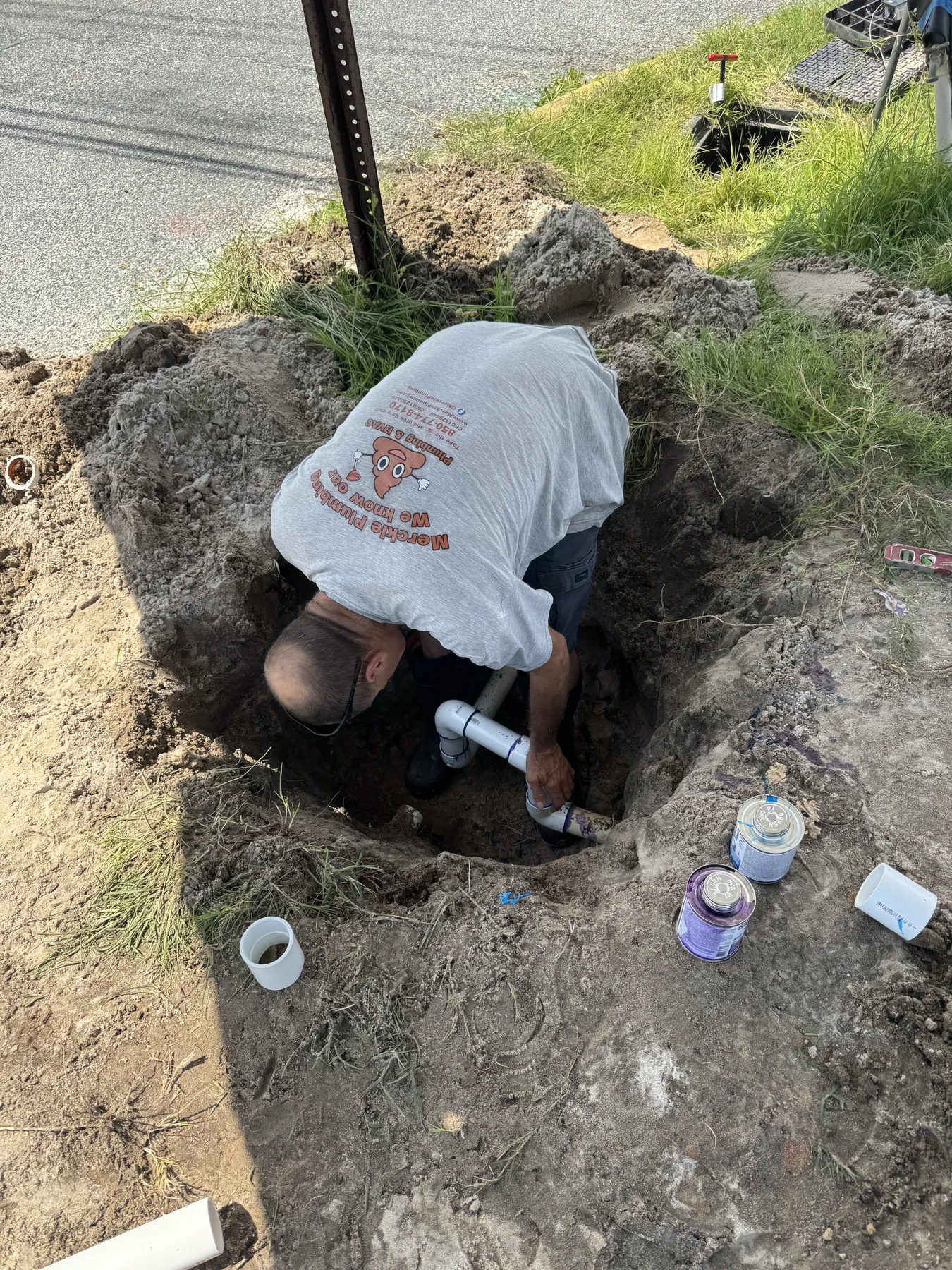
A Merckle technician joining new white PVC water service fittings near the meter box.
One pinhole is a repair. Leaks in room after room are a pattern.
Signs the supply pipe is wearing out
- Pinhole leaks that keep turning up in new spots
- Water stains on the ceiling of the unit below
- A water bill rising with no change in use
- Pressure dropping at several fixtures at once
- Discolored water when a tap first opens
- Green crust on exposed copper and its fittings
- Damp drywall near a shower valve or water heater
Tell us where the water keeps showing up
Fresh stain downstairs, another pinhole, pressure fading? Call 850-318-5777 and give us the history. We find the source first, and you hear what it costs before any wall gets opened.
- A person answers every hour of every day
- Licensed plumbing contractor CFC1429646
- Single leaks get repaired first
Turning the water off when neighbors share it
In a detached house, the main shutoff is yours to close. In a building with shared supply, closing the wrong valve can leave a whole floor or a whole stack dry, so the outage has to be planned like any other part of the job. Before we cut anything, we work out which valve isolates your unit, whether that valve actually holds when it is closed, and who else loses water when it turns.
That usually means talking with the property manager or the association and giving neighbors notice. Check the association’s documents about who owns which pipe before work starts, since the answer decides who signs off and who is responsible for what. We can help you find the right pages. The rules themselves belong to the people who wrote them.
In a rental, the outage also has to fit the booking calendar. Tell us when the unit turns over and who manages it, and we will line up the switchover for a stretch when nobody is staying there. Whoever called us hears what is happening at each step, and the owner gets the same updates directly instead of a secondhand report a week later.
What new pipe looks like inside the wall
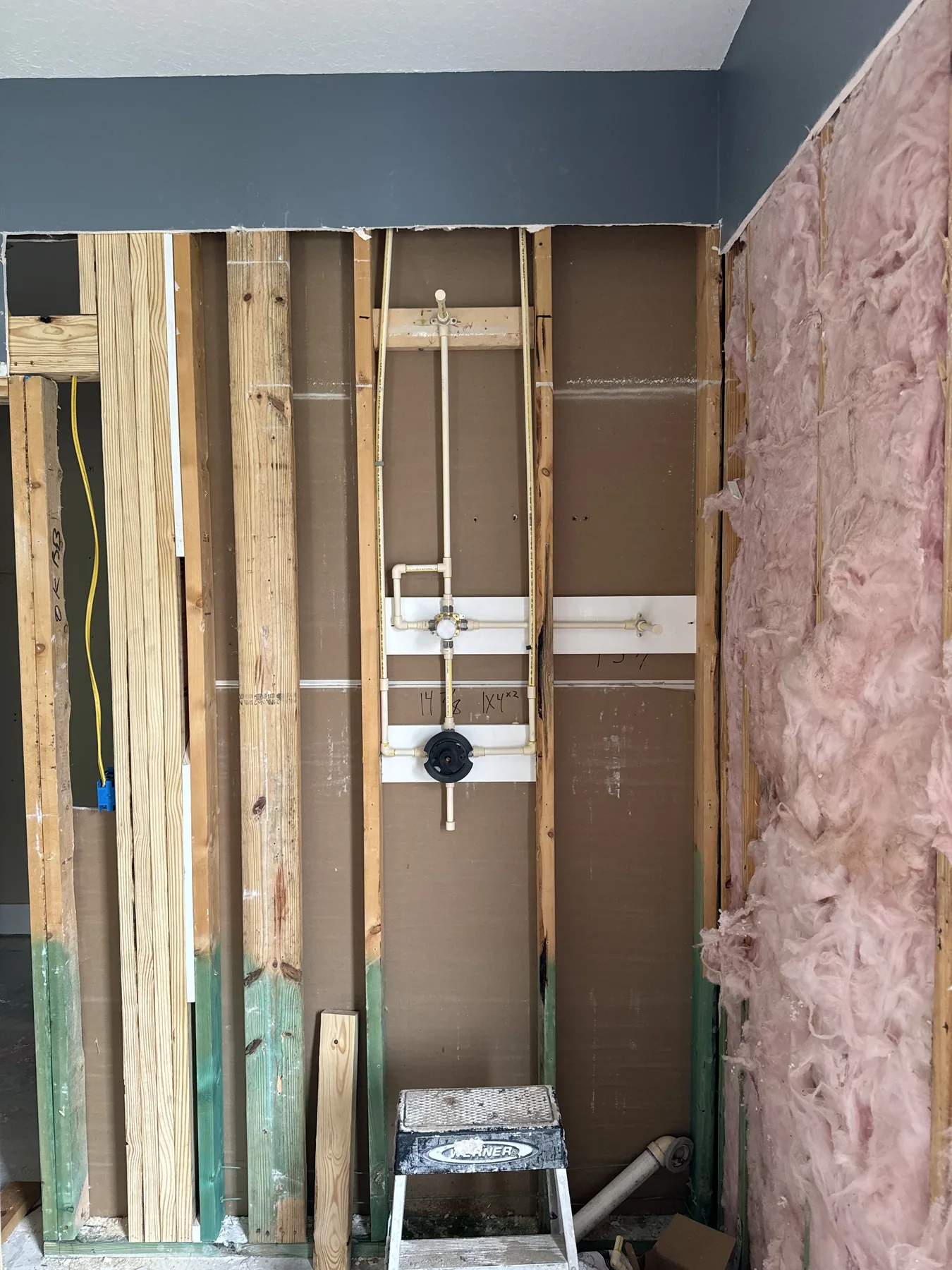
Up top is the stage most owners never get to see: a bathroom wall opened, the insulation pulled back, and new CPVC supply lines run to the shower valve and spout. Before that wall closes, the new lines are strapped to the studs and the whole system is pressure tested. If a joint is going to weep, we want to catch it now, with the wall open, instead of in the ceiling below next month.
Repair first, repipe only when the pattern says so. That is how Noah Merckle set the company up, and it is why both licenses, plumbing CFC1429646 and mechanical CMC1250426, sit with one person. If a water heater or an air handler closet is part of the same wall, it stays one job with one company.
How a repipe moves through the unit
- Map the fixtures and valves
We trace every supply line from where it enters the unit to each faucet, toilet, shower and appliance, and note which valves isolate what.
- Small openings in planned spots
Access holes go where the pipe turns or connects, often behind a vanity or inside a closet, so whole walls stay standing.
- Run the new lines
New pipe goes in alongside the old while the old keeps working, which means most of the job happens with the water still on.
- Switch over and test
During the planned outage we cut over to the new lines and pressure test them before a single opening is closed.
- Patch and clean up
Openings get patched and the work area gets cleaned, so the unit is ready for whoever arrives next.
- Show you what came out
You see the old pipe we removed and where it was failing, along with a plain account of everything that was replaced.
Questions about repiping a condo or rental
How do I know if I need a repipe or only a repair?
One leak in otherwise healthy pipe gets repaired. When leaks keep appearing in different places along the same pipe, the material is wearing out through its length. We show you where the leaks have been and what the pipe looks like inside, and then the decision is yours.
Will you have to tear out my walls?
No. A repipe runs through small openings cut where the pipe turns or connects, usually one room at a time, and those openings get patched when the work is done. Tile and other finished surfaces are left alone wherever there is another way to reach the pipe.
Will the whole building lose water during the work?
Usually not for long. Most of the new pipe goes in while the old lines are still carrying water. The outage comes at the switchover, and we plan it with the property manager or association so neighbors know ahead of time when it is happening and for how long.
Is the pipe inside my wall mine or the building’s?
Every building handles it differently, and the answer is written in the association documents. Check them for who owns which pipe before work begins. We can trace the lines and show you where each one runs and what it serves, which makes those documents much easier to read.
Why does my water bill keep going up?
If your use has not changed, a hidden supply leak is the usual reason. It could be inside a wall, under a slab, or on the service line between the meter and the building. We track it down on the supply side first, before suggesting anything bigger than a repair.
What kind of pipe goes back in?
It depends on the building and on what the walls allow. Before any wall is opened we tell you which material we plan to run and why. If the association has a preference for its buildings, we follow it, and we put that choice in writing so the next plumber knows what is behind the drywall.
Elsewhere on our Miramar Beach list
- Sewer Line Repair
- HVAC Maintenance
- Tankless Water Heater Installation
- Mini Split Installation
- Repiping across our area
Freeport is home base, so Miramar Beach is a regular stop on our route. If water is coming through a ceiling right now, close whatever valve you can reach and call 850-318-5777. For a pinhole that has come back again, send a note with the history and a little about the building, or look over finished jobs in the gallery first. The Miramar Beach page covers the rest of what we do in town.