Plumbing Roughed In Right the First Time
On a build, plumbing sets the schedule for the trades behind it. We show up when we said, pass inspection, and don’t hold up the pour.
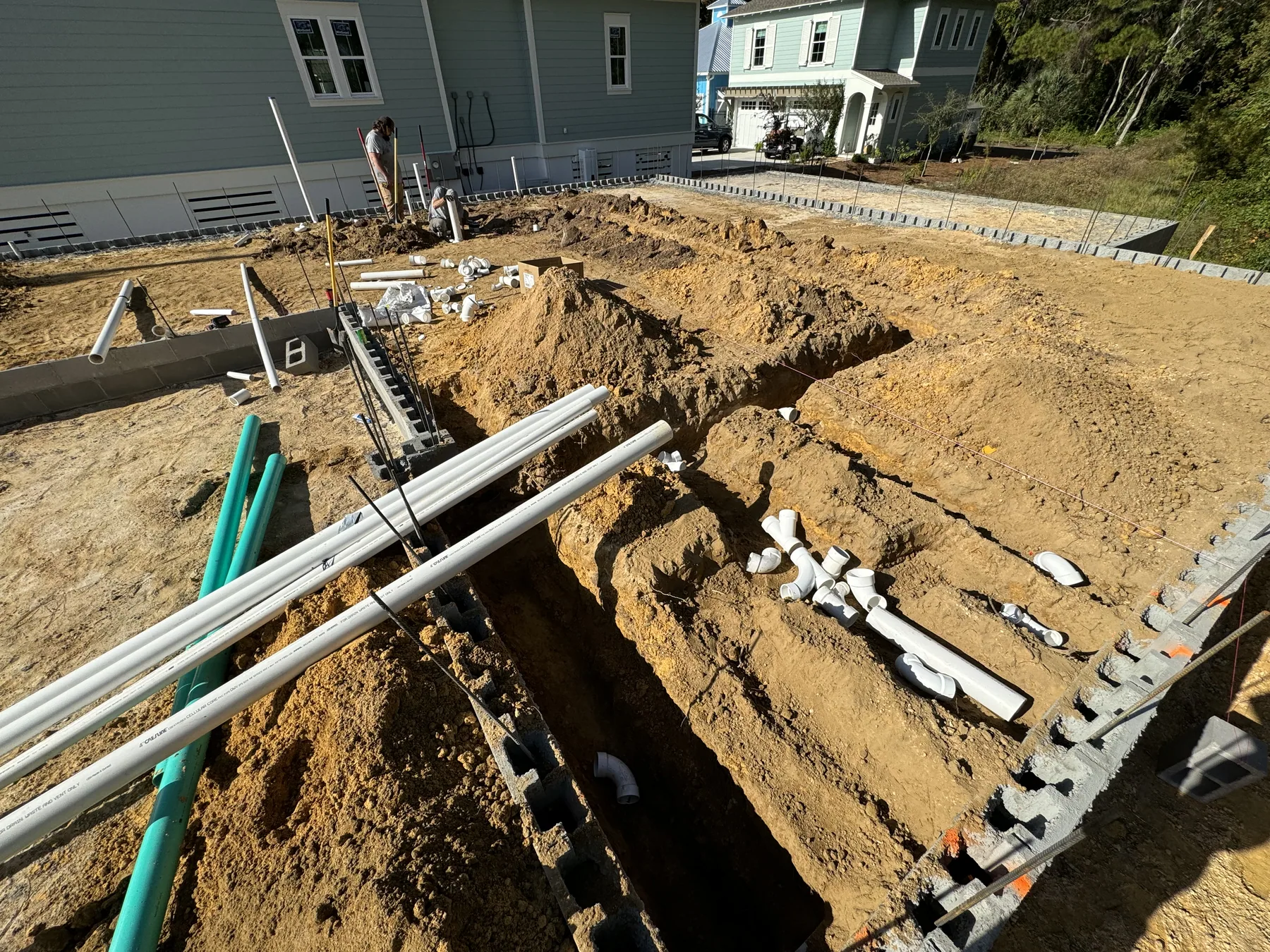
Commercial plumbing on new construction is a sequencing job as much as a pipe job. Underground goes in before the slab pours and can’t be revisited afterward without breaking concrete. Rough-in has to be complete and inspected before walls close. Trim happens at the end when everybody’s fighting for the same space. Miss a window and the trades behind you all move.
The work itself splits into three phases. Underground is the waste, vent and supply below the slab, set to correct fall and location off the drawings. Rough-in is everything in the walls and ceilings up to the fixture connections, pressure tested and inspected. Trim is fixtures, trim-out and final testing, which is where the building finally becomes usable.
What separates a good plumbing sub from a problem one is coordination and paperwork. Being where the schedule says, catching conflicts with the mechanical and electrical routes before they’re built, pulling the right permits, and passing inspections the first time. A failed inspection isn’t just our problem, it’s a hold on everything behind us.
Projects we take on
- Ground-up commercial buildings, retail, office and mixed use
- Restaurant build-outs with kitchen, grease and gas requirements
- Multi-unit residential and vacation rental construction
- Tenant improvements and change-of-use conversions
- Additions and second buildings on existing commercial sites
- Projects that need both plumbing and mechanical under one license holder
Underground is the one phase you cannot fix later without a jackhammer. It gets checked twice.
Where new construction plumbing goes wrong
Almost all of it traces to underground. Waste lines set at the wrong fall, a cleanout placed where a wall will land on it, or a stub-up located off the drawings are all cheap mistakes before the pour and very expensive ones after. We verify locations against current drawings, not the set from three revisions ago, and we walk it before the concrete truck is scheduled.
The second source is coordination with other trades. Plumbing, mechanical and electrical all want the same ceiling space and the same wall cavities. Conflicts found on paper are a conversation. Conflicts found in the field are rework, and rework is schedule. Holding both plumbing and mechanical licenses means we’re solving that internally on projects where we do both instead of negotiating across two companies.
Locally, a few things need attention early. Slab-on-grade means everything below the slab is permanent. The high water table in low areas around Freeport and the 30A corridor affects trenching and bedding. And whether the site is on gravity sewer or on low pressure force main requiring a grinder pump changes the design fundamentally, so that’s confirmed at the start rather than discovered at the tie-in.
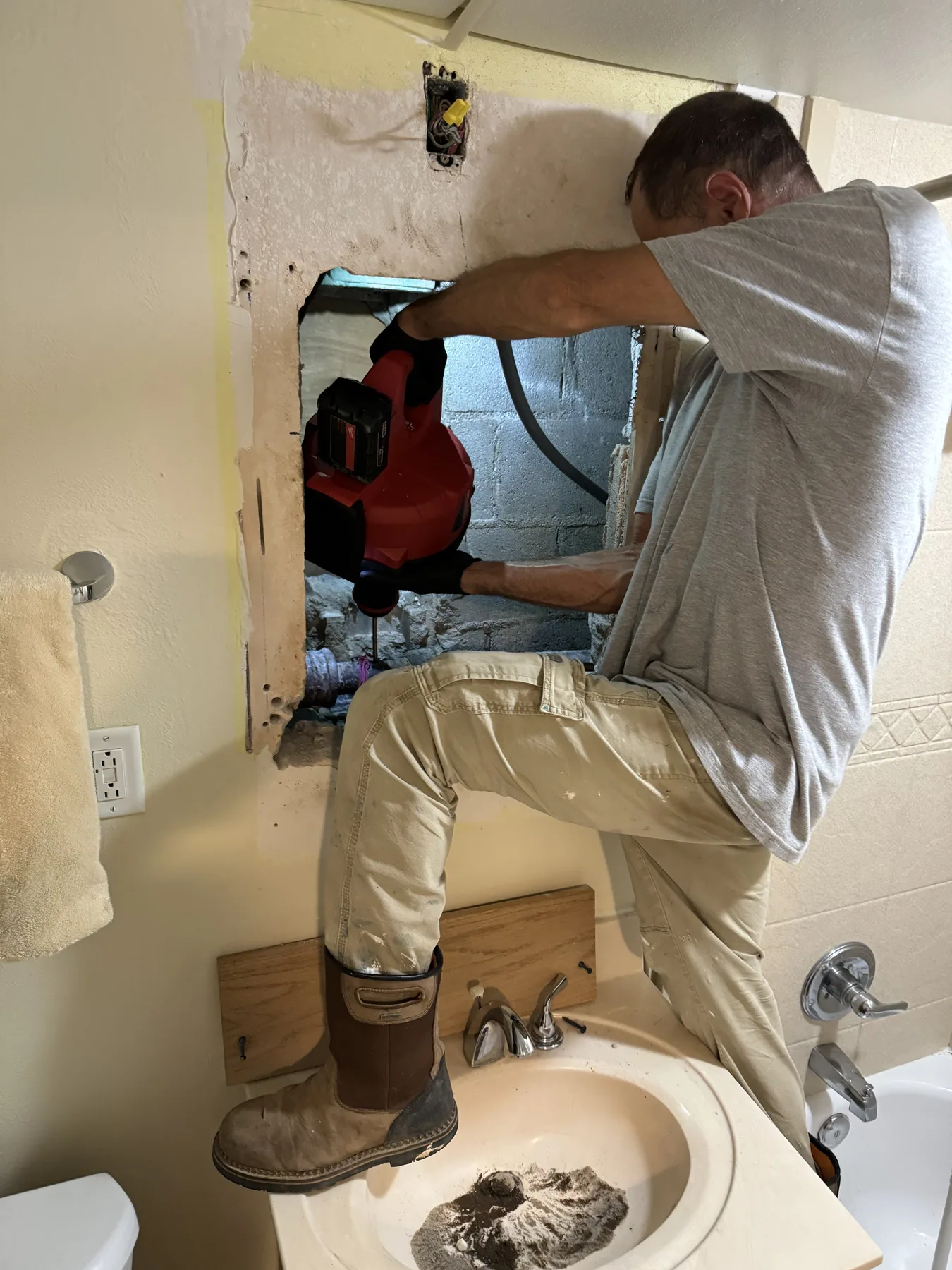
Underground waste and supply set to grade and verified against drawings ahead of a commercial slab pour.
Commercial work
Bidding a project or need a plumbing sub who holds the schedule? Call 850-318-5777 and we’ll look at the drawings.
- Answered 24 hours, 7 days
- Licensed CFC1429646 and CMC1250426
- Repair first, always
A maintenance plan keeps this kind of thing from becoming an emergency.
How we run a project
- Review drawings and price the work
We read the set, flag conflicts and missing information early, and give you a number based on what’s actually drawn.
- Permits and coordination
Permits pulled, utility requirements confirmed, and our schedule fitted to the GC’s sequence rather than the other way around.
- Underground before the pour
Waste, vent and supply below slab, verified against current drawings, inspected and photographed before concrete.
- Rough-in through the structure
Supply, DWV and gas in walls and ceilings, coordinated with the other trades, pressure tested and inspected.
- Trim and fixtures
Fixtures set, connections made, everything tested under real conditions, punch list worked rather than argued about.
- Turn over with documentation
Inspection records, as-builts and photos of what’s buried, so the owner and the next contractor know what’s there.
Building with GCs and developers across the region
We work new commercial construction in Freeport, Santa Rosa Beach, Point Washington, Miramar Beach and the 30A towns including Grayton Beach, Seaside, WaterColor, Seagrove Beach and Inlet Beach. That corridor sees a steady mix of retail, restaurant and vacation rental construction, and each of those has a different plumbing profile and a different inspection path.
We also build in Destin, Niceville, Valparaiso, DeFuniak Springs, Paxton, Ponce de Leon, Ebro, Vernon and Panama City Beach. Permitting and inspection requirements differ between Walton, Okaloosa, Washington, Holmes and Bay counties, and knowing which jurisdiction wants what keeps a project from losing a week over a paperwork detail.
Not sure we reach you? Regular stops include Valparaiso, Ebro, Santa Rosa Beach, Destin, Vernon, Point Washington, Niceville, Caryville, Miramar Beach, Eglin Air Force Base and our hometown of Freeport. If your town isn’t named, the full service area list will settle it.
Questions we get about this
Do you work as a sub for general contractors?
Yes, that’s most of our new construction work. We come in on the GC’s schedule, coordinate with the other trades, and handle our own permits and inspections.
We’ll also work directly with owners and developers on smaller projects where there isn’t a GC carrying the whole build.
Can you handle both plumbing and mechanical?
Yes, and on projects that need both it’s a real advantage. Noah holds a certified plumbing contractor license and a certified mechanical contractor license, so the ceiling coordination between plumbing and HVAC happens inside one company.
That means overlapping items like condensate drains, gas piping and water heater venting don’t fall in the gap between two subs, which is where they usually cause trouble.
What happens if the drawings have a problem?
We flag it as soon as we find it, in writing, rather than building it wrong or quietly guessing. Missing information and conflicts are normal on a set of drawings, and catching them at review costs nothing compared to catching them in the field.
If a change is needed, you get the cost and schedule impact before we proceed, not on the final invoice.
Are you insured and licensed for commercial work?
Yes. Florida certified plumbing contractor CFC1429646 and certified mechanical contractor CMC1250426, and we carry insurance appropriate for commercial jobsites. Certificates go to the GC or owner as part of onboarding.
How do you handle inspections?
We schedule them, we’re on site for them, and we aim to pass the first time because a failed inspection holds up everybody behind us. Underground and rough-in both get photographed before they’re covered so there’s a record of what went in.
You get the inspection documentation at turnover along with as-builts showing where buried lines actually run.
Do you do restaurant build-outs?
Yes, and they’re their own animal. Kitchen fixture counts, grease waste requirements, floor drains and sinks, gas piping for cooking equipment, and hot water sized for sanitizing all have to be right. We’d rather be involved during design than asked to make a finished kitchen work afterward.
Related plumbing work
- Commercial Hydro Jetting
- Backflow Installation
- Commercial Water Heaters
- Commercial Repiping
- Commercial Leak Detection
- Commercial Leak Repair
- Commercial Water Line Repair
- Commercial Water Line Installation
- Office Building Plumbing
If it leaks, drips, backs up or runs cold, chances are it is on our plumbing page. Still unsure? 850-318-5777 gets you a real person, the contact page takes a written description, and the gallery shows finished work.