
Sewer Trouble Found on Camera Before Anyone Digs
When the toilets, the tub and the kitchen sink all drain slow on the same afternoon, the trouble usually sits in the main line, past every branch in the house. We put a camera through the cleanout first, so the repair goes where the pipe actually failed and nowhere else.
One slow sink, or the whole house at once
A single slow sink is usually that sink’s own problem. Hair, soap and grease build up in the trap or in the short branch behind the wall, while the rest of the house drains fine. That is a drain cleaning call, and it rarely needs more than a cable through that one fixture.
Everything slowing down together points somewhere else. Every branch in a home ties into one main line on its way out, so a blockage or a break down there backs up the whole system. The lowest fixture usually shows it first. A shower that fills while a toilet is flushing, a gurgle in the tub when the washer drains, or water rising in a floor drain all say the same thing: the main is no longer carrying the load.
Rentals add their own twist. A Miramar Beach property with a fresh set of guests every few days collects things an owner would never flush. Wipes labeled flushable, paper towels and the odd cleaning cloth travel down the line together and stop at the first fitting that gives them something to snag on. Very often that fitting is the cleanout.
That is also the good news. A cleanout is an access point, so a wad of wipes caught there can usually be pulled and the line flushed without opening anything else. Whether the pipe past it is healthy is a separate question, and that is where the camera comes in.
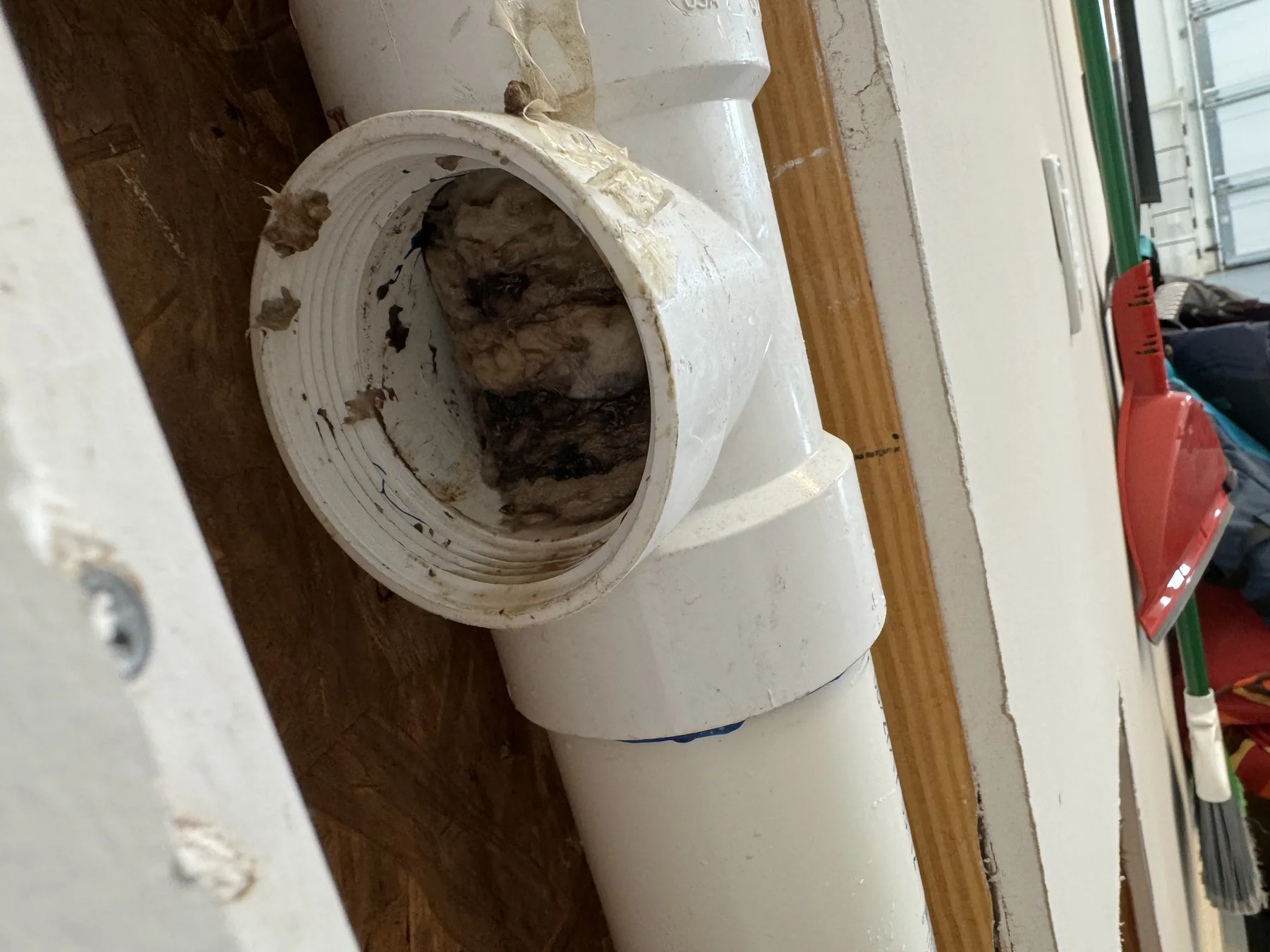
An open PVC cleanout tee in a wall cavity, packed with wipes and debris.
When the toilet gurgles as the washer drains, look at the main line first.
The camera goes in before the shovel
We do not dig on a hunch. Once the line is open enough to pass, a camera goes in through the cleanout and travels the length of the pipe toward where it leaves the property, and you are welcome to watch the screen with us. It shows whether the trouble is a plug of wipes, roots pushing through a joint, a section that has sagged and holds water, or pipe that has rotted through.
A locator in the camera head lets us mark the ground directly above the problem and note how deep it sits. That turns a dig into a hole about the size of the repair. It also leaves you with footage, which helps when you have to explain the work to a co-owner or a property manager who was not there.
For the general picture of how we handle a broken or blocked main anywhere we work, see our sewer line repair page. What follows is how that work tends to go in a town built this tightly.
Signs the main line is the trouble
- Toilets, tub and sinks all draining slow on the same day
- A gurgle from one fixture while another one drains
- Water coming up in the shower when a toilet is flushed
- A sewage smell in a bathroom or near the cleanout
- A cleanout cap that is wet, pushed up or seeping
- Soft or sunken ground over the path of the line outside
- Backups that return within weeks of the last cleaning
Tell us which drains are acting up
Slow tub, gurgling toilet, a smell you cannot place? Call 850-318-5777 and walk us through it. The camera tells us what is down there, and you hear a straight number before any digging starts.
- Somebody answers 24 hours a day, 7 days a week
- Florida plumbing contractor CFC1429646
- Repair first, a new line only when the footage calls for it
Old cast iron gives out along the bottom
Cast iron drain pipe lasts a long time, but it does wear out, and it wears from the inside in a way that surprises people. The bottom of the pipe carries the flow and stays wet, so that is where the metal thins and flakes away first. From above, the pipe can look sound. Underneath, a channel opens along the floor of the pipe until wastewater runs into the soil instead of through the line.
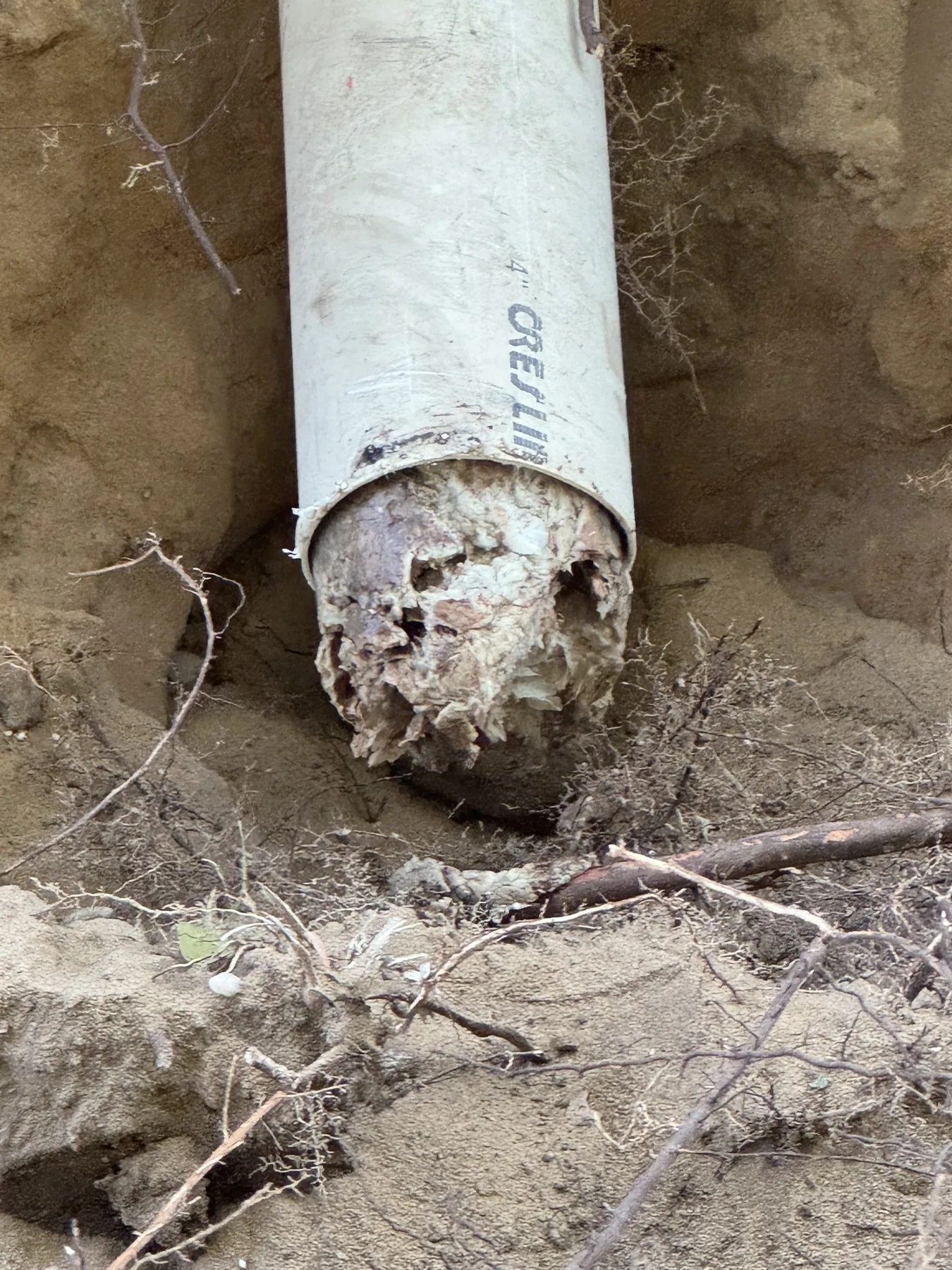
Once there is an opening, roots notice. They follow the moisture into the gap and keep growing inside, catching paper and grease until the line closes up. The photo at the top of this page shows that end state: a cast iron section rotted open where it meets newer PVC, sitting in sandy soil with roots around it. Our post on cast iron pipe that rots from the bottom goes further into what that damage looks like on camera.
Units that share a main
In a building with several units, the line under your floor may serve only you, or it may also carry the units above. That question gets answered before anyone opens a wall or a floor, because it decides who is responsible for the repair and who needs to hear that it is happening. We trace the line with the camera and show you where it runs. For the ownership side, check the association’s documents about who owns which pipe. We will not guess at that for you.
Timing matters as much as ownership. Here the repair usually has to land between one checkout and the next arrival. Tell us when the changeover is, who will let us in, and who should get the results. We plan the dig and the restoration around that window, and if the job will not fit inside it, you hear that from us up front.
Patch one section or replace the run
- Clear a path
If the line is blocked, we open it far enough to pass a camera. Clearing it also shows whether a cleaning alone gets the house draining again.
- Film the whole length
The camera runs from the cleanout to the end of the line, so every joint gets a look, including the ones that have not failed yet.
- Count the bad spots
One cracked joint or one rotted section on otherwise sound pipe is a spot repair. Several failures spread along the line point toward replacing the run.
- Check the pipe on either side
A patch only holds if the pipe it joins is solid. When the cast iron beside the break is thin as well, a new section would just move the leak a few feet.
- Open, repair, run water
We dig at the mark, make the repair, and send water through it with the camera watching before any soil goes back in.
- Restore and explain
The ground or floor goes back, and you get the footage plus a plain account of what we did and why we chose it.
Sewer line questions from Miramar Beach owners
Why are all my drains slow at the same time?
When every fixture slows together, the blockage or break is usually in the main line that all of them drain into. A clog in one branch only affects that one fixture. We confirm it with a camera through the cleanout before recommending any repair, so you know exactly what is causing it.
Can wipes really clog a sewer line?
Yes. Even wipes sold as flushable hold together far longer than toilet paper, and they snag on joints, roots and cleanout fittings. In a rental with new guests every few days, they build up fast. A small sign in the bathroom asking guests to put them in the trash saves a lot of calls.
Do you have to dig up the yard to find the problem?
No. A camera goes in through the cleanout first and shows where the trouble is, and a locator marks that spot and its depth on the ground above. If a repair does need digging, the hole goes at the mark, which keeps both the opening and the restoration as small as possible.
How do you decide between a spot repair and a new line?
We look at how many failures the camera finds and at the condition of the pipe around them. One bad section on otherwise solid pipe gets repaired. When the footage shows rot, sags or root entry along much of the run, replacing it costs less than coming back again and again.
I own a condo. Is the sewer line under my unit my responsibility?
That depends on your building, and we will not guess. Some lines serve a single unit and some are shared. We can trace the line and show you where it goes, and we ask owners to check the association documents about who owns which pipe before any work begins.
Can the repair happen between guests?
Often, yes. When you call, tell us when the next check-in is, who will meet us and who should get updates. We plan the camera work, the repair and the cleanup around that window, and we tell you at the start if the job cannot fit inside it.
More we handle in Miramar Beach
- Repiping
- Tankless Water Heater Installation
- Mini Split Installation
- HVAC Maintenance
- Sewer line repair across our area
We work out of Freeport, so a sewer call in Miramar Beach is part of an ordinary week for us. If sewage is coming back into the unit, call 850-318-5777 and somebody will pick up at any hour. For anything that can wait, send us a note about which drains are slow and when the next guests arrive, or browse the gallery to see finished work. Everything else we cover in town is on the Miramar Beach page.