
Hair slows a tub drain in any house. Near the beach it has a partner, and the pair of them build a plug that hot water and bottled chemicals barely touch.
Beach houses have their own version of the slow tub. Hair is the usual cause of a sluggish drain anywhere, and in a Santa Rosa Beach rental or vacation home it gets help from sand. Every kid rinsing off after a day on the beach leaves a little behind, and the drain collects it far faster than a house inland would.
Most of these clogs sit close to the surface, where an owner or a manager can clear them with very little risk. The rest are worth recognizing early, before somebody pours something in that makes them harder to fix.
Why sand and hair make such a stubborn pair
Sand on its own is heavy and never dissolves. With enough water moving behind it, most of it washes on through. The trouble starts in the trap and in the drain body right under the stopper, where water slows down and sand drops out of it.
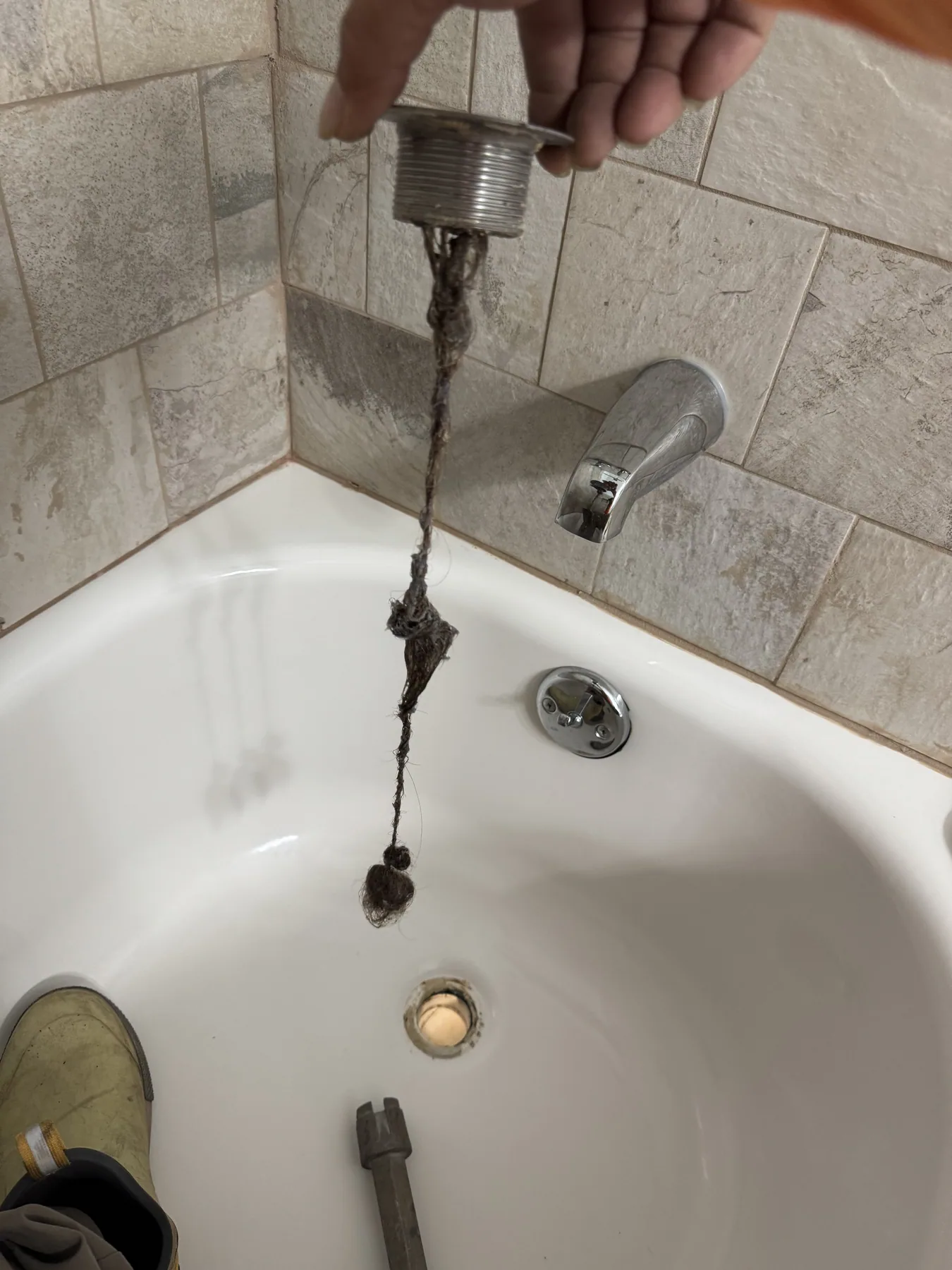
Hair does the other half of the job. It snags on the stopper linkage and the crossbars in the drain opening, and once a few strands are hanging there, they act like a net. Sand, soap scum and conditioner collect in that net until it turns into a dense plug that lets water past slowly and never quite closes off.
That is why these drains decline so gradually. A tub that emptied in a minute at the start of summer takes several by the end of it, and nobody can point at the day it changed. It also explains why a kettle of hot water rarely helps. Heat softens soap film, and it does nothing to sand or to a mat of hair.
What an owner can safely do
Most slow tubs clear with a few minutes of work and no special tools.
- Take out the stopper. Many lift straight up, others unscrew counterclockwise, and some have a small set screw under the cap.
- Clean off whatever is wrapped around the stopper and its linkage. Wear gloves, because it will not be pleasant.
- Use a plastic barbed drain strip from any hardware store to hook hair out of the opening. Pull slowly so the clump does not tear off and stay inside.
- Run hot water for a minute and watch the speed. If it drains quickly, put the stopper back and you are finished.
Showers with a screwed-down grate work the same way once the grate comes off. Skip the bent wire hanger, since it tends to push the plug deeper and scratch the finish on the way. If the next step would be a hand auger, that is a sensible point to call somebody.
Why we steer people away from chemical drain openers
The bottles promise a lot, and on a clog made mostly of sand they have almost nothing to work on. Sand does not react to them at all. Hair takes a long soak to break down, and in a trap packed with grit the product often just sits on top of the plug.
That leaves a tub of standing water mixed with a caustic chemical, which is a hazard for whoever comes next: the next guest, the cleaning crew, or the plumber who has to reach into it. If something has been poured in, tell us before we arrive, because it changes how we open the drain.
If a bottle has already gone down the drain, say so when you call. It is a safety question, and nobody will judge you for it.
Repeated use is hard on the drain as well. Some of these products get hot as they react, and older metal drain parts and the rubber washers under a tub do not tolerate that for long. A drain that has been dosed every few months for years tends to start leaking at the joints.
Keeping sand out of the bathroom
The easiest drain cleaning is sand that never makes it to the tub. A few habits make a real difference in a house full of beach days.
An outdoor shower, or even a hose with a spot to rinse feet by the entrance, catches most of it. A bucket of water beside the door for feet and toys does the same job on a smaller scale. Shaking out towels and swimsuits outdoors, instead of in the shower, keeps a surprising amount out of the drain too.
Inside, a hair catcher that sits over the drain opening is the most effective thing you can add, and they are inexpensive. In a rental, put one in every tub and shower and add emptying them to the cleaning checklist. Guests will never think about it. The crew will, if it is written down.
Give outdoor showers the same attention. Their drains catch the heaviest sand of all, and it settles there just as it does indoors.
When the problem is further down the line
Some slow tubs have nothing to do with the stopper. The signs are fairly consistent. If more than one fixture is slow at the same time, if the tub gurgles or bubbles when a toilet flushes, or if water rises in the tub while the washer drains, the restriction is past the individual trap and into a shared line.
A sewer smell at the drain, or a clog that returns within days of being cleared, points the same way. So does a house where the tub and a nearby sink both slowed down over the same summer.
At that stage, hooking hair from the opening will not reach it, and a rented machine can do real damage to a drain line in unpracticed hands. A camera run through the line shows where the blockage is and what it is made of. Our drain cleaning in Santa Rosa Beach starts there, with finding the problem before choosing how to clear it. On houses served by a grinder pump, we rule out the station at the same visit.
Tub drain questions
Can I use baking soda and vinegar on a slow tub?
It will not hurt anything, and it can loosen soap film near the opening. It will not dissolve sand or break up a mat of hair, so on most beach house clogs the fizzing is mostly for show. Pulling the stopper and clearing what is wrapped around it will do far more, in less time, with nothing left sitting in the pipe.
Is a slow outdoor shower drain the same problem?
Often, and usually with more sand in it. Outdoor shower drains collect grit from feet and beach gear every day of the season. Lift the grate, scoop out what has settled, and flush it with a hose. If it is still slow once the grate and the opening are clean, the line beyond it needs a proper look.
How can I tell a guest clog from an old pipe problem?
A clog right under the stopper that clears once the hair comes out is a use problem, and it will keep coming back without a hair catcher. A drain that stays slow after the stopper is clean, slows along with other fixtures, or smells is more likely a line problem. A camera inspection tells us which one it is without guessing.
Sand and hair come with owning a house near the water, and most of the time they need nothing more than gloves and a few minutes. When a drain stops responding to that, call before anyone reaches for a bottle. Some of our drain work is in the gallery if you want to see it first.
Drain still slow?
Call 850-318-5777 or send a note, and tell us what has been tried so far, especially anything poured in. We will get it looked at properly.