
In a stacked building, the first sign of a failing supply pipe often comes from downstairs. A neighbor knocks and asks about the stain spreading across their ceiling.
That is how a lot of repiping conversations start in Miramar Beach. Condo units sit one on top of another, sharing risers that carry water up through the building, and a leak in one unit rarely stays put. The water finds its way down to the next unit, and sometimes the one under that.
Most leaks deserve a repair, and that is where we start. The harder call is when a unit has had enough of them that the pipe itself has become the problem. This post is about that point, and about how a repipe runs when your neighbors live under you and share your water supply.
Why a leak in a stacked building is never only yours
In a single family house, a hidden leak mostly damages the owner’s own house, and the clues show up there. The signs in our post on slab leak signs are about a house sitting on its own slab. In a condo, the water has somewhere else to go. It follows a pipe, drops down a chase or soaks through a ceiling, and the first person to see it may live two floors down.
That changes how fast things need to happen. Knowing where to shut off your own unit’s supply, and where the building’s shutoffs are, matters more here than in a house. So does a quick call, because a supply line leaking into a ceiling keeps adding drywall to somebody’s repair list for as long as it runs.
It also changes the math on repeat leaks. One repaired leak is a nuisance. A third leak landing in the same neighbor’s ceiling turns into a conversation with the association, and maybe an insurance claim, that nobody wants to keep having.
Pinholes, and when patching stops making sense
Pinhole leaks are small and slow, and they usually turn up in copper supply pipe. One shows as a damp spot, a stain, a hiss you can hear inside a wall, or a water bill that has crept up for no reason you can name. We find it, cut out the bad section and replace it, and most of the time that ends it.
The pattern is what changes our advice. A second pinhole somewhere else along the same kind of pipe says the pipe is wearing thin from the inside along its length. Patch it and you are waiting for the next one. Older pipe that has a history of leaks, or that turns out thin and pitted wherever we open it, tells the same story.
At that point we show you what we found, explain what is likely coming, and give you a straight number for another repair and for a repipe, side by side. Repiping is the answer only when the pattern says so. We would rather fix one leak than sell a repipe a unit does not need, and we will tell you which one you have.
Room by room, through small openings
A repipe does not mean gutting the unit. New supply lines run through the walls and ceilings using small openings at the points where the pipe has to connect: behind fixtures, at the water heater, at the turns in the run. Between those points the new pipe is fished through, which is a lot less demolition than most owners picture.
We work in sections, usually one area of the unit at a time, so the kitchen or one bathroom can be back in service while another is still open. New pipe goes in, gets connected and is pressure tested before any wall is closed up. Then the openings get patched.
The new supply pipe is usually CPVC or PEX, run to each valve and fixture with proper support so it does not knock or rub inside the wall. The old pipe is cut off and capped, or pulled out wherever it can be reached.
Before anything is opened, we walk the unit with you and mark where each opening will go, so nobody comes home to a hole in the wrong wall.
Planning the water shutoff with the neighbors
This is the part that makes a condo repipe different from a house. In plenty of buildings your unit’s supply cannot be shut off by itself. The valve that isolates it may also isolate the unit beside you, or the stack above and below, and some work means the building has to shut down a whole riser.
That takes planning. The association or the property manager usually needs notice, the neighbors on the same supply need to know when their water will be off, and the shutoff should land at the time that causes the least trouble. In a building full of rentals, that means working around everyone’s check-ins, yours and theirs.
We keep the shutoffs as short as the work allows by saving the tie-ins for last, with everything else already run and waiting. Your manager or the association sends the notices, and we give them the times the water goes off and comes back on.
Where your unit’s water starts
Before we plan a repipe, we want to know where your unit’s supply begins. In a tower it usually comes off a shared riser through a valve somewhere in or near the unit. In a smaller building or a townhouse style rental, there may be a separate service line running underground from a meter.
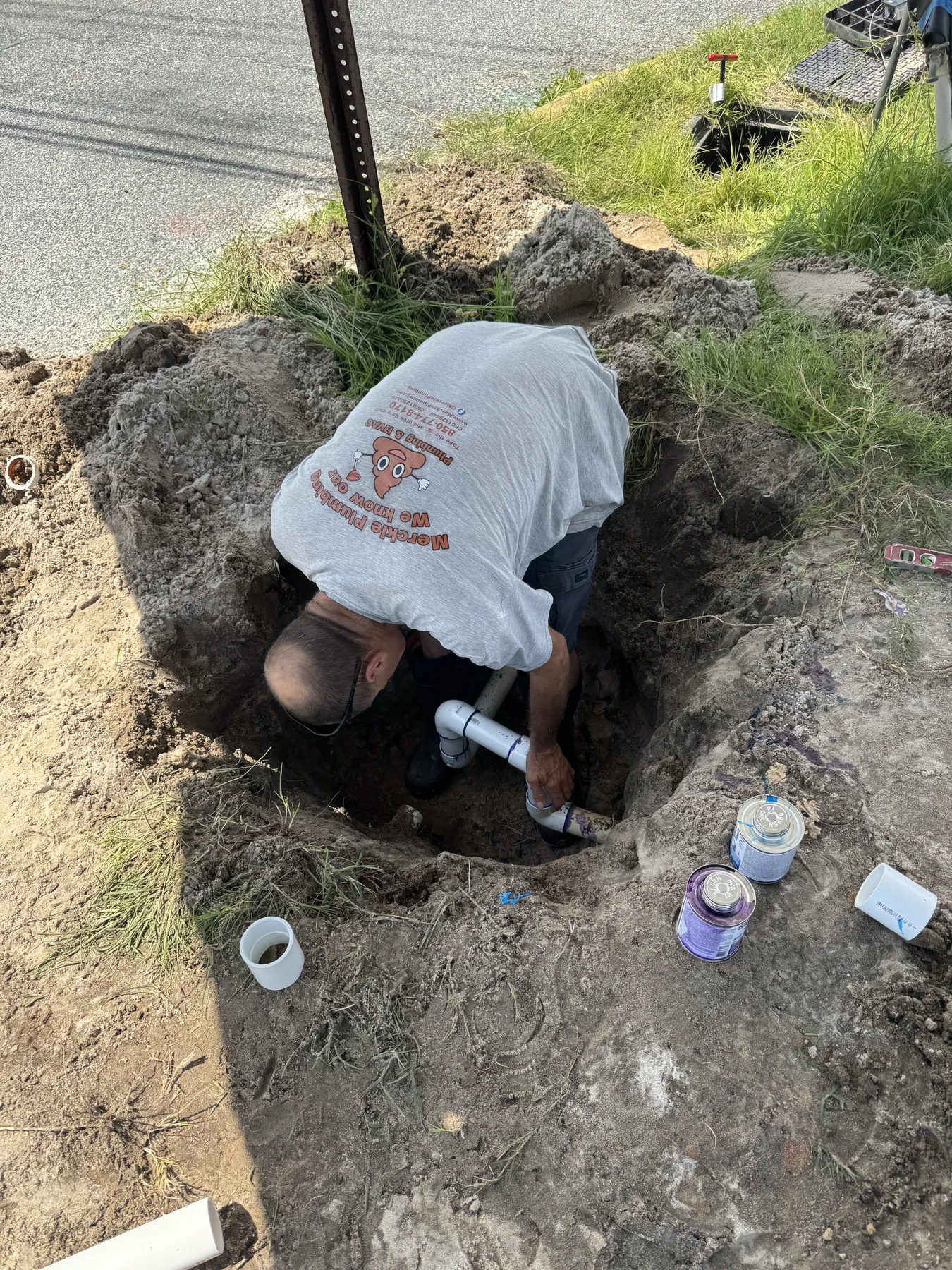
That service line belongs in the conversation too. If it is the same age and material as the pipe that keeps leaking indoors, doing it at the same time can save a second disruption. If it is sound, we leave it alone.
Our repiping in Miramar Beach covers the unit and, where it applies, the line from the meter, and the repiping page goes into the materials. If the drains are acting up as well, our sewer line repair page is the next stop.
Repiping questions from condo owners
Do I have to move out while the unit is repiped?
Usually not for the whole job. Because we work one area at a time, a kitchen or a bathroom is often back in use before the next one is opened. There will be stretches with the water off, and some dust where openings are cut. In a rental it is easier to schedule the work between bookings and keep the unit empty while it runs.
Will the walls look patched afterward?
The openings get patched and made ready for finishing. Small openings behind fixtures and inside closets are easy to hide, and that is where we try to put them. Matching paint or texture on a feature wall is often a job for a painter, and we will tell you ahead of time which openings are likely to need one.
Can I repipe only the part of the unit that keeps leaking?
Sometimes. If every leak has been on one run, say the line to one bathroom, replacing that run can make sense on its own. If the leaks are spread around the unit in the same kind of pipe, doing one area tends to move the next leak somewhere else. We look at where each leak has been before suggesting either.
One leak gets a repair. A pattern gets a plan. In a stacked building that plan has to account for the neighbors, the shutoffs and the booking calendar, and handled that way a repipe turns out far less dramatic than it sounds.
Another leak in the same unit?
Call 850-318-5777 and tell us how many leaks the unit has had and where each one turned up, or send a note and we will come and read the pattern.