
A red alarm light on a grinder pump means the tank is filling faster than the pump is emptying it. Here is what to do in the first ten minutes, and how to tell a utility call from a plumber call.
If you live in Freeport, Point Washington, or almost anywhere in the low flat ground along the 30A corridor, there is a good chance your house does not drain to the sewer by gravity. It pumps. Somewhere in your yard there is a buried tank with a pump inside it, and that pump grinds up everything you send down the drain and pushes it uphill into a pressurized line that runs out to the utility main.
Most people never think about it until the day a red light comes on and something starts beeping. That light is not a suggestion. It means wastewater is coming into the tank faster than the pump is getting it out, and the tank has a limited amount of room left before it has nowhere to put anything.
So the first thing to know is what to do in the next ten minutes, before anybody comes out. The second thing to know is who to call, because that answer is not always the same.
Stop running water. Right now.
This is the whole first step. Every gallon you send down a drain while that alarm is lit is a gallon going into a tank that is already behind. A shower is around two gallons a minute. A load of laundry is a lot more than that in one shot. A single toilet flush is more than most people picture.
The alarm exists to buy you a window. Depending on how full the tank already was when the float tripped, you may have some reserve room, or you may have very little. Nobody can tell you which from the outside, so the safe move is to treat it as very little. Tell everyone in the house. That means no dishwasher, no washing machine, no long showers, and holding off on flushing where you reasonably can.
An alarm is a warning that the tank is filling faster than it is emptying, so the single most useful thing you can do is stop adding to it.
If the alarm has an audible silence button, pressing it turns off the noise. It does not turn off the problem. The light stays lit for a reason, and silencing the buzzer while continuing to run water is how a manageable evening turns into sewage coming back up through the lowest drain in the house, which is usually a downstairs shower or tub.
If the power is out, this is a different situation
A grinder pump runs on electricity from your house. No power, no pump. Regional Utilities is direct about this and they are right to be: wastewater cannot be disposed of through a grinder pump during a power outage. There is no workaround at the house.
After a storm, that catches people. The lights go out, everyone goes about their evening on generator or candlelight, and the household keeps flushing and showering out of habit. All of that goes into a tank with no way to empty. We get those calls the morning after weather more than any other single kind.
If you know a storm is coming and you know you are on a grinder pump, that is worth planning around ahead of time. Water conservation during an outage is not about the water bill. It is about the tank in your yard.
What actually makes these pumps fail
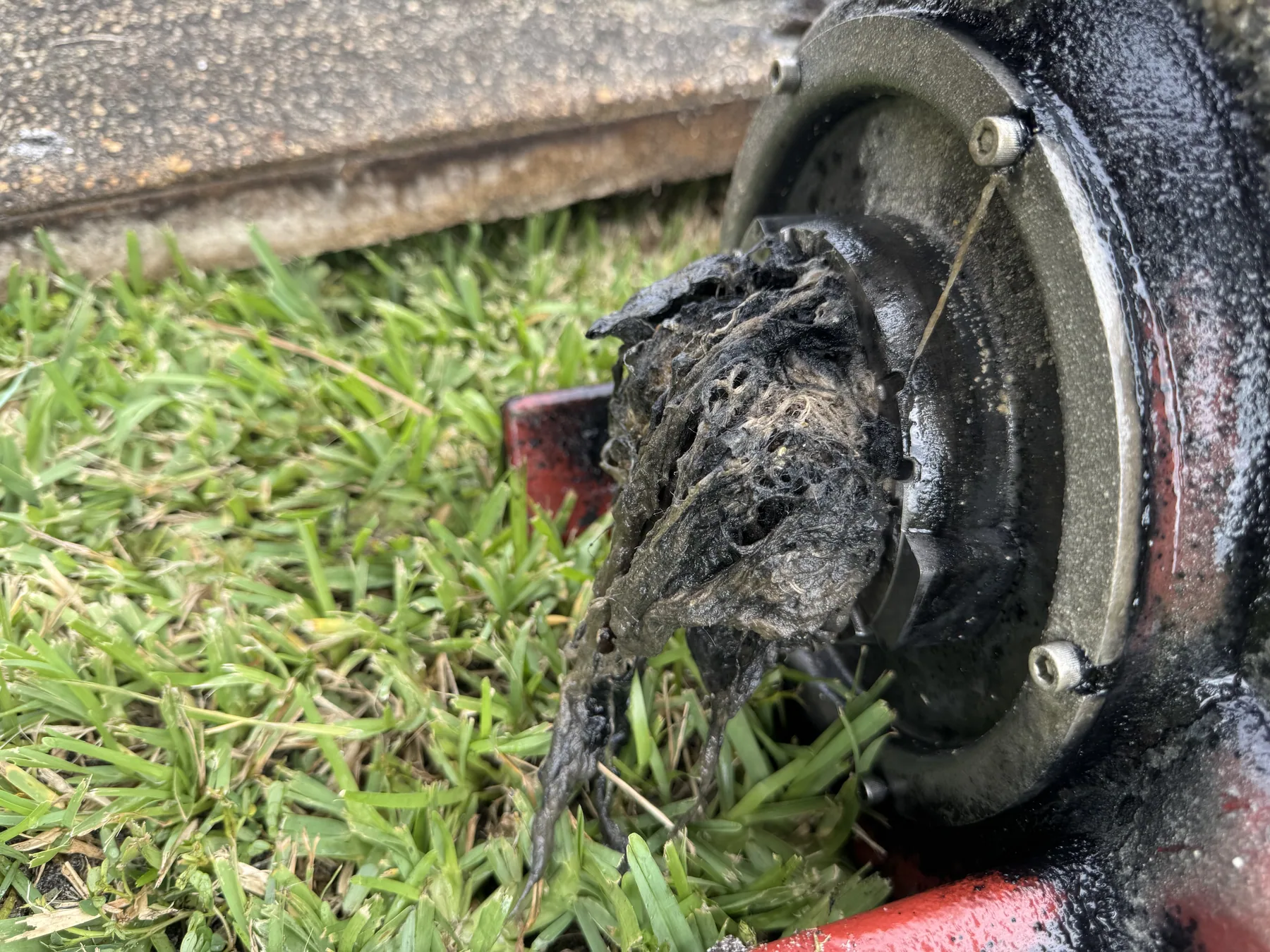
A grinder pump has a cutter assembly that chops solids fine enough to move through a small diameter pressure line. It handles what it was designed for. It does not handle what it was not designed for, and that is where nearly all of the trouble comes from.
The list of things that stop these pumps is short and consistent:
- Wipes, including the ones sold as flushable. They do not break apart in water, they rope together and wrap the cutter.
- Rags, cleaning cloths, and paper towels. Same problem, more of it.
- Grease poured down a kitchen sink. It cools in the tank, hardens, and coats the floats so they stop reading the water level correctly.
- Feminine hygiene products and diapers, which are built to absorb and expand.
- Anything fibrous or stringy that binds up the cutter instead of passing through it.
Floats are the other common failure. A grinder pump knows when to run because a float rises with the water level and closes a switch. Coat that float in grease, or let it get tangled in a rag, and the pump either does not start when it should or does not shut off when it should.
Sometimes the pump itself is fine and the check valve on the discharge is stuck, so everything the pump pushes out drains straight back in. From inside the house that looks identical to a dead pump. From the tank it is obvious in about a minute. That is why we look before we form an opinion.
Utility call or plumber call?
Here is where we are going to be straight with you rather than convenient. Who owns and maintains the grinder pump varies. In some arrangements the utility owns the pump station and maintains it, and calling them is both free and the correct first move.
We are not going to tell you which one you are, because we would be guessing about your specific agreement. Check your service agreement or call the utility and ask them directly. It is a short question and the answer is worth knowing before you need it.
Regional Utilities says to call immediately when the red alarm light is lit. That instinct is right, and it costs you nothing to start there.
What we can tell you is the practical sequence that works. Stop running water. Call the utility and report the alarm. If they confirm the main is flowing and the pump is on your side, that is when we come out. If they own it, they handle it and you have lost nothing by asking first.
What we do when the call comes to us
We open the station and look. Not because it is dramatic, but because the diagnosis is visible and the readings are real. We check whether the pump is drawing current, whether the floats are moving freely and reading the actual water level, whether the cutter is bound up with something, and whether the check valve is holding.
A good number of these end as a cleaning and a float adjustment. Some end as a cutter that has to be freed and cleared. Some genuinely end as a pump that has run its life and is finished, and when that is the case we will show you what we measured and why we think so rather than asking you to take our word for it.
Noah started this company because he was tired of watching equipment get condemned without anyone putting a meter on it. A grinder pump is expensive enough that the difference between a service call and a replacement matters to a household, so it gets diagnosed properly.
Keeping the alarm quiet in the first place
The two habits that prevent most grinder pump calls are boring and they work. Do not put anything down a drain that is not human waste, toilet paper, or water. And keep grease out of the kitchen sink, which mostly means letting pan drippings cool and scraping them into the trash instead of running hot water behind them to wash them away. Hot water only moves grease far enough to cool somewhere less convenient.
If you have a rental or a second home on 30A, it is worth putting a small sign in the bathroom. Guests do not know they are on a grinder pump, and the wipes that were fine at their house are not fine at yours.
We work grinder pump calls across Freeport, Santa Rosa Beach, Point Washington, and the 30A towns from Grayton Beach through Seaside, WaterColor, Seagrove Beach, and Inlet Beach. If your alarm is on right now and you want someone to look at it, call 850-318-5777. Somebody picks up.
Questions
Can I just silence the alarm and deal with it tomorrow?
Silencing the buzzer is fine. Continuing to use water is not. The light stays on because the tank is still filling faster than the pump is emptying it, and how much reserve room you have depends on how full it already was. Treat it as limited and cut water use until somebody has looked at it.
Are flushable wipes really a problem?
Yes, and it is the single most common thing we pull out of these pumps. They are labeled flushable because they clear the toilet, not because they break down. In water they stay intact and rope together, then wrap around the cutter assembly until the pump stalls.
My power just came back on and the alarm is still lit. Is that normal?
It can be, briefly. The pump has to catch up on everything that went into the tank while the power was out, and if that is a lot, it may take more than one cycle. If the light is still on well after power restoration, or if the pump is running continuously without the level dropping, get it looked at.
Does a grinder pump need maintenance if it has never alarmed?
Periodic inspection is worth doing. Floats collect grease film over time, and a check valve can start weeping long before it fails outright. Catching either one during a scheduled look is a very different afternoon than catching it during an alarm.
Something not right at your place?
Call 850-318-5777 any hour and describe what it is doing, or send it in writing. We diagnose before we quote, every time.