
Fixing the Broken Spot, Not the Whole Yard
When a sewer line fails at one point, you repair that point. We put a camera down the pipe first so we know exactly what and where before anybody digs.
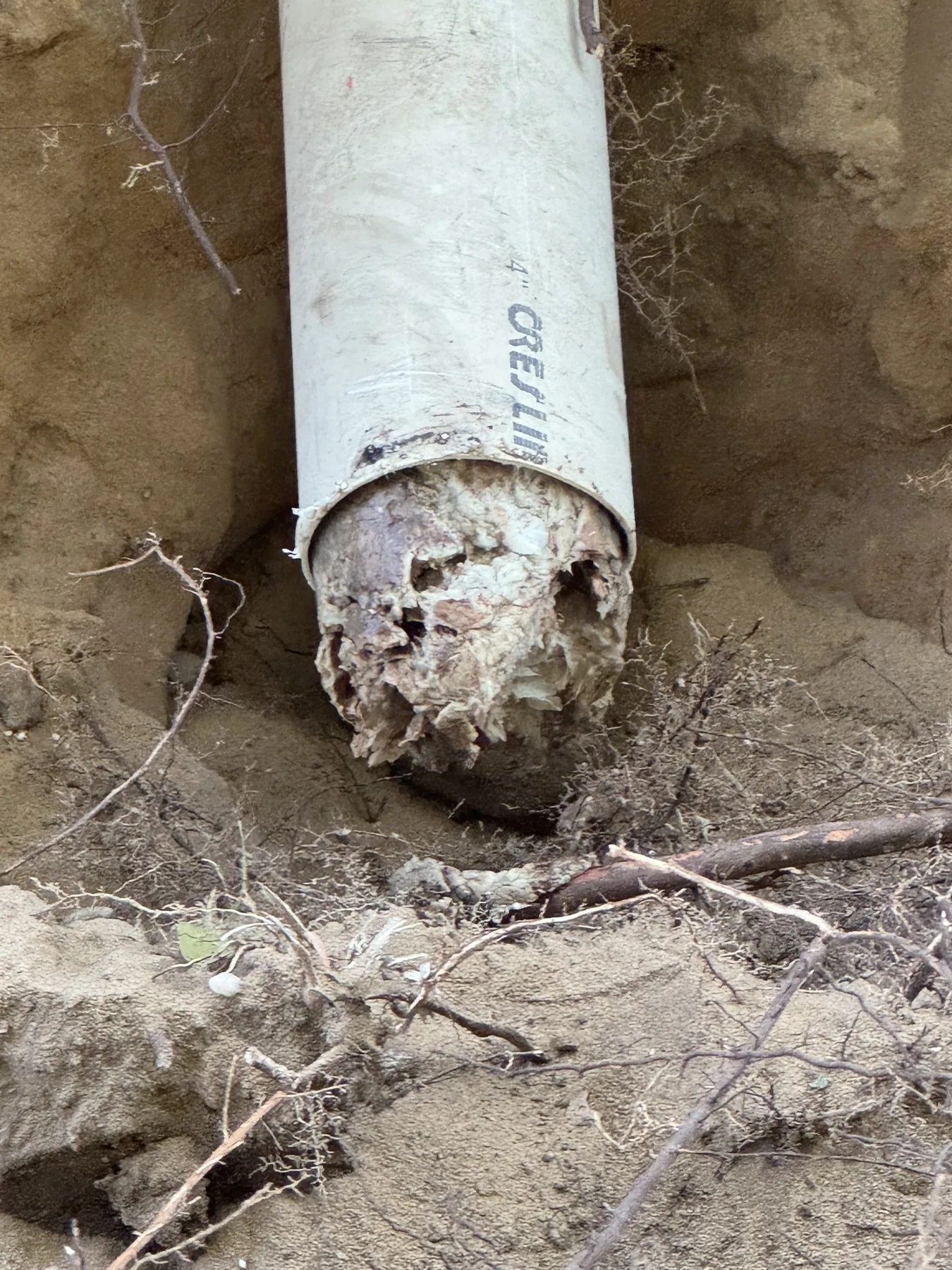
A sewer line is one long, gently sloped pipe with no pressure behind it. Everything depends on that slope and on the pipe holding its shape. When one section breaks, cracks at a joint, or gets pushed out of line by a root, waste stops moving past that point and backs up toward the house. The rest of the pipe can be perfectly fine.
That distinction matters because sewer work gets sold in extremes. The camera is what settles it. We run a video line down the pipe and watch the whole run to the connection. You see the same footage we do, and it shows whether this is a single failure worth repairing or a pipe that has deteriorated end to end. If it is one spot, we fix the one spot.
Repair usually means excavating down to the failure, cutting out the damaged section, and joining in new pipe with proper couplings and bedding so the slope holds. Done right, a spot repair on an otherwise sound line lasts. If the camera shows the run itself is finished, that is replacement, which is a different job entirely.
What a failing sewer line looks like from inside the house
- More than one fixture backing up at the same time, especially the lowest ones
- A toilet that bubbles when the shower runs
- Sewage appearing in a tub or shower rather than at the fixture being used
- Repeated main line clogs a few months apart despite being cleared
- A soggy or unusually green strip of yard following the line’s path
- Sewer smell outdoors near the cleanout or along the run
Camera the line before you dig. Everything about the repair depends on what it shows.
Why a run fails at one point
Roots are the classic. A tree finds a vapor trail at a joint that has loosened slightly, sends a fine root through, and that root thickens over years until it has cracked the pipe open and made a net that catches everything passing by. Older clay and cast iron joints are the easiest way in, which is why root intrusion shows up more in the established neighborhoods around DeFuniak Springs and Freeport than in newer PVC.
Ground movement causes the rest. Our sandy soil shifts and settles, especially after heavy storm saturation, and a pipe supported by that soil moves with it. A section can drop out of alignment at a joint and create a low spot where waste and solids sit instead of flowing through. That sag then collects the next clog and the one after, which is why a repeating main line blockage in the same place is worth a camera.
Physical damage rounds it out. A line crushed by a vehicle driving over a shallow run, a post or fence hole punched through it, or another trade’s excavation nicking it and backfilling over the damage. These show up as a sudden problem in a system that was fine last week, and the camera finds them quickly.
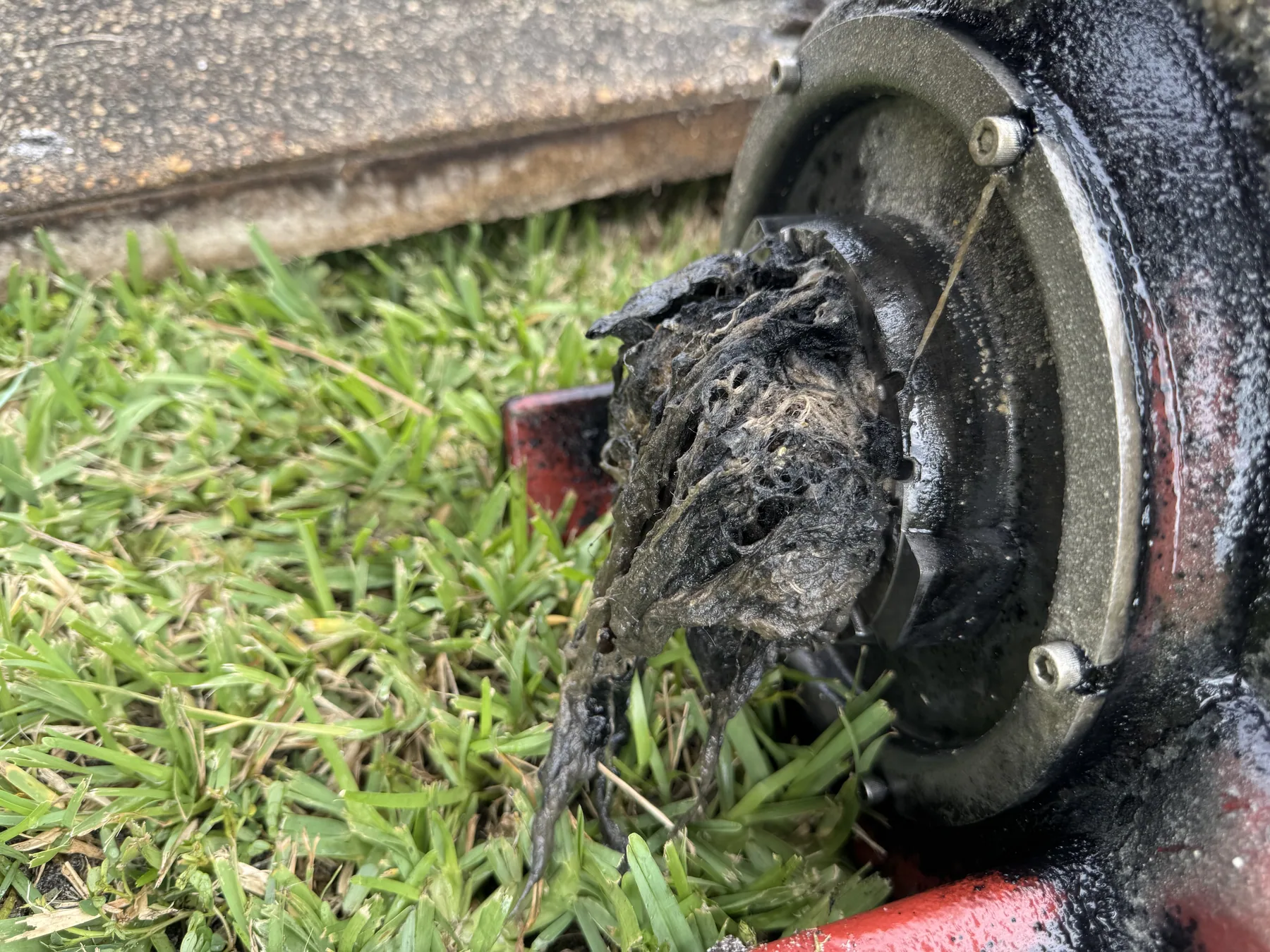
Exposing a root-cracked joint on a sewer line ahead of a section repair.
Get it looked at
Backing up more than once? Call 850-318-5777 and we will camera the line before anyone talks about digging.
- Answered 24 hours, 7 days
- Licensed CFC1429646 and CMC1250426
- Repair first, always
Maintenance plans from $16 a month keep this kind of thing from becoming an emergency.
From backup to repaired line
- Clear enough to work
If the line is fully blocked we open it first so the camera can actually travel and so the house is usable.
- Camera the full run
We watch it from the cleanout to the connection and record what we find. You see the break, the roots, or the sag yourself.
- Locate and mark the spot
The camera head is tracked from the surface, so we mark the exact position and depth. That keeps the excavation small.
- Excavate carefully
Open just the area needed, protecting what is around it, and expose the failed section.
- Replace the section and re-bed it
Damaged pipe out, new pipe and proper couplings in, bedded and graded so the slope is right, then backfilled and restored.
Sewer repairs across Walton and the surrounding counties
Sewer service varies a lot across this area. Much of Freeport and the 30A corridor is on Regional Utilities, some of it gravity and some of it low pressure force main with individual grinder pumps at the house. Which one you are on changes what a failure looks like and what is even repairable on your side of the connection, so identifying that is the first thing we sort out.
We repair lines in Santa Rosa Beach, Point Washington, Miramar Beach, Seagrove Beach, Grayton Beach, Seaside, WaterColor, and Inlet Beach, and inland in DeFuniak Springs, Paxton, and Ponce de Leon where the pipe tends to be older and roots are the more common story. We also work Destin, Niceville, Valparaiso, Eglin Air Force Base, Choctaw Beach, Ebro, Vernon, Caryville, Westville, and Panama City Beach.
Towns we get to most: Freeport, Santa Rosa Beach, Point Washington, Miramar Beach, Niceville, Destin, Eglin Air Force Base, Valparaiso, Ebro, Vernon, Caryville. See the full service area.
Questions we get about this
How do you know it needs a repair and not a full replacement?
The camera. We watch the entire run and judge the condition of the pipe as a whole, not just at the failure. One break in otherwise sound pipe is a repair. Deterioration along the whole length is replacement, and we will show you the footage either way.
How much of the yard has to be dug up?
For a spot repair, only the area over the failure, because we locate and mark the camera head from the surface first. Knowing the exact position and depth is what keeps the hole small.
Can roots be cleared instead of repaired?
Cutting roots gets the line flowing again, and sometimes that is the right immediate move. But the roots came in through an opening, and they will grow back through that same opening. If the camera shows a cracked joint, clearing is buying time and the repair is the actual fix.
Whose responsibility is the line, mine or the utility’s?
Generally the portion on your property up to the connection point is yours, and the utility handles their main. Where exactly that line falls depends on your service, and it is different again if you are on a grinder pump. We identify which side the failure is on before any work starts.
Is a repair going to hold?
A section repair on pipe that is otherwise in good shape holds fine when the new section is properly bedded and the slope is restored. Most repairs that fail early failed because the pipe was backfilled without support and settled right back out of alignment.
Related plumbing work
- Sewer Line Replacement
- Water Heater Repair
- Water Heater Installation
- Tankless Water Heater Repair
- Tankless Water Heater Replacement
- Tankless Water Heater Installation
- Water Filtration
- Gas Line Installation
- Gas Line Repair
Not seeing it? The full list is on the plumbing page, or just call 850-318-5777 and describe it. You can also see the work or send a note.