
Find the Fault That Keeps Coming Back
For the problem that has already had two contractors out. Measured, methodical fault finding on commercial systems, with the readings written down.
Some commercial faults are obvious. A contactor is burned, a belt is broken, a capacitor is dead, and the repair is clear within ten minutes. Diagnostics is for the other kind: the unit that fails on hot afternoons and works fine when the technician arrives, the zone that goes warm without a pattern, the breaker that trips once a week, the system that has had parts replaced and still misbehaves.
The difference is method. Intermittent faults do not survive guesswork, because a part swap that seems to fix it just moves the timeline. So this work is instrumented: electrical readings under real load, refrigerant pressures and superheat measured at operating conditions, airflow and static pressure taken across the system, control signals verified, and thermal imaging when we need to see something the meters cannot reach.
It is also documented, which is what makes it useful to a property manager or owner. When you have paid for two service calls that did not solve it, what you need is a record: here is what was measured, here is what those numbers rule out, and here is what they point to. That is a report you can act on and a report you can hand to somebody else.
Problems That Need Real Diagnostics
- A unit that fails only during the hottest part of the day
- A breaker that trips intermittently with no consistent trigger
- Parts replaced by another contractor and the fault still present
- A zone that drifts out of temperature at unpredictable times
- A system short cycling with no obvious cause
- Comfort complaints from one tenant that never reproduce on a service call
- High energy consumption on equipment that appears to be operating normally
An intermittent fault is a measurement problem, not a parts problem.
Why These Faults Hide
Load is the usual reason. Many commercial faults only appear at full load, so a system checked at nine in the morning in mild conditions tests perfectly and fails at three in the afternoon. Marginal electrical connections, a compressor that is weak but not dead, and a coil that is fouled enough to matter only under peak demand all behave this way.
Multi-zone systems hide their faults inside their complexity. Controls, terminal units, dampers and staging all interact, and a symptom in one zone frequently originates somewhere else entirely. Chasing the room that is complaining, instead of measuring the system that serves it, is how a problem survives several contractors.
Our conditions add a layer. Salt corrosion near the Gulf creates high-resistance electrical connections that heat up and behave differently as they warm, which is exactly the profile of an intermittent fault. And because equipment here runs nearly continuously from spring into fall, marginal components spend months operating right at the edge instead of failing outright.
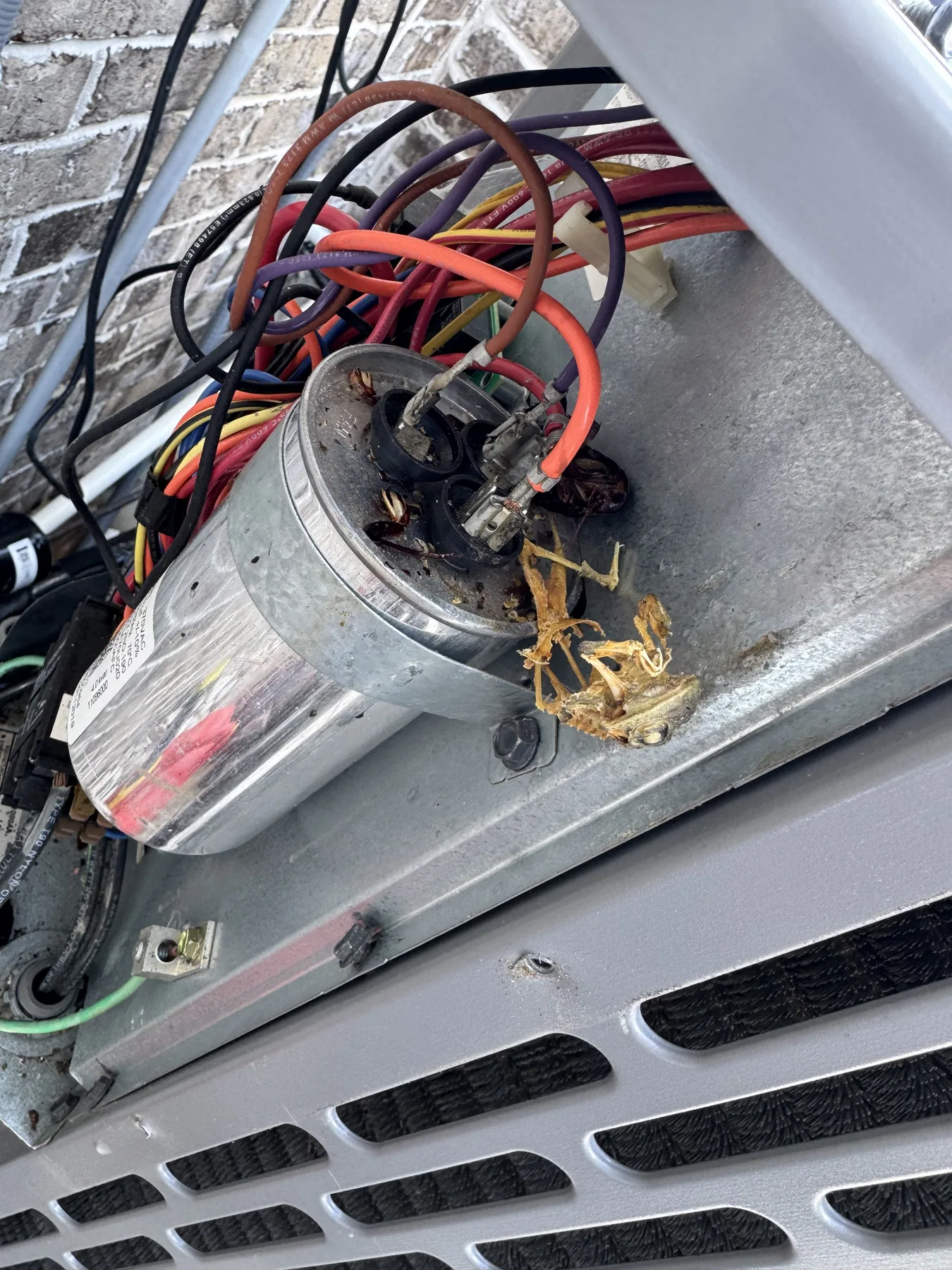
Reading electrical values at a commercial air handler during a mid-afternoon diagnostic under full load.
Commercial work
Same fault, third service call? Call 850-318-5777 and we will measure it properly and write down what we find.
- Answered 24 hours, 7 days
- Licensed CFC1429646 and CMC1250426
- Repair first, always
Maintenance plans from $16 a month keep this kind of thing from becoming an emergency.
The Diagnostic Method
- Take the history
When it happens, what conditions, what has already been replaced, and by whom. The pattern of the failure narrows the search before we open anything.
- Measure under real conditions
We come back at the time of day the fault appears if that is what it takes. Testing a hot-afternoon problem on a cool morning proves nothing.
- Work the system, not the symptom
Electrical, refrigerant, airflow, static pressure and controls each get measured, so the whole system is characterized rather than one suspected part.
- Bring in imaging where useful
Thermal imaging finds hot electrical connections and airflow or coil problems that meter readings alone will not localize.
- Reach a supported conclusion
You get the fault, the readings that prove it, and what the repair takes. Not a guess with a part number attached.
- Write it up
Findings, measurements and recommendations in a document you can keep, act on, or hand to an owner.
Diagnostic Work Across the Coverage Area
We take diagnostic calls across Walton, Okaloosa, Bay, Washington and Holmes counties, and a lot of them come from property managers and restaurant owners who have already spent money without a result. Buildings in Destin, Miramar Beach, Santa Rosa Beach and the 30A towns come with the coastal complication, where salt-degraded connections and fouled coils produce faults that only show under summer load.
Inland, in Freeport, DeFuniak Springs, Niceville, Vernon and Ponce de Leon, the calls skew toward multi-zone control and airflow problems in buildings that have been reconfigured over the years. Either way the process is the same and so is the deliverable, which is a written set of readings and a conclusion those readings actually support.
Towns we get to most: Freeport, Santa Rosa Beach, Point Washington, Miramar Beach, Niceville, Destin, Eglin Air Force Base, Valparaiso, Ebro, Vernon, Caryville. See the full service area.
Questions we get about this
How is this different from a normal service call?
A service call addresses a fault we can find and fix in one visit. Diagnostics is for a problem that has resisted that, so it is longer, instrumented, and it produces a written set of measurements rather than just a repair.
Will you have to come back more than once?
Sometimes, and we will tell you up front if we expect to. If a fault only appears under peak afternoon load, then measuring it at peak afternoon load is the only honest way to catch it.
Do you work on systems another contractor has already touched?
Regularly. That is most of this work. We do not need to know what happened before to take our own readings, though the history of what was replaced is useful for narrowing things down.
What do we get at the end?
A written report with the measurements, what they mean, the fault they support, and what correcting it takes. Owners and property managers want documentation, and it is also what protects you if the problem resurfaces.
Can you diagnose without shutting down our business?
Mostly yes. Measurement is done while the system runs, since that is the point. If something needs the equipment off, we schedule that portion outside your operating hours.
Will this end in a recommendation to replace the equipment?
Only if the measurements support it. Repair-first is how this company was built, and a diagnostic that concludes with replacement will show you exactly which readings led there.
Related HVAC work
- Commercial HVAC Service
- Commercial Air Balancing
- Commercial HVAC Cleaning
- Commercial Equipment Installation
- Commercial Duct Leakage Testing
- Commercial Duct Sealing
- Thermal Imaging
- Kitchen Ventilation
- Ventilation Design
Not seeing it? The full list is on the HVAC page, or just call 850-318-5777 and describe it. You can also see the work or send a note.